Welcome to
Chris Brady’s
Blog

“The only way to be happy, is to give happy.”

  • There are multiple roads to accomplishment.  

    Some people begin the journey to success in a particular endeavor endowed with obvious natural talent. Everybody who observes such people gives ready acknowledgment to the obvious gift of inborn ability.  

    Others, however, (and most, as it turns out), are not so gifted.  This second group has to work harder to do what the first group was able to do naturally.

    Over time, however, the differences between starting points fade away. 

    How? 

    First, a little background. 

    Most people are average. While this is true statistically, it’s hard to swallow emotionally. As a result, most people think they are above average. In fact, there is a research paper that won the year 2000’s satirical “Ig Nobel Prize” for psychology written by Dunning and Kruger. What resulted is called the Dunning-Kruger Effect: “a cognitive bias in which unskilled individuals suffer from illusory superiority, mistakenly rating their ability much higher than average. This bias is attributed to a meta-cognitive inability of the unskilled to recognize their mistakes.”   

    How many of us have known people who suffered from “illusory superiority?” In the body of the study, Dunning and Kruger report that people who overestimated their ability at a task adjusted their opinion of themselves upward when confronted with data depicted the ability level of others sampled. In other words, people generally think they are pretty good at something even when they are not, and when shown data of how others perform at the same task, they increase their “illusory superiority” to an even higher level

    This is very insightful research because it provides a window of understanding into the behavior of people who recoil from a true scoreboard of their performance. Those of us who teach and coach others in the topic of success and high achievement never cease to be amazed at the response of certain people when they are forced to confront the reality of their performance (or lack thereof) in an objective fashion – that is, when they must face a true scoreboard of their performance. Among others, the reactions of such people include the following:

    1. Anger at the scoreboard

    2. Claims that the game is stupid or unfair

    3. Excuses along the lines of, “I’m just not competitive”

    4. Denial that others are really scoring better than them and the claim that those who appear to do so must be “cheating”

    5. Quitting the task altogether in favor of a retreat to an endeavor where their individual performance can be masked, hidden or unobserved

    But none of us need fear the scoreboard. Instead, we should embrace it as the positive-pressure cooker of our personal improvement. Why? Because all of us can improve. We can all get better. 

    Now, it’s time to answer the question posed above: How do the differences between starting points and talent levels of individuals fade away over time?

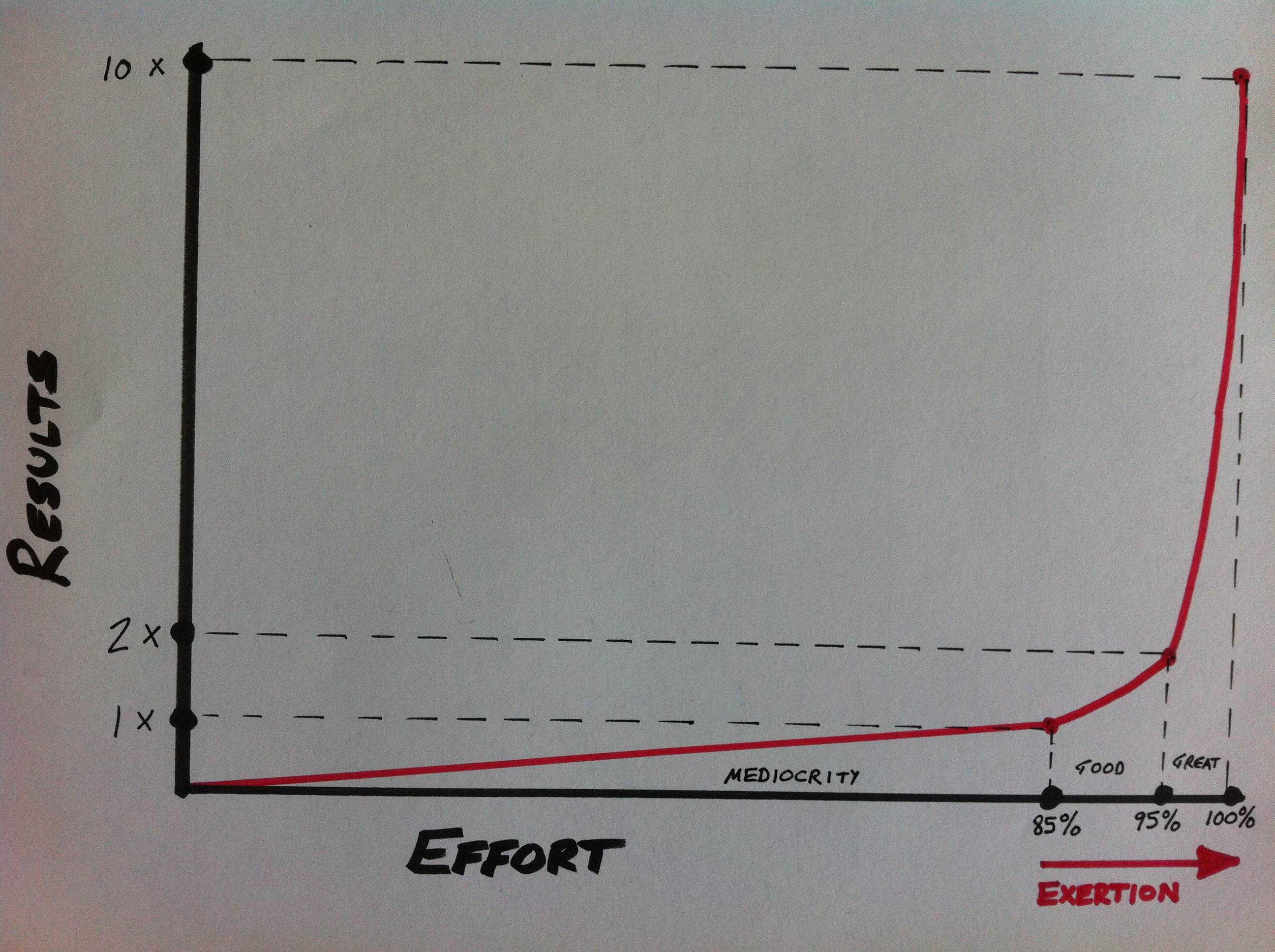
    Consider the chart below. Although drawn arbitrarily, it mirrors the principle of the power of exertion, over time. 
    IMG_3058

    Note that a large range of effort brings roughly the same in terms of results. In that band is “mediocrity,” an average amount of results from most participants. For any given endeavor, this is where most people live. But for some reason there is a small, self-selected group of individuals who push harder, who consistently give more effort, who take the endeavor much more seriously. This extra 10% push (again, an arbitrary estimation) brings perhaps twice as much results (represented by the 2X on the Y axis). This is where people leave the zone of mediocrity and enter into “good” or “very good.” The greatest achievers, however, push even further.  Just 5% more effort, taking them to the maximum of 100%, is enough to generate as much as 10X the result. So, the closer one gets to maximum effort, the more of an exponential one can expect to see in results (given enough time).

    This is instructive in the following way:

    1. If you are the type of person who has always felt a little behind others, a little less gifted, or a little put down, the good news is that with exertion into the upper ranges of effort, sustained over time, you can achieve excellent results. No matter your starting point, you can make it, if you work hard enough consistently enough and long enough.

    2. If you are the type of person who has always felt a little ahead of others, a little more gifted, who have always had a little easier path, the bad news is that you cannot rest on that as a sustainable advantage. If you don’t eventually push yourself into the exertion zone toward excellence, those who are working harder will eventually pass you by. However, if you can somehow adopt their hunger and work ethic, you might just be uncatchable. 

    Either way, don’t learn the wrong lesson. The less gifted should never feel permanently disadvantaged because of their starting point, while the gifted should never count on their natural advantages to sustain them long term. Over time, excellence goes to the consistent hard worker.  
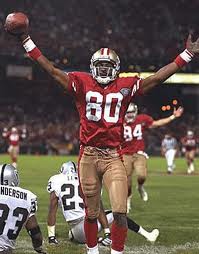
    ImagesJerry Rice is often talked about as the best wide receiver in the history of the National Football League, and sometimes even considered to be the best all around football player ever. Yet in his youth he was only able to garner collegiate scholarship from the relatively small and unknown school, Mississippi Valley State. His professional prospects were quite a bit better, based upon his collegiate performance, but still, he had not been expected to be taken until the sixth or seventh round in the NFL draft. One coach, however, understood his worth. Bill Walsh of the San Francisco Forty-Niners was looking for exactly the kind of player Rice had made himself into – quick, precise, and incredibly hard working. With these basic foundations, Welsh knew he had found what he was looking for to complete his high-percentage offense featuring the accurate and precise quarterback, Joe Montana. For the next twenty years Jerry Rice continued to work at an intimidating pace to perfect his craft. Even after winning multiple Super Bowls and MVP awards, Rice demonstrated an uncommon hunger to push himself to maximum effort in the pursuit of excellence. A man with perhaps only above average talent, with literally hundreds of others “ahead” of him on the talent scale, had worked himself into icon status.

    Exertion –→ over time  -→ massive results 

    The question then becomes, “How?” How does one keep himself in this “exertion zone?” How does one stay at high effort over time?

    1. A deep and abiding purpose – the more noble your cause the more your efforts will be able to withstand the lure of distraction, the pain of discouragement, and the poison of critics.

    2. Informational Reinforcement (see the LIFE portfolio of subscription products for this purpose) – we need a constant, consistent flow of information and motivation to sustain us in our quest.

    3. Relational Reinforcement (see the LIFE Live seminar events) – we need to surround ourselves with people who lift us up, encourage us, and inspire us to be better.

    4. Self Talk (and personal affirmation statements) – it’s important to control what we say to ourselves. 

    5. Remember that you are NOT average, by choice! – excellence is attainable through exertion, no matter where you begin on the talent scale.

    So get yourself into the Exertion Zone now, and stay there! 

    Excellence awaits you!

    Sincerely,


    Chris Brady


  • Image 7In life, in business, or wherever, it is necessary to find sources of motivation to help maintain peak performance. My business partner and often co-author Orrin Woodward once said, “If you don’t want to do something, no one can stop you!” Inertia is often hard to overcome, so we look for sources to get us moving. Motivation is the force we use to overcome our general desire to lay on the couch and have someone fan us and feed us grapes.

    There are motivational speakers, motivational seminars, and reams of motivational books. Much of the information found in these sources is valuable and at least temporarily able to kick us in the fanny. Sometimes, though, these things can miss the mark. There are times when things that sound true on the surface fall apart upon further inspection.

    One time I was at a business conference listening to a speaker on stage who had been a famous NFL football player. His talk wasn’t really a talk, it was more like a well-rehearsed theatrical performance. Every line was memorized; every word delivered with just a little too much polish. It was obvious he’d given this exact talk a hundred times. Still, it was pretty good. But then he said something that left me wondering. “The key to success,” he shouted with a pause for dramatic effect, “is to fall down ninety-nine times, and get up a hundred!” The crowd went wild. Children cried. Heart patients clutched their chests. Such beautiful words. Such wisdom. Such motivation.

    Such bad math!

    I chuckled to myself as I imagined how it was possible for someone to “get up” one more time than they’d fallen down!

    There is another such phrase so common that nearly every one of us has said it at one time or another. It is in books. It can be heard in speeches. It has been said by well-intentioned advice givers everywhere. The phrase?

    “It’s never too late!”

    But there is one certainty as reliable as taxes: there IS a time when it’s too late. When you’re dead, it’s too late! Or when you’ve blown the important relationships in your life, it is probably too late. Or when you have destroyed your health, it’s too late! There IS a too late!

    Now, I understand, the phrase is meant to encourage people that even though they’ve wasted time, or even though they’ve failed in the past, or even though opportunities have passed by – that’s no excuse for not taking the next positive step. Still, good intentions aside, the phrase is not true. One of the reasons so many people accomplish so little in life is they live as though they’ve got forever; they live as though it’s never too late.

    There are many other “motivational myths” out there. Can you think of some? If so, share them with the readers of this blog in the comment section. We need to be a little aware of the “truths” we are swallowing without critical consideration. Success in life, in relationships, in finances, in anything, requires action consistent with true principles. Learn the principles and steer clear of the myths.

    Motivate yourself to get cranking now, because although there is a day when it will be too late, it might not be yet! And, if you should get knocked down, feel free to get up once for each time it happens. That should be sufficient.

    Sincerely,

    Chris Brady


  • Dreamstimefree_1245177"What do you do to stay so 'on' all the time?" the man asked me. I mumbled out some sort of answer and asked him a similar question. We finished our time together and parted ways, but his question stayed with me.

    Am I really 'on' all the time? I thought.

    No, not really, I thought to myself, doubting whether anyone could truly be 'on' all the time.

    Still, I am fairly excited and enthusiastic most of the time, and most days I awake super-charged to plow into the work that I do. I am blessed, love what I do, and don't want to waste any chances I've been given.

    Also, however, I've been well taught. Years and years of listening to audio CDs, attending conferences and seminars, reading thousands of books, and hanging around similarly driven individuals, have all combined to make me what I am today. One of the biggest lessons I've taken from all this experience is the following: a successful, happy, contributing life comes from proper 'personal management.'

    Management can mean the proper, disciplined, responsible application and stewardship of something valuable. It follows, then, that personal management is the proper, disciplined, responsible application and stewardship of one's life, health, time, resources, energy, and blessings. And it can be seen that those who accomplish the most and seem to be the happiest are those who do the best job with their personal management.

    In other words, how well you manage yourself determines what you achieve and how much you fulfill your God-given potential.

    Wait! Before you tune out thinking this is just so much motivational drivel, stop and ask yourself some questions:

    1. How well do you do in the category of 'personal management?'

    2. Does your life demonstrate self-discipline and a responsible shepherding of the gifts and privileges you've been given?

    3. Do employ your time wisely?

    4. Do you keep yourself fit and in good health?

    5. Do you have goals in life you are pursuing, directly and through a specific game plan?

    6. Do you have a financial plan so you can deploy the most possible resources toward your life's purposes?

    7. Do you feel a special pull to accomplish something particular in your life?

    If most of your answers to these types of questions (and I could expand that list indefinitely) are in the negative, you may need to begin doing a better job managing yourself. After all, it's for your own good and happiness. People sometimes avoid the terms 'discipline' and 'accountability' and 'stewardship' and similar topics because they don't like putting themselves under pressure. But one of the paradoxes of life is that we are the happiest when under pressure, especially when that pressure is the healthy, self-applied variety. 

    So what do you need to do to begin managing your life more productively? What must you do to stop wasting time, energy, health, and resources and instead begin living a vibrant, productive, disciplined, happy life? Here is a partial list of things to consider and steps to take that may be helpful. 

    1. Pursue your purpose. Aimlessness results from not aiming at anything. Without a burning purpose, time and energy is wasted poking around through the days of your life and accomplishing nothing. Discovering your purpose is a little like an archaeology project, you uncover it a bit at a time. Begin before any more is wasted.

    2. Find someone (or several someones) to serve. Our problems usually diminish when we help other people with theirs. We gain perspective and receive blessings from sharing what we have with others in need. It is impossible to be entirely self-serving when you are busy serving others. Whenever I deal with someone who is embroiled in tremendous trifles and poor self-management, I always inquire to find out whom they are serving besides themselves. The answer is almost always, "no one." 

    3. Cultivate the awareness of the passing of time. You will not live forever, and each passing day is an evaporating gift. One thing I will never understand is the people who are living as though they've got forever. They waste time, frit away their days, and plow through entire swaths of the calendar without doing anything meaningful or important. You will regret the time you wasted that you can't re-get.

    4. Foster a little disappointment in yourself. This won't work for some personality types, perhaps, but I think it's healthy to stay a little unhappy with oneself. I don't ever want to be satisfied with my performance or think I've arrived. I don't want to grow complacent or lose my edge. Therefore, I zero in on areas where I obviously need to improve, and use these to motivate myself to heightened commitment and better results. 

    5. Shut out the world a little bit. A lot of what comes in to us is negative and destructive, while much of the rest is distracting. Learn to block out the noise from time and time and garner for yourself moments to think, pray, study, and live uninterrupted.  

    6. Plug into sources of power. First and foremost is to understand who you are and who's you are. Get your life right with God. Further, plug into information sources that are educational, uplifting, practical, and edifying. Read the good books (including the Good Book), listen to instructional audios, attend conferences, and learn to feed your brain the food it needs to stay active at a high level. I once asked a busy, active, 83 year-old billionaire what his secret to health and vitality was. His answer was to keep your brain going so fast that it can't atrophy.

    7. Improve your associations. We become a lot like the people we hang around the most. To improve your life, improve the quality of the people you allow into it. Be intentional about this and choose your friends and associates wisely. 

    8. Set goals. Chasing after something specific is exhilarating and productive. When we have a goal, all sorts of ideas and plans pop into our head to help us relieve the 'pressure' the goal provides. Suddenly we are alive with the idea of pursuit and we are busy about something definite.  

    9. Develop game plans. Game plans are the attempted routes toward the accomplishment of goals. They don't always work out, but they at least get us started down the road to victory. Chart a course and set sail. You can't arrive if you don't depart.

    10. Allow rewards. When you increase your self discipline, it is a good idea to reward yourself along the way. When you hit a little goal, give yourself a tiny, commensurate treat. This reinforces the behavior and proves to yourself that all the effort is paying off. It cements the productive behavior as a new, worthwhile habit and encourages further growth in that direction.

    Consider this: There is nothing more common than someone who is out of shape physically, or has all sorts of relationship problems, or has money problems, etc. Anybody (and sometimes is seems as if it's most everybody) gets themselves off track and into these categories. But it doesn't have to be that way. It doesn't have to be you!

    Poor personal management is to blame; it was the road that got them there. But the good news is that personal management can also be the road out. So put some more effort into your personal management today and take the baby steps to where you want to be.

    No one can do it but you.

    Sincerely,

    Chris Brady 


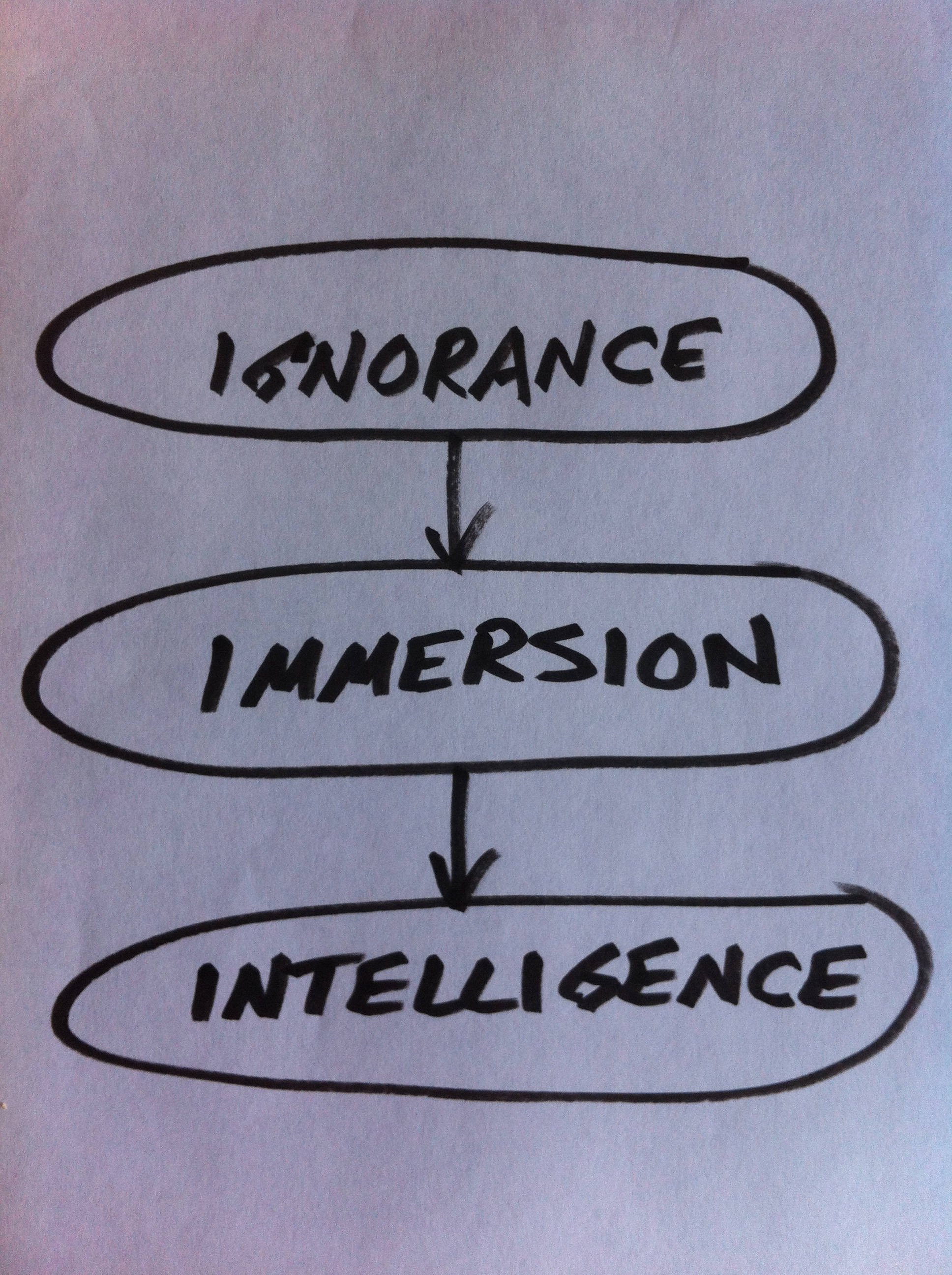
  • IMG_2966There are three stages in life on the road to mastery of any craft:

    1. Ignorance – this is the brief but enjoyable stage where the task at hand appears interesting and enjoyable. Without the confusion of knowledge, accidental competency sometimes occurs and practitioners are often able to make some early headway quite easily. At this early stage it is easy to take things too lightly, underestimate the top performers in the category, and even get a little cocky. 

    2. Immersion – this stage is the key. Without long-term immersion in a topic, mastery will never be realized. This takes intensity, focus, commitment, and time. The challenge here is that as one plunges into the the craft, all sorts of details and complexity reveal themselves. Things begin to seem overwhelming and difficult. What at first appeared fun and easy soon begins to feel impossible and perhaps "not worth it." There is a clear choice in the Immersion stage: feel the pressure or marvel at the wonder. It is possible to do both productively, but never just the first. A healthy sense of wonder at all that is involved is required for ongoing enthusiasm and commitment.

    3. Intelligence – this is where the practitioner has mastered his craft and makes it look "easy" to the outside world. Outsiders look at those with such master and say they have a certain "intelligence" in the topic, as in, "Peyton Manning has incredible football intelligence." Competence is now second nature and almost unconscious, although the job of the master to continually improve never ends.

    We can consider the above steps from the standpoint of martial arts. Upon first look, it may seem that throwing a punch is nothing more than that – simply throwing a punch. However, once immersion in martial arts begins, the student realizes that there are complex and specific mechanics involved in properly throwing a punch, such as body position, center of gravity, core involvement, opposing hand pull-back, torso twist, formation of the fist, pointing of lead knuckles, and much more. It is in this stage that one realizes that "a punch is MORE than just a punch." After thousands and thousands of practice punches in a whole host of different environments and applications, honed to sharpness by the oversight of a master sensei over a long period of time, eventually a punch returns to being "just a punch," meaning, it becomes second nature and almost automatic. However, now it is extremely effective and correctly done.

    The challenge along the path of mastery is the pressure that results in the Immersion stage. Most people cannot handle this pressure. Instead they:

    1. become overwhelmed, determine that the task is too hard, and quit. Or,

    2. they cave in to the pressure but don't quit, but also don't bring the concentration and effort required to pass through Immersion on to mastery. Instead, they wallow around in Immersion indefinitely, going through the motions half-heartily, and never really improving. Or, 

    3. they blame the craft or the process . This often turns people into "suggestion machines," as in, "This craft would be so much better if they would just make such and such changes . . . ." Unwittingly the productive pressure of the Immersion stage is bled off and applied elsewhere. Relieving this pressure by directing it elsewhere robs the participant of the lessons the pressure brings and prolongs the time required to reach mastery. Or,

    4. they blame other people for their lack of progress. This is even worse than becoming a suggestion machine because now it also involves playing the part of a victim. This is a total relief of the productive pressure and is the surest way to become entrapped in the Immersion stage long term, or to take the short trip back to #1 above and quit outright.

    Once one has traveled down the road to mastery in a subject, quitting is particularly tragic because it effectively and mercilessly starts the clock over. Quitters often enjoy immediate relief from the pressure of immersion, and even brag about it to their associates. But masters know that this temporary respite from pressure is simply the pause in the time line until the person must choose the next endeavor and begin the process all over again. Sadly, the cycle usually just repeats itself as the person gets frustrated at the next new thing and quits again. It is precisely in this fashion, blaming processes and people all along the way, that many would-be achievers accomplish very little with their lives and never actually master anything. Time ticks without remorse as the self-deceived entrap themselves in unnecessary mediocrity.

    In this progression it can also be seen why time spread too thin across too many activities is a killer for anyone truly seeking mastery. There simply isn't enough time to become a master at more than one or two things in life. I dislike the well-intentioned phrase, "It's never too late," precisely because, well, there IS a too late! Time doesn't wait forever. Health doesn't last forever. Windows of opportunity don't remain open forever. Relationships will not wait forever. Time lost is time lost. Period. Mastery is only available if given enough time, and delaying Immersion or spreading oneself too thin both deprive one of the time required for mastery.

    Also, one can easily see that attempting to compete part-time with someone who has dedicated himself full-time to a profession is likely an exercise in futility. Sooner or later the person or enterprise with the most focus, the most commitment, the most "skin in the game" will win. NY TImes bestselling author Orrin Woodward says, "Half of you against all of them means you lose all!" 

    Decide to master your craft. Fall in love with the wonder of the depth of what you do. Become excited by each new discovery and layer you remove of greater dimensions and understanding. Let this fuel your intensity and magnify your focus. Throw your whole self in to the endeavor and be a patient student of the process. Use the challenge of the pressure wisely and allow it to mold you, long term, into a legitimate master, one with that special "intelligence" in your field. And don't worry that most people will not understand you. That's okay. In fact, it should be seen as a positive indicator that you are headed in the correct direction away from the herd. Simply look to other masters for approval. They were once where you are, and will be the first to cheer you on.

    Sincerely,

    Chris Brady 


  • Virtualreadoutslide"The government is best which governs least," is a statement often erroneously attributed to Thomas Jefferson. Although he likely would have agreed, the statement cannot be found in any of his writings. It is, however, plainly written by Henry David Thoreau:


    I heartily accept the motto,—“That government is best which governs least;” and I should like to see it acted up to more rapidly and systematically. Carried out, it finally amounts to this, which I also believe,—“That government is best which governs not at all;” and when men are prepared for it, that will be the kind of government which they will have. Government is at best but an expedient; but most governments are usually, and all governments are sometimes, inexpedient.
    —Thoreau, Civil Disobedience


    The trend of today seems to run counter to the words of Thoreau and the inclinations of Jefferson. We see a citizenry taught to worship it's government and to not only depend upon, but demand from it all manner of "services" not natural to it. Somewhere along the line Americans have switched from rugged individualism to radical governmentalism. 

    The truth is, however, that governments only do one thing well: grow in power. Over time, they creep in their reach and gain in their control. Nothing is more natural for a bereaucracy than to add to itself like coral growing on a reef. Over time the accumulation grows big enough to block the waves of freedom and leave instead a pool of slack water.

    Government interference in human affairs (beyond its basic responsibility for protection against enemies domestic and abroad) depends upon several factors and participants. In an attempt to make the process of the loss of freedom more recognizable, perhaps the following list will be helpful:

    1. Viewpoint – this is the inflexible dogma of government control in one area or another that motivates the behaviors of the Valiant.

    2. Valiant – these are the champions of the Viewpoint, the schemers who push it on everyone else "for their own good."

    3. Victims – those who are being somehow unfairly treated and are therefore entitled to a special benefit from the government

    4. Villains – anyone who does not pledge blind loyalty to the Viewpoint

    5.  Verifiers (or Validators) – the idealists who preach the Viewpoint as though it is the most obvious truth in the world

    6. Vassals – students in many schools and particular universities who become indoctrinated into the Viewpoint

    7. Voters – sheep to be manipulated to vote for the Viewpoint no matter how harmful it may be to them. 

    8. Vandals – those who write any opinion against the Viewpoint

    9. Vanishing – what happens to freedom when the Viewpoint takes firm foothold in a nation

    10. Vanity – all human effort to establish a perfect world outside of God's laws and grace

    Viva la Viewpoint!

    Sincerely,

    Chris Brady


  • In life, we have an admirable tendency to conform, to seek harmony, and to build consensus. This is commendable, as we certainly don't want to intentionally cause conflict and wreak havoc. However, excellence carries with it the apparently inescapable reality of polarization. Whatever you are "for," others will be "against." In fact, the more you take a stand, the more you'll be opposed.

    This explains why strong leaders and dominant viewpoints meet such opposition. George Washington was ridiculed abroad and the victim of passive aggressive politics and slander at home. The very fact that Abraham Lincoln was elected President was the spark that ignited the poweder keg of the Civil War. Today, Barack Obama is both passionately admired and vehemently hated. And closer to home for me, my good friend and often co-author Orrin Woodward has some of the strongest followers and at the same time, some of the most vicious enemies. Again, this is the natural result of taking a strong stand, being passionately committed to your purpose, and seeking aggressively after excellence.

    Remember: Excellence polarizes.

    If you are going to pursue your passion and calling in life with excellence, with gusto, with the full force of your gifts and determination, realize that you will be harshly opposed. It's just how things work. In fact, the most dominant of personalities are able to not only understand this as the lay of the land, but look for it as a sign that they are on the right track. If nobody is against them, it's a sure bet that there really won't be anyone who is much for them, either.

    You should never seek to be intentionally offensive or disharmonious, but on the other hand, never hold back your gifts in an attempt to assuage your critics. They will be your critics no matter how much you pander to them. So don't pander to them in any way. Learn from their opposing viewpoint only to the extent that it makes you think through your position better, develop your understanding more clearly, and make your contribution that much more focused and correct. 

    Never conform to please the critics, instead, perform to thrill your fans. 

    Sincerely,

    Chris Brady

  • This is the time of year when many people are sending out those online video and photo-montage Christmas cards (although I prefer the old fashioned snail-mail kind, with photos of the family). So, I thought it only appropriate to contribute a little something from my past year. What follows is a video compilation of some of my free time activities in 2012, including videography, photography, motorsports, and the like. I am a trained professional, by the way, so don't try these things at home. Happy New Year everybody! May you live life largely!

  • Dont-quitAchieving something great means going where you've never gone before. Even though much of the ground is therefore unknown to you, there is one main feature of your journey of which you should be aware in advance: the tempation to quit. 

    I would say very confidently that anyone who has achieved greatness in any endeavor has been mightily tempted by the desire to quit. In fact, one of the key differences between champions and the rest is that somehow, in some way, the champion found a way to continue moving forward when the others gave in to the impulse to quit.

    Hanging on is a big part of moving on. 

    Quitting doesn't just happen, though. Instead, it follows a progression of destructive thoughts that culminate in the murder of the dream. The key to not quitting is to recognize these poisonous thoughts early, identify them for what they are, and counteract them with productive ones – quickly. Just as a weed is easiest to pluck when it's only a sprout, so too are thoughts of quitting. Pull them from the garden of your thinking early.

    Here is a list of thoughts that can lead to quitting:

    1. I no longer believe I can do this!

    2. My main partners in the project quit.

    3. I'm out of resources.

    4. I gave it my best shot.

    5. I'm not as far as I thought I would be by this time.

    6. I've invested so much and still have so little to show for it.

    7. This is harder than I thought.

    8. Someone (or several someones) ridiculed me.

    9. Someone I'm working with hurt my feelings.

    10. I listened to the critics of what I do and now I'm not so sure.

    Know this: these thoughts are not unique to you. I think nearly every high achiever experiences at least six of these (if not more) on his or her path to success. Identify them early; be slow to buy into them, and like a heart patient popping nitroglycerin, swallow a bit of the following to stave off being disheartened.

    1. Go all the way back to your purpose, and remember what fired your enthusiasm in the first place. Has your core purpose changed? Likely, no.

    2. Look at things from a completely different perspective. Instead of looking back over the ground traveled with discouragement, look at it for clues as to what could be done better.

    3. Get with a mentor or expert in your field who has successfully survived similar bouts of doubt. What did they do to get through the tough times? How can you see things the way they did? Look for inspiration that will resonate deep inside of you.

    4. Take stock of what HAS been accomplished, instead of just seeing what hasn't. Have there been some intangibles? Have you become a better person as a result of the struggle so far? Have you made friends and connections you wouldn't have made otherwise? Have you learned something?

    5. Analyze your expectations. Often, people become discouraged because they began a pursuit without a mature understanding of success. Most particular endeavors aren't harder than expected; rather, success itself is harder than expected. Realize that succeeding at anything would likely provide moments of discouragement to you. Our society glorifies mediocrity so much that we are shocked how tough excellence can seem.

    6. Realize that success is often located just beyond the most doubtful moment. Many great accomplishments were achieved immediately after a crisis of confidence. Hang on and see if just a little bit more effort might be enough!

    7. Dramatize your own story to give yourself staying power. This one may seem silly, but it's got real power. Use images, visualizations, music, and drama to build your quest into a romantic pursuit. Picture yourself as the director and lead actor in your own movie, with a crowd of eager onlookers. What will you do next? Will you play the hero? Will you thrill the crowd? 

    8. Keep the goal but modify the plans. Often all that's needed is a little tweaking. This is where someone with experience (see #3 above) can help. What adjustments can be made? What slight modifications can be put into your approach? Being just a little off track can add up to a huge difference in the destination reached at the end. So make little course corrections along the way often and intelligently.

    9. Read, rest, and restore yourself. (For more on this whole concept, see my book A Month of Italy: Rediscovering the Art of Vacation). You should never make a decision about anything of any importance (including quitting) when you are tired, stressed, or sick. Read something that speaks deeply to you, restore your physical and mental strength, and see if things don't look better once you're refreshed. They almost always do.

    10. Realize that ultimately, it's your life. You will be held entirely accountable for it. The committee of "they," the critics, the naysayers, the dream-stealers, the know-it-alls, the back-stabbers, the false friends, and the outright mean people out there will be nowhere to be found, whether you quit or win. These types of people are shockingly scarce when it comes to finding help once you've hit rock bottom, or for applause when you've ascended the victory podium. At both places they are as scarce as fur coats on fish. Realize this. You don't even have time to ignore them. Think of it this way: if you quit because of what someone like that does or says, you get to become like them. Perish the thought.

    As my friend and often co-author Orrin Woodward likes to repeat, "When the going gets tough, the tough get going."

    May this article be a nitro pill for your heartache, and may you get back out there and finish the journey!

    God bless!

    Chris Brady

  • Logo_smalltalk_largeIn our modern discourse, the word "big" is generally given a position of higher esteem than "small." 

    With nieces and nephews arriving at their door, for instance, no distant relative ever says, "Oh, my, look how small you kids still are!" Nope. Instead, it's always a commentary on how big they are becoming.

    My boys recently pointed out a television commercial in which all the clichés surrounding the word "big" (such as "big shots" and "big moment" etc.) are replaced with the word "little." It was quite humorous.

    There is no counterpoint to the Texas phrase that "Everything is big in Texas" by, say, the smallest state, as in, "Everything is small in Rhode Island." You probably won't see that on their license plates any time soon.

    Finally, no mountain biker would ever affix a sticker to his SUV that says, "Go small or go home!"

    It's pretty certain; big has got top billing in our language.

    This is not true, however, in all instances. Take talk, for instance. While it is certainly important to have "big" talks, or "the big talk" or "deep conversations" or "crucial conversations" and the like, we should never underestimate the value of small talk.

    Small-Talk-Comic-Community.skype_.com_Left to my natural tendencies, it could be said that I hate small talk. Mere chit-chat with near strangers covering topics ranging from nothing to the weather is not my idea of a rip-roaring good time. But I have come to learn its importance.

    Consider how often in life we are thrown into situations that require the ability to do just that; start from nothing and work toward at least a little something in the way of conversation. It happens so often, even to the most hermetical of us, that we should consider it a skill desirable of developing. You can never tell when that unknown group of people amongst whom you next find yourself may contain a new best friend, valuable business contact, or both.

    What if you could be more at ease, more interesting to the other parties present, and more valuable to the unfolding group dynamic than the average wall-flower type who retreats into his/her shell and basically caves in to the all-too-common disease of self-consciousness? What if a room full of strangers no longer presented a challenge to your nerves but an opportunity to your interests?

    Here are some suggestions for making small talk not only a little more palatable, but more productive, too.

    1. Get your mind off yourself – it is usually by being preoccupied with how we are feeling and how we are coming across that we miss the opportunity to get involved in a meaningful way with the others present.
    2. Be interested in others – Dale Carnegie taught that the best way to be interesting is to be interested in the other person.
    3. Be sincere – false interest or conversational “techniques” are bogus, stay away from them and simply be authentic.
    4. Listen – make listening an action verb in which you choose to excel.  Don’t bide the time away while the other person is talking thinking about what you are going to say. Instead, listen deeply and see how much you can pick up from what the other person is saying.
    5. Be First – be the first one to introduce yourself, be the first to say your name, be the first to break the ice. Chances are everyone else is a little uneasy, too, and they will appreciate someone taking leadership in the situation.
    6. Be Humble – don’t push yourself forward or boast about yourself or your accomplishments. Also, avoid name-dropping and other tactics of jockeying or superiority. Remember: if you are too impressed with yourself, there is no room for others to be.
    7. Ask Questions – one of the best ways to accomplish steps 1 through 6 above is to inquire about the other person. Ask about their occupation, family, hobbies, and interests. Have a couple of stock questions that are sure to get a good conversation going, such as, “How did you get started in what you’re doing now?” and “What does it take to be good at what you do?” And, never forget the importance of small, thought-connecting questions such as, “Really?” and “How?” and “Why?” The longer you can keep the other person talking, the more they will like you and the more you will find to like about them.
    8. Find Common Ground – look for the “you, too?” moment. As you proceed through steps 1 through 7 above, eventually you will find that your lives intersect in some way. Build a bridge at that point and begin conversing on common ground. Ultimately, it’s common ground upon which we build the foundation for appreciating each others’ differences.
    9. Involve Others – be a connector.  Once you become acquainted with one person, make an introduction of him or her to another. This gives you the chance to enlarge the circle of conversation (taking some of the pressure off yourself), make the person being introduced feel edified (by repeating some of what you’ve just learned to the new person in the circle), and make the new person in the conversation feel honored (by receiving the introduction).
    10. Enjoy yourself – it may seem odd to have this as an item on a list, but remember to relax and have fun getting to know others. Unarguably, it’s with, through, and for other people that we build a life worth living.

    So you see? Small talk is a big deal. Essentially, nobody likes a big talker, but everybody loves a small talker!

    Sincerely,

    Chris Brady

    PS: For some excellent bonus material, check out this video on leadership effectiveness by my friend and often co-author, Orrin Woodward (click here).

    PSS: What kind of funny reversals can you think of in which the word "small" or "little" is inserted where the word "big" is usually said? (e.g. "I'd like to little-size my value meal, please!")


  • I was recently reminded that it's been a while since we've had a caption contest on this blog, and, not wanting to disappoint, I thought we'd take a break from the lofty literary heights to which we've recently ascended and take a moment for some fun. But first, we must announce the winner of the previous contest. 

    Congratulations goes to Todd Moser for the following caption to Contest 2012.8:

    After another panic attack, a Walenda family counselor is called to talk down the lesser known Dudley Walenda from his riskiest attempt yet.

    This lucky winner will be receiving a free, autographed copy of Orrin Woodward and my NY Times best seller, Launching a Leadership Revolution. Simply email us your mailing address (which will remain confidential, of course)!

    And now, here's the new photo. What does this image say to you (notice the date)?

    Sincerely,

    Chris Brady 

    IMG_0903