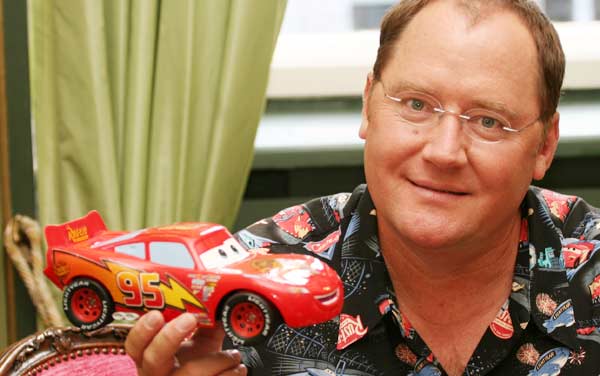
 John Lasseter and the Pixar Phenomenon
Let me start with a confession: I cried during Toy Story 3 – twice! Call me a softy (or an idiot), but those little cartoon characters and their situation just pulled hard at the old tear ducts. Just to put things into perspective, the last movie to affect me that way was The Champ back when I was ten years old.
Pixar Corporation, the organization of geniuses behind not only the blockbuster Toy Story series, but a string of record breakers including Finding Nemo, Cars, A Bug's Life, Monsters Inc., The Incredibles, Ratatouille, and Up, is a bit of a favorite subject for me. I love art, creativity, design, and movies. I also love business. Pixar is a beautiful combination of the two. And just like any success story, Pixar's is infinitely interesting.
The Birth of a Dream
The life of one man in particular at Pixar, John Lasseter, is inspirational and instructive (as are others, to be sure). As a child, Lasseter loved cartoons. In high school he discovered a book on animation that changed his life by giving him a dream. He decided to pursue the making of cartoons as a career. More specifically, he wanted to become an animator at Disney.
Taking Initiative
Still only a high school student, Lasseter sent drawings to Disney Studios. They recognized his talent (and pluck) and invited him in for a tour. During that visit the professionals at Disney encouraged Lasseter to pursue a formal education in art.
Getting Training
Lasseter chose to attend CalArts, the art school founded by Walt Disney years before. In a scenario of perfect timing, Lasseter came of age to attend the institute just as it was launching a program in animation. Lasseter was its second enrollee.
Gaining Experience and Finding Mentors
Lasseter became the summer assistant to the Donald Duck cartoon director Jack Hannah. According to authors Capodagli and Jackson, it was during this time that "John became a master of creative teaming, sharing story and project ideas, and playing critical evaluator with fellow students – a gift that would ultimately help him become a professional animator and inspirational leader." Lasseter also gained experience working directly with three of the original nine Disney animators.
Running into Roadblocks
Eventually Lasseter hired on full-time as a Disney animator. To all outward appearances his dream had come true. However, Lasseter was not only a talented artist, but an extremely creative visionary. He could clearly see that computers would play an increasing role in animation but ran up against strong reluctance on the part of Disney corporate staff. Most of the experienced animators saw computers as a threat that would render their jobs obsolete.
A Closed Door
Incredibly, after preparing only the artwork for a short computer animated film to demonstrate the possibilities of the technology, Disney let Lasseter go, telling him, "Your project is now complete, so your employment with the Disney Studios is now terminated."
Turning Obstacles Into Opportunity
Disney may have told him that his project was now complete, but his career was far from it. A small, crack team of computer specialists at Lucas-film Computer Division (founded by George Lucas of Star Wars fame) knew of Lasseter and hired him to help with their computer animation software development. It was there that Lasseter would team up with Ed Catmull and Alvy Ray Smith, as well as a small band of others, who shared his dream of computer animation.
Progress and Development
Some time thereafter co-founder of Apple Computer Steve Jobs, a bit down on his luck and struggling to make his new company NExt Computer succeed, was able to acquire the Lucas-film Computer Division in a fire sale (actually a divorce sale). The little group renamed itself Pixar and began producing small computer-animated films to demonstrate the value of the software they had produced. Eventually they realized (or at least got Jobs to realize) their real product was the films they could produce, and not the software.
Dancing with Destiny
This is how Toy Story, the world's first fully computer-generated feature film, was born. Its creativity, artistic beauty, depth of characters, and worldwide inter-generational appeal won it critical, as well as financial, acclaim. Its development was not without bumps and struggles, especially with the partnership with Disney to produce and market the film, but the collaboration, leadership, and creative genius of John Lasseter had finally broken through to the rest of the outside world. Toy Story grossed $29 million in its first weekend (nearly matching the entire production cost of the movie) and by early 2009 had grossed $361 million worldwide.
The Power of Productive Partnership
Lasseter certainly didn't make his dreams come true in a vacuum. For that he needed to find the right people; those who shared his vision, would collaborate productively, and had the environment and the resources to back the pursuit of his dream. George Lucas, Alvy Ray Smith, Steve Jobs, and many others all played key rolls, as well as hundreds of writers, artists, directors, and programmers, but no one perhaps was as important as Ed Catmull. As Capodagli and Jackson summarized, "For twenty-five years, Catmull and Lasseter have worked side by side in a collegiate manner that is reminiscent of the partnership between Walt Disney and his brother Roy."
Leaving a Legacy
In a telling comment by Ed Catmull, he said, "When we finished Toy Story . . . my new goal became, with John [Lasseter], to build a studio that had the depth, robustness, and the will to keep searching for the hard truths that preserve the confluence of forces necessary to create magic . . . We've had the good fortune to expand that goal to include the revival of Disney Animation Studios . . . . But the ultimate test of whether John and I have achieved our goals is if Pixar and Disney are still producing animated films that touch the world culture in a positive way long after we are gone."
And What About Us?
From an early age John Lasseter harnessed his talents and sent them marching in the direction of his dreams. No success story follows a straight up trajectory, however, and Lasseter's is no exception. He had a long term vision of where his industry could go and stayed true to that vision through many shifts in the pathway – even when being fired from his "dream job." Lasseter has that unique ability to fall in love with the destination while remaining flexible regarding the route to its attainment.
Another big component of his continued success is his ability to work with others in productive, collaborative ways. This is not as common as we might wish in our world of dogmatic, false, and uninspiring "leaders."
Perhaps the biggest thing we can take from Lasseter's example is the comprehensive package our abilities, once diligently developed and continually applied, present to the desires of our hearts. When we align our abilities in the direction of our dreams, and then apply a little pluck, a lot of perseverance, and a ton of partnership, we too just might end up doing something great – such as creating movies that make grown men cry!


 Welcome to Chris Brady's Blog
Leave a reply to Dennis Swift Cancel reply