Welcome to
Chris Brady’s
Blog

“The only way to be happy, is to give happy.”

  • DSC01000It's not what happens to you, it's what you happen to do with what happens to you.

    I am impressed by many people, especially those who have a great attitude, seem focused on others, and make me feel good by just being around them. Often, however, I have been surprised to eventually find out that the person behaving in this admirable way has had anything but an easy life. In one case, the couple had lost a teenage child, in another, one had battled cancer, in yet another, family financial challenges were nearly taking them under. Yet, in spending time with these people, none of these burdens were obvious, no complaints were forthcoming, and negativity seemed to have no place in their vocabulary.

    Contrast this with people who are not happy unless they are unhappy; those who appear hard-wired to focus on the downside of everything, complaining about this slight or that perceived unfair situation as though they were the world's #1 victim.

    What is the difference between the two groups?

    In my opinion, the difference stems from a person's perspective on events, and how he or she responds to the challenges of life. Bad times and hardships skip no one. Sickness, death, relational struggles, and other frictions of life do not single out particular victims. We are all swimming in the same soup. Realizing this is a major step toward maturity and will go a long way to improving your relationships and attractiveness.

    Why, in a culture and time in which people are so blessed, are so many full of complaints?

    Peculiarly, negative people don't think they are negative. If they admit to any impertinence at all, they will usually say they are merely being "realistic." This is a non sequitur, because their perspective on reality is warped by their ungratefulness, and they are no more infallible than anyone else when it comes to defining true reality.

    How can you be more positive and more fun to be around? Here are ten things to consider:

    1. Realize that it's not what happens to you, but how you respond that counts. We all have it tough in some way(s), so stop comparing yourself to others and begin tracking your own personal growth, instead. 

    2. Never stop counting your blessings. The truth is, your every breath is a gift.

    3. Don't take yourself too seriously. It's refreshing to come across someone who is truly humble.

    4. Look for good in people and situations. You will be delighted by the surprising treasures you'll discover.

    5. Become "other" focused, and think about how you can serve rather than receive. Sacrifice is a surprising paradox that serves the server as much as the served.

    6. Consider your mortality, and operate with an eternal perspective. This involves prayer and worship, and being more concerned with whose you are than who you are.

    7. Treat being flexible as an open invitation to unplanned adventure. It's the unexpected that often thrills us the most. Be open to it.

    8. Find your purpose in life and pour your efforts into it. Work barely seems like work when you're doing what you were built to do. Do what you were meant to and do it with a purpose.

    9. Forgive quickly, and forget even faster. Carrying grudges only builds muscles of bitterness. Lighten up by dropping that load.

    10. Be present wherever you are. Multi-tasking is a thief, robbing us of joys and stealing our ability to focus and create clear memories. If you're with your kids, be with your kids. If you're at work, be at work. Stop splitting yourself into little worthless pieces.

    And there is probably an eleventh: Don't read too many blog articles like this one where the author preaches at you as if he's got it all together himself. Nobody is that good!

    🙂

    Sincerely,

    Chris Brady

  • IMG_6613It's your life.

    This statement is profound on many levels, such as: 

    1. you alone will be judged for how you live it

    2. you alone are responsible for the results you obtain

    3. you alone will be blamed for any failures.

    What your life is and becomes, what you contribute, who you spend time with, and how you choose to employ the days of your life are ultimately your responsibility.

    Let's consider the topic of success.  One of the greatest failures a person can make is trying to succeed according to someone else's definition of success. Life is too short, too personal, and too important to waste climbing someone else's ladder.

    This is why I teach people to "customize" their success; to determine exactly what it is they want to do and accomplish with the days they've been given. (Of course, as believers we know that this should be done through prayer and a diligent seeking to be obedient to the call of God on our lives. Still, it appears there are huge swaths of territory open for us to decide upon our particular paths within the boundaries of God's leading.)

    So what do you really, really want your life to be like?

    What dreams have you nurtured deep in your heart for too long now?

    What do you truly want to accomplish?

    Who do you want to be as a person?

    What do you want to be known for?

    If people had to sum up your entire life with just one sentence, what would you want that sentence to be?

    When you look back on your life, what will you most regret not doing if you don't get started on it soon? 

    Don't waste another moment. Go after your own custom version of success with everything you've got. After all, only you can do what only you can do.

    Sincerely,

    Chris Brady

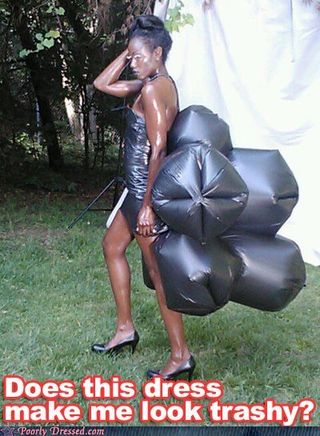
  • Fashion-fail-i-refuse-to-answer-that-questionOne of the coolest pieces of sales training I ever received was, "Answer a question with a question." What a slick idea, I thought. Then I tried it. Wow, talk about difficult.

    When Jesus entered the temple toward the end of his earthly ministry, He was confronted by the religious gate keepers of His day with a question basically asking, "Who gave you this authority to do these things?" to which He answered, in effect, "I'll tell you if you can first answer my question." And then he stumped them with a question that must have brought an uproar of hilarity from the crowd (Matthew 21:23-27)

    Oh, if we could only be like that. If we could only have an intelligent question at the ready to throw our adversaries into a tizzy and precisely expose their machinations. But then, we're not the Son of God.

    So, what can we do? Obviously this approach can be most effective. My suggestion is to come up with some in advance, memorize them, and have them at the ready for any future conflict or conundrum that comes your way. Here are some examples:

    If asked:

    "Does my butt look big in this dress?" you could ask, "Does my face look dumb on this head?" 

    If asked:

    "Did you bring your homework?" you could ask, "Was someone else supposed to bring it?"

    If asked:

    "Do you like your mother-in-law?" you could ask, "Don't you?"

    If asked:

    "Are you putting on weight?" you could ask, "Are you checking out my body?" 

    If asked:

    "How much do you make?" you could ask, "How much do you need?"

    If asked:

    "Don't you think the government should help people?" you could ask, "Do you think they can?"

    If asked:

    "Are you losing your hair?" you could ask, "Are you losing your manners?"

    If asked:

    "Are you having twins?" you could ask, "Are you having second thoughts about asking that?"

    If asked:

    "Don't you think you owe me an apology?" you could ask, "Do you think I'd keep score like that in our relationship?"

    If asked:

    "Are you hearing a word I'm saying?" you could ask, "Aren't you saying many words?"

    If asked:

    "Haven't you learned anything from all of this?" you could ask, "Was this supposed to be about learning?"

    If asked:

    "Is that the best you can do?" you could ask, "If it is, is it good enough?"

    If asked:

    "How much do you weigh?" you could ask, "How often do you get out among people?"

    If asked:

    "Do you have some of your own you could add?" You could answer, "Yes" and place them in the comment section for us all to enjoy.

    Sincerely,

    Chris Brady


  • NoiseIf you haven't noticed, we're in the Information Age. What that really means is there is too much of every kind of information: emails, texts, phone messages, instant messages, links, news, announcements, requests, solicitations, spam, social networking updates, and invites to just about anything. What this also means is that if you are joining into the conversation in any way you'd better make your point quickly or risk being ignored, deleted, or laughed at.

    I read the other day that YouTube videos have just seven seconds to attract someone's interest before being turned off, and those first seven seconds only buy ten more seconds of attention, and so on.

    So, assuming you haven't already tuned out of this blog posting (which, let's face it, is highly possible, since I'm taking my sweet old time getting to my point), here are some ideas for making your contribution to the noise less noisy, more noticeable, and perhaps more likely to gain traction or action, whichever you're after.

    1. Keep it short. More than ever, being concise is critical. Don't ramble on with sentences that go on forever saying not much of anything and just using up a bunch of words and taking the reader a long time to get through without really adding any value to their lives and wasting their precious time which you apparently had too much of in the first place because how in the world could you take so much time and so long to say a simple thing that we can get to the point of way before you are finished making it, anyhow? You're killing us!

    2. Be interesting. Enough with the dull corporate voice crap, already. Leave that to MBA professors and those who like to hang out at the section of the library marked "boring." Oh, and another important part of this: if you're going to say something, be sure you have something to say!

    3. Be authentic. The most effective tool for getting noticed is your own, authentic personality. Be who you are. Nobody else can, and that's probably your biggest advantage.

    4. Be creative. As Maximus said in Gladiator, "I'll win the crowd. I'll give them something they've never seen before!"

    5. Be clear. There is nothing worse than a message or communication that doesn't make any sense. (Well, actually there is, such as crotch-sniffing dogs, Pittsburgh Steeler fans waving their Terrible Towels, and big government, but the exageration of that proverbial phrase got your attention, didn't it?)

    6. Use a call to action. What do you want to happen as a result of what you are saying? Make it clear and obvious. "Tell us what you want, what you really really want."

    7. Have fun. It's refreshing to deal with people who are comfortable enough in their own skins to allow fun to seep into everything they do. 

    Okay, that's seven, the Bible's perfect number, and good enough for this topic, too.

    Now go make some noise!

    Sincerely,

    Chris Brady


  • Success-failureIt doesn't always go the way you want, and it doesn't always go the way it should, but it does always go. Success isn't easy, easily explained, or entirely predictable. Anyone who tries to paint too clear of a picture of their success is being a little misleading, albeit perhaps unknowingly. 

    Here's the thing: it's true that success is hard, but failure is hard, too. The choice is where you choose to have your "hard." Do you want the "hard" of self-discipline or the "hard" of the consequences of failure?

    And here's another thing: success usually goes to the crazy.

    That's right, the crazy. Those who are whacked enough to believe they can achieve something, stubborn enough to stick with it, and dogged enough not to cave in to excuses and the lure of lesser things. Remember, it's people who actually believe they can change the world who actually do!

    So for the crazies out there, here's an honest look at the jagged journey to your dreams. It's not littered with rose pedals and candy, that's for sure, but it is one of the most rewarding journeys upon which you could ever embark. 

    Here are the Top 10 Realities of Success:

    10. You will work your butt off – there is no definition of true success that doesn't also include the concept of earning it. Expect it. 

    9. You will feel like a dork – you cannot accomplish uncommon things without doing uncommon things. Automatically, that sets you apart from the safety of the crowd, and you will feel that distance. 

    8. You will run into knuckleheads – this one was the biggest shocker to me. Everyone isn't nice, kind, or encouraging. Prepare for a few knives in the back. The uniform of leadership is thick skin.

    7. You will doubt yourself – if you don't feel multiple times along the way like you've lost your mind, you're probably not on the road to making it.

    6. You will have reversals – failures aren't fatal if you don't let them be final. Get up and get going again. More adventures await the resilient.

    5. Someone will preach to you – folks will come from everywhere to thrust their opinions and concerns upon you. Smile, nod, and go about your business. It's your life. Remember, no guts, no story. 

    4. You will have to make a million unforseen adjustments – don't get too concerned about the path, it will turn and twist more than you can imagine starting out. That's normal. Bob and weave as necessary, but keep your eyes fixed upon the prize.

    3. You will compare yourself to others – it will be a natural instinct to look around and assume others have it easier, better, or whatever. They don't. God knows what he's doing even if you don't. Look to Him, not to them.

    2. You will get frustrated by a lack of progress – frustration to an achiever is like that pesky neighborhood kid you can't move away from. You don't have to like it, but you do have to learn to deal with it on a regular basis.

    1. "They" will call you lucky – I promise. No matter what you achieve, someone will explain it away by labeling it luck. At least I told you this up front. And for that, you're lucky.

    The good news, however, is that for each one of these truths about success, the reverse is also true. 

    10. BUT it won't feel like work after a while because you'll love it.

    9. BUT if you stick with it you'll eventually feel like a champion.

    8. BUT you will meet some of the dearest people, too.

    7. BUT you will grow to respect yourself.

    6. BUT you will also have advances.

    5. BUT someone will learn from you.

    4. BUT you will accomplish a main vision (or two or three).

    3. BUT others will compare themselves to you.

    2. BUT you will become encouraged by progress.

    1. You'll know you earned it (mostly).

     Now get moving, your destiny awaits!

    Sincerely,

    Chris Brady


  • Dialing-for-danger-Do-cell-phones-increase-cancer-riskHave you ever wondered if cell phones pose health risks?

    Do you know that researchers say children absorb twice the amount of radiation as do adults?

    With the recent theme of this blog of refusing to take things at face value and learning to see our world around us with wide open eyes and discerning thoughts, the article below from Huffington Post caught my eye. It's a quick, thought-provoking read about a technology that has crept largely unexamined into our daily living. And with the trend of parents buying their children cellular phones at earlier and earlier ages, it might be worth considering.

    Here's a portion of the article:

    —————————————

    Cell Phone Study 'Misleading': Children May Still be At Increased Cancer Risk, Experts Say

    "Cell Phones Don’t Increase Cancer Risk in Kids." From USA Today to CBS News, variations of this hopeful-sounding headline now abound after yesterday's release of a new study in the Journal of the National Cancer Institute.

    But experts have some serious concerns regarding the methods and conclusions of the first study evaluating the connection between cell phone radiation and brain cancer in children and teens. Not only was the study flawed, they note, but it was also financially supported by the cell phone industry.

    "To have moms assume that kids using cell phones are safe is the wrong conclusion to make," Devra Davis, president and founder of the consumer advocacy group Environmental Health Trust, told The Huffington Post.

    After looking at brain tumors and cell phone use among about 1,000 boys and girls between the ages of 7 and 19, European researchers determined that kids who averaged one or more weekly cell phone calls over a period of at least six months were not at an increased risk of developing a brain tumor compared to peers that were non-users. Overall, less than 15 percent of the children and teens had spent more than 4 years as a cell phone user.

    "It’s ridiculous to think that because you didn’t find a significant increase in brain cancer among kids that now cell phones are safe," added Davis. She likened the study to looking at 16-year-olds who smoked as children to see if they had lung cancer. “You’d find nothing,” she said.

    Dr. Keith Black, a brain tumor expert at Cedars-Sinai in Los Angeles, agreed. "It usually takes decades of exposure for a person to be at an increased cancer risk," he told The Huffington Post, adding that the extent of the exposure observed in the study was extremely small.

    "It's interesting that most of the studies that have shown a correlation between brain cancer and cell phone use have tended to look at long-term exposure — at least 10 years — and at higher doses such as using a cell phone for 60 minutes or more each day," said Dr. Black. "Studies that have tended to not find a link looked at short-term use — maybe an hour or so a month."

    Unlike ionizing radiation such as X-rays or gamma rays, which are strong enough to damage the DNA in cells, far less is known about the cancer-causing potential of radiofrequency waves emitted by cell phones. What's more, most of the studies thus far have only looked at adults. Adults, however, absorb about half as much radiation while using one of the devices compared to children.

    The latest addition to the conflicting assortment of studies was partially supported by money from mobile communication companies. However, senior author Martin Roosli of the Swiss Tropical and Public Health Institute in Basel, Switzerland, told HuffPost that the industry "did not have any say" in how the study was conducted. The author of an accompanying editorial that affirmed the finding is employed at the International Epidemiology Institute, which has reportedly received funding from the telecommunications industry.

    Published yesterday, the study also comes on the heels of Tuesday's unanimous ruling in San Francisco that will soon require all local cellular retailers to post radiation exposure warnings on every phone and hand every customer education material. The city's mayor is expected to sign the ruling into law within the next week, with more cities likely to follow San Francisco's lead, according to Ellen Marks, director of government and public affairs for Environmental Health Trust. Berkeley, Philadelphia and New York City are among those looking to impose similar legislation.

    In an interview with The Huffington Post, Marks suggested that cities had been waiting to see how San Francisco fared. Their legislation had been previously tabled after a lawsuit from the cell phone industry, which claimed that the measure violated their first amendment rights.

    Such a warning is not unprecedented. In fact, the Federal Communications Commission already requires a safe distance warning with every cell phone. (For example, a Blackberry is not to be held closer than an inch from the body.)

    (For the rest of the article, click here).

    (Another interesting article here.)

    ———————————————

    What do you think?

    Are cell phones the new cigarettes? 

    SmokeDo you think we'll be reading about their medically confirmed damaging affects to our health someday, seeing huge lawsuits on television about corporate coverups and burried medical studies, or is it all a bunch of hype?

    Were you shocked to read that part about keeping Blackberrys at least an inch away from the body?

    How many hours a day do you hold a device up to your head?

    Thanks for reading (and, if you're reading this on your cell phone, you might want to hold it at a safe distance from your face!)

    Sincerely,

    Chris Brady

  • FishI recently heard someone say, "It's not what you don't know that's hurting you – it's what you think you know that isn't so that's hurting you."

    In coaching and counseling individuals through all kinds of situations and circumstances over many years, one thing I've noticed that comes up again and again is self-deception. Blindness to or denial of a limiting or damaging belief can have all sorts of negative repercussions in a person's life.

    More simply stated: wrong information believed and acted upon produces poor-to-terrible results.

    If this is true for individuals, it begs considering whether it's also true for cultures. Listening to the things people say and put forth in conversation reveals a lot about how they think and what they believe. Hearing the same things said enough times by enough people leads one to conclude that much of our culture has bought into particular beliefs as though they are obviously and comprehensively true.

    So if incorrect beliefs lead to damaging behavior for individuals, it follows that they are just as destructive to cultures. As we hear the ever-increasing warning siren for the collapse of our American culture, we might do well to analyze anew commonly held "truths" that seem to be swallowed hook, line, and sinker by the greater majority of people – and – swallowed as such with nary a voice to the contrary. In other words, what "everybody" knows and accepts to be true might just not be quite as true as "everybody" seems to think. 

    What follows below is a brief list of several commonly held "truths" that, contrary to popular and unexamined opinion, are maybe not always true, and in some cases, not true at all.

    1. Going to college is a good thing, and the automatic next step for a kid graduating from high school.  Not necessarily. College isn't and shouldn't be for everyone. Many people have, do, and will continue to thrive in life without the official status of a college degree of any kind. Furthermore, college can be damaging in many ways (financially, for starters) and is, by no means, a universal "good."  

    2. Waiting until after completing college is the best time to get married. Again, not necessarily. I know countless couples who have wonderful marriages that began in or after high school, or even during college. While this may not be ideal for many depending upon a whole host of considerations, there are legitimate reasons an earlier start on marriage and parenthood may be a positive.

    3. Waiting until you can afford kids is the intelligent way to plan a family. I should maybe just begin each of these explanations with a standard, "Not necessarily." Again, "affording" to have children is nearly a nonsensical concept. While children are unarguably one the most costly endeavors parents will ever experience, some things are so important as to be placed above financial considerations. 

    4. Government exists to solve problems for the people. There is no "not necessarily" to this one, but simply a "not." Our nation has absorbed a creeping assumption that government is it's nanny, that it not only should solve our issues, but that it actually can. Even a cursory reading of the founding documents reveal that the list of areas in which government was intended to operate was small, intentionally limited, and deemed almost a necessary evil. An abundance of historical examples exist in plain site to confirm the founders' beliefs that government was a monster needing to be chained within its few productive boundaries. We've flipped the coin all the way over on this one. 

    5. If the technology exists, we should automatically adopt it into our lives. I've been blasting away on this topic lately and thereby likely testing the patience of my three readers (whose indulgence I will continue to appreciate). Just because technology can do something doesn't mean that it necessarily should. We should be more discerning and attempt to understand both the benefits and drawbacks of new devices and technologies before wholesale incorporation of them into our lives and culture.

    6. People with credentials are experts. It's time for another "not necessarily." The list of contrary examples is both enormous and often humorous. (The possible exception to this one is bloggers, who, well, let's face it, might just be infallible.)

    7. Democracy is good. Somewhere along the way we have almost entirely lost the realization that our government was intended to be a "republic" and not a "democracy." The two types of government are radically different, and the founders considered democracy an evil as ugly as a lynch mob with sticks and clubs. However, this doesn't prevent people from saying that the United States is a democracy, or that the concept of a democracy is somehow good (e.g. former President George W. Bush boasting that the United States wished to "export democracy around the world." Sheesh.)

    8. Politically correct is the correct way to be. In many ways, refuting this one isn't even controversial anymore. "Politically correct" has gotten so wacky that most people understand that if it's "politically correct," there's a good chance it's not Biblically correct, morally correct, or correct. It's a sliding scale moved by whom?

    9. The government should be the only one to issue money to the citizens. Leaving the government as the only issuer and controller of the money supply is like assigning the fox to the hen house. Privatized money with commercial interests competing for customers would work to keep stranglehold power out of the hands of government. As Patrick Henry said, "The junction of the sword and the purse . . . are the ingredients of despotism." But we've been conditioned to not even realize that government doesn't have to be the one in charge of issuing or controlling money in any way.  

    10. You have your truth and I have mine. This is logically impossible. What most people mean when they consider this is "preferences," such as "I like the New England Patriots the best." It's perfectly legit for me to hold that "preference" or opinion, while you instead like the New York Giants the best. These are preferences, and my preference does nothing to negate yours, and visa versa. This is all fine. However, if we move the conversation into a discussion of "truths," such as which team is the best, then there are concrete measurements for such things which are absolute. The NY Giants recently defeated the New England Patriots in the Superbowl, thereby proving to the world that they are definably the best (much to my chagrin, I might add). There is only one "best," and in this example it is measurable and therefore absolute. In the same way, what is true in the world is absolute, and immovable and unyielding to anyone's opinion.   

    11. You can afford something if you can afford the payments. This one was likely propagated by those who stand to gain from people requiring credit, however, the jig is up on this one too. People are awakening more and more to the enslaving dangers of credit for consumption.

    12. You need two incomes to make it these days. It might feel like it, but this one isn't strictly true either. It's a matter of priorities. I know of couples who have cut back in ways many would find extreme just to make it on one income, thereby proving that it all comes down to the definition of "make it."  If "make it" means a consumptive, materialistic, "keeping up with the Jones's" lifestyle, then that's one thing. But if it means doing with less material trappings for the sake of other priorities, it can and is being done. (Nobody is saying it's easy, though.)  

    13. Electing the right political party will make all the difference. During election season especially, we're sold this one as an absolute truth. "If only the blue team wins we'll be saved!" "No! If only the red team wins we'll be saved!" Hmmm. I wonder if there's a puppet master behind the scenes working hard to get us distracted by the show out front? Because we seem to get more of the same (at different rates of speed, perhaps) no matter which color gets elected.

    14. The news reports the facts. If you've ever had occasion to be on the "inside" of a story and witness how things get distorted (not merely from bias, but even with honest mistakes, details lost in the translation, etc.) you know firsthand that you can't believe everything you read or hear. This one is not new. But yet, how many people leap to hysterics because they "heard it on (fill in the blank) that so-and-so said or did such-and-such?"

    15. Television and movies are harmless entertainment. This may have been true at one time (maybe, a long long time ago when people moved in jerky motions and didn't speak on screen), but today's entertainment is an ongoing social indoctrination program. It shocks me how undiscerning many people can be when it comes to what they put in front of their (and, don't get me started, their children's) eyes and ears. Everything you watch, listen to, and take in has an effect.

    I know what I am saying here is controversial. I could probably argue most of the above statements from both sides, and there are certainly exceptions and intelligent counterpoints to many of them. But the key is this: when a culture blindly adopts so many half, partial, or non-truths without any critical thinking or contrarian consideration, that culture is sick indeed. In fact, so infected, if left unchecked by independent thought, such a culture cannot long endure.

    Sadly, this list is only a partial one. Can you think of other "truths" we swallow without hardly a contrary thought?

    Why do you think critical, independent thinking is apparently so rare in the cases above? Or isn't it?

    Sincerely,

    Chris Brady



  • Vagobond-logoVagobond is a cool online travel magazine we deemed worthy to include in the exclusive "Travel Recommendations" list on the A Month of Italy website. A special thank you to Vago Domitio, the creative force behind Vagobond, for the great review of the book. Here are some excerpts: 

    ——————————————-

    The thing that most captured me as I read was the sense of how it made me feel good about the life I lead and the choices I’ve made. Chris is a hard working guy – like me. I spend a huge amount of time writing, editing, working on projects, and building a future for my wife, our daughter, and me. The thing is though, I always make sure to take the time to enjoy life too. Chris pointed out at one point that the average working American father spends an average of 37 seconds a day with their kids!!!! What?

    And yet, there is much more to this book than the adventures and misadventures of an American family in Italy – instead, this book is about finding the balance in our lives between work and play – it is about the importance of taking the time to really live – and it is filled with powerful messages that every stressed out CEO or entrepreneur needs to read.  The reason? Because life is sometimes meant to be fun and sometimes it is meant to be downright silly.

    Ultimately, this book is about Italy and more. It’s about Tuscany, food, culture, and the misadventures of travel – but, beneath the surface, this book is about the choices we make in our lives. It is about how to be more effective in our work, more loving in our families, and how to enjoy the art of our lives – both on vacation and at home.

    As to the rest – it’s an enjoyable story about traveling in Italy and it offers some funny stories, beautiful descriptions, and some inspiring moments. It’s a very good book and I recommend that you read it.

    ———————————————

    For the complete review, click here.

    Thanks, Vagobond, and thanks to all who've read and recommended the book! May you strike out on your own adventures soon!

    Sincerely,

    Chris Brady

  • Too_Much_MailIn A Month of Italy: Rediscovering the Art of Vacation, I wrote about the accidental joy that resulted from poor Internet and cell phone connections. "Going dark" electronically was one of the biggest blessings of our "radical sabbatical." 

    This topic seems to be gaining more and more momentum, as people everywhere are waking up to the danger of non-stop connection. Just because technology can do something doesn't necessarily mean it should – at least – not all the time.

    In strategy + business, a recent article by professor Henry Mintzberg and Dean Peter Todd considers the concept from the perspective of effective management. One of the most poignant excerpts from the article is:

    Indeed, managers who are in touch only through their keyboard are out of touch with the vast world beyond it. They risk substituting breadth for depth. Recent research shows that we may have more connections today, but fewer relationships.

    Here is the article, with some questions for you below:

    ————————————————

    The Offline Executive

    A manager’s effectiveness depends not only on using e-mail and other electronic communication, but also on learning to shut it down.

    by Henry Mintzberg and Peter Todd

    Do you ever disconnect, even for just a few minutes? Think about the last time you used your “off button.” Was it at home over the weekend? On vacation? Or were you at the office? BlackBerrys, iPhones, Androids, iPads, and all their digital relatives are transforming our lives — for better and for worse. They are also changing the nature of how and when (and where) work gets done.

    This new reality has profound implications for management, although studies on the topic have been surprisingly limited. We know that managers at all levels spend at least half their time collecting, receiving, and disseminating information. New technologies have extended the speed and breadth of this communication across vast distances. Yet studies going back a half century and more (long before e-mail) have made it clear that managing is characterized by high levels of variety, brevity, fragmentation, and, perhaps most significantly, interruption. Often to managers’ detriment, their attention is frequently diverted from one activity to another in their attempts to reconcile conflicting demands. The first of these studies, carried out by Sune Carlson and involving managing directors in Sweden in the late 1940s ― when the first computer was developed ― found that managers were inundated with reports. If they only knew what was to come.

    Mobile computing seems to help managers cope with these distractions effectively. Smartphones, for instance, allow them to attend to the variety of demands on their time and leverage brief moments between interruptions to complete minor tasks. But new technologies can also have unintended negative and harassing effects; managers need to understand the dangers of an overreliance on electronic communication.

    (Click here for the rest of the article).

    ————————————————

    Thank you to strategy + business for contacting me with this article.

    Readers:

    Have you noticed an increase in electronic interruption in your life over the past ten years or so?

    Do you notice an erosion of your creativity and clarity when inundated with electronic connections?

    How do you control the "urgent" vs. the "important?"

    Thanks for reading!

    Sincerely,

    Chris Brady

  • Congratulations to the winner of the recent Caption Contest 2012.6! Here is the winning entry:

    Mark Mester said…

    Urine trouble now!

    June 13, 2012 at 06:03 PM

    Mark: Simply comment on this blog with your mailing address (which will remain confidential) and you'll receive a free, autographed copy of my latest book, A Month of Italy: Rediscovering the Art of Vacation. Congratulations!

    And now, without further delay, let's get to the new caption contest. This photo was submitted by a friend who caught this interesting action on her smart phone camera. Good luck!

    Photo

    Sincerely,

    Chris Brady