Welcome to
Chris Brady’s
Blog

“The only way to be happy, is to give happy.”

  • Political-dog Come on, everyone! It's time to push our government for
    Universal Veterinary Care! After all, we have a RIGHT to have a healthy pet!


     (And if you don't
    agree, you are a big, mean, prejudiced, unfeeling, uncaring, right-wing,
    radical, Nazi pig).


    So contact a bleeding heart near you and start fighting for
    your rights.


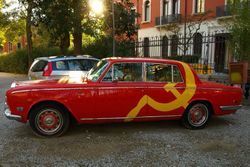
  • Communist-car Click on the link below for a very well written, easy to understand article explaining where we are economically in the United States right now. You will notice immediately that our government is not currently, nor has it been for over twenty years, ANYWHERE NEAR these principles.

    http://dailyreckoning.com/the-magic-formula/

    The author, Nathan Lewis, calls the combination of:

    1. lower taxes

    2. stable money

    the "Magic Formula." For proof of his claim, all one has to do is look to history. 

    But then again, this combination leads to freedom and prosperity, two things people in the United States don't seem to appreciate, understand, or even desire anymore. I guess years of indoctrination against what made America great are finally paying off.

    Freedom is okay as long as YOU don't get to exercise it. After all, bureaucrats in Washington know better than you how you should live, and there is no shortage of special interest groups and whacko extremists who want to pass laws limiting your behavior.

    Prosperity is only "allowed" if the government says you can have it. And the answer is probably "no" unless you receive it from them directly in the form of a handout, subsidy, bailout, welfare check, tax credit, or "redistributed benefit." 

    The "Progressive" movement was started in the late 1800's and is still lovingly adhered to by most of today's politicians (in both "parties," by the way). What does it mean? Let's get a quote directly from one of its early leaders, good ol' Teddy Roosevelt. Here's what he said: 

    "We grudge no man a fortune in civil life if it is honorably obtained and well used. It is not even enough that it should have been gained without doing damage to the community. We should permit it to be gained only so long as the gaining represents benefit to the community." 

    Hmmm, only someone who didn't earn his money himself could talk like this. But that's not all, even though this would be enough to make Karl Marx blush. He went on to say:

    "Every man holds his property subject to the general right of the community to regulate its use to whatever degree the public welfare may require it." 

    Aah, now we're to the "Greater Good" Communistic nonsense. 

    One has to wonder: did this guy ever, EVER read the Constitution and the Bill of Rights? 

    Have any of today's Progressives? 

    The founders established the Constitution and the Bill of Rights to guarantee the American people protection from exactly this kind of government overreach and control. But we cannot be protected by something we have forgotten exists, or if we become complicit in its destruction. We have got to stop falling for the Progressive bracket creep of our government, which takes an inch of freedom, then pushes for a yard. 

    There is no "progress" in the Progressive movement, unless you are part of the governing elite growing fat on its bulging power over the people. For the most part, the Progressive movement means:

    Progressively higher taxes

    Progressively more laws

    Progressively more government involvement in private industry (can you say banks, automobiles, healthcare?)

    Progressively inflated and therefore devalued money

    Progressively less freedom

    Progressively less prosperity

  • Debt (1) "In the end they will lay their freedom at our feet, and say to us, 'Make us your slaves, but feed us.'" Grand Inquisitor, Brothers Karamazov

  •  

    What exactly is a Rascal, you ask? 

    For a complete answer, you'll have to wait for the book to come out! But for now, just consider it an acronym standing for:

    Reasonable

    Americans 

    Seeking

    Constitutional

    Answers and a 

    Limited 

    State

    With the pending Health Care Bill vote on Capital Hill, possibly tomorrow, I urge all Americans to get involved in this "Superbowl of Freedom," as it has been called. To determine who your congressperson is, and how to call his or her local and Washington offices, click on the following link and type in your zip code. Get involved. Let your voice be heard. Please do not remain silent at this moment.   

     https://writerep.house.gov/writerep/welcome.shtml

  • The ramrod of government-controlled healthcare is beating hard upon the doors of free enterprise. For some reason, a sufficient number of people have somehow become convinced that the US government can actually run something, anything, efficiently, for this crazy idea of nationalized health care to be gaining traction. But the facts of what such a system would do to our current level of medical care, ease of access, levels of research and advancement, innovation, and even capacity, are scary. 

    Recently, newsman John Stossel of ABC did a compelling analysis of what nationalized health care would mean. He has since been fired. Many speculate that his release was precipitated by this bit of work he did to dare and suggest that the emperor has no clothes. Watch the clip for yourself.

  • Monster in Chains Jacob Hornberger is founder and president of The Future of Freedom Foundation.  In a recent article entitled Gold and Freedom, Hornberger does an excellent job of giving a history of monetary policy in the United States.  He explains the dangers of inflationary power in the hands of the government or its agents, and casts his views against a historical backdrop.  The article will take about ten or fifteen minutes to read, but I would recommend printing it off, going off by yourself to someplace quiet, and giving it the time it deserves.

    One of the best points Hornberger makes in the article is the following:

    The first thing to keep in mind about the Constitution was its dual purpose: to bring into existence the federal government while, at the same time, protecting the nation from it.  While the Framers understood the need for government, they also understood that that same government constituted the greatest danger to their freedom and well-being.

    The creation of the United States was unique, because it produced chains of restraint at the same time it brought its monster of government to life. Today, the danger is that the monster has outgrown his chains, and instead of fearing the monster, many of its citizens now worship it.

    (Click on photo to enlarge)

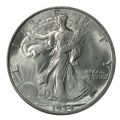
  • Walking-Liberty-Half-Dollars-Obverse Walking-Liberty-Half-Dollars-Reverse Hopefully readers of this blog (all 3 of you!) have noticed that I never bash individual policy-makers or politicians. Rather, I attempt to focus on the principles involved.  This has been intentional, because our problems are bigger than personalities, and our malaise is beyond the reach of political messiahs (whether of the Bush or Obama variety). 

    I believe many of the problems with the United States today stem from the fact that she has forgotten her roots. It was once a country in love with the idea of liberty. Individuals and freedom were the centerpiece of an experiment in government unlike anything before. The principles of liberty and freedom were what was celebrated, not the STATE itself. But today, we have it backwards. We celebrate the STATE, and think that it is the source of our freedom. We talk about having Czars for this and Czars for that, we create enormous bureaucratic DEPARTMENTS to solve our problems, and we expect THE GOVERNMENT to predominate in all our affairs. The rest of the world has gotten it confused, too. They take the bullying, brash, arrogant, ruthless tactics of our government in world affairs and think, "THAT IS AMERICA."

    This all represents a tragic shift in thinking.

    We the People are America; not our government.   

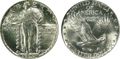
    Standing-liberty-quarter-front-and-back There is something that demonstrates this symbolically: U.S. coinage. Leaving aside, for the moment, that U.S. coins used to contain precious metals and therefore were valuable in and of themselves, today's "arcade tokens" that serve as our coins also have another major difference, and that difference is quite telling. The early American coins featured Liberty as a beautifully-clad woman strolling confidently and carrying symbols of peace and prosperity. Torches of freedom and symbols of liberty were widely employed. It was as if the focus was on the principles of freedom, not the figureheads of power. We had our Washingtons and our Jeffersons, to be sure, but their likenesses weren't dominant on our coins like a Caesar in all his omnipotent power. No. Lady Liberty got the predominance; she was the focus.

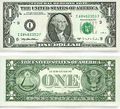
    Dollarbill Today that has all changed. Our coins seem to celebrate the STATE, and feature former politicians as the enshrined masters of power. Washington and Jefferson would probably blush, if not blanch in anger. Worse, however, is the bizarre symbolism on our paper currency. Secret society markings and strange sayings are strangely prevalent. Conspiracy theorists run rampant with these, but at the very least, these symbols do not promote freedom and liberty. And at the worst . . . ?

    Where has the love of liberty gone? 

    Why have we left her? 

    Have we prospered so much we have forgotten it was our freedom which enabled our abundance?

    Ronald Reagan famously quipped, "Freedom is never more than one generation away from extinction." If the symbols of America accurately reflect the change in thought, understanding, and allegiance of the American people, we may be close to finding out if Reagan was right.

    (click on photos to enlarge)   

  • One of my followers on Twitter (@graveecindee) compiled some of my tweets from today and wrote an interesting article. I am glad to have inspired her thoughts, and also agree with her deduction of this world's greatest Rascal! The link for her article is here:

     http://cindygraves.wordpress.com/

    I hope you enjoy it! I have yet to meet her, but can tell already that she can be accounted among the Rascals, too! 

    BTW: If you want to follow me on Twitter as well, I am @rascaltweets

  • Inflation-2 There are many myths about inflation; what it is, what it does,
    whether it is bad or not, and how it can be controlled. The concept has been
    confused and convoluted by "experts and economists," either through
    ignorance or duplicity, for centuries. But inflation is one of the biggest
    robberies any government ever perpetrated on its people, and therefore, it MUST
    be understood to be stopped.


    Let's go step by step.


    Inflation: any
    expansion of the money supply that exceeds
    the demand
    for that money. 


    Demand for money? What does that mean?


    Although there is an infinite demand for the things
    money can buy (i.e. we all want everything), there is actually a finite demand for money itself in our
    economy. At any given moment, you and your family only demand so much actual cash (called base money) to have on hand. If
    you have $20 in your wallet and it is enough for the day, then that is all
    the demand you have placed
    on the total supply of money out there that day. If you decide to
    "withdraw" more from your savings, say $30, then you have increased the demand for money
    that day by $30. At the same time, though, other people are deciding to
    "turn in" some of their cash (base money) by depositing it into
    banks, etc. This opposes your demand, because deposits and withdrawals
    work in the opposite direction of each other. The net result between the two is called the demand for money. At
    any given moment in our economy, if it were possible to calculate (and it is
    not), there is a specific demand for money as a result of everybody's activity.
    At some moments, the net flow of money is into
    banks, etc., at others, the net flow is out. 


    So what is inflation, again?


    Inflation is when more base money is put into the economy (more about how this is
    done in a future post, perhaps) than the amount demanded or required by
    our economy at that time.


    Some people say that inflation is every and all expansion of
    the amount of money in circulation, but that is not entirely correct. All expansions of the money supply are
    not inflationary. As an economy expands, there is a need for more money to
    match the size of the growing pie. Just as a bigger pie requires more fruit, a
    bigger economy requires more cash (base money) in circulation. There are more
    people, more industries, higher production, more commerce, etc., etc., and
    these things are all good for an economy. Remember, actual economic growth is
    good!  Inflation is not the growing of
    the base money supply that matches the expansion of the productive economy
    itself. Inflation is when governments put more
    money into circulation faster than it
    is demanded by the economy. Since
    this money is not demanded, reserves (the amount of base money banks actually have
    on hand) are higher because there is more than is demanded. This means banks have to lower interest rates to get people interested in borrowing it. This
    drop in interest rates increases borrowing, at which point more people take the
    money and spend it in the economy. As this additional money makes its way into
    the economy, there are more dollars than before fighting to purchase the same
    amount of goods (this is most easily pictured if you view our economy as one
    giant auction). More money fighting for the same amount of goods means
    merchants will quickly realize they can raise prices. In millions of
    transactions across the country this occurs, and overall, prices go up.


    THAT resultant price increase is NOT inflation, but the
    RESULT of inflation. (For a fun game, listen to politicians and
    "expert" economists mess this one up. You will be astounded at how
    often they say that rising prices is inflation!) 


    So, once again, inflation is the expansion of the money supply beyond what is needed or demanded at
    the moment by the economy. The result is rising prices across the board.


    So why is inflation
    considered a deadly and hidden tax?


    I am glad you asked! Inflation, as we have just seen, raises
    prices. There are no new products or services as a result of this price
    increase, just higher prices. The only reason the prices are higher is because
    the supply of money is higher. Everybody has more, so everybody can pay more.
    (Stay with me). This means that each dollar in circulation is worth less. It used to buy X amount, now
    it will only buy X-minus-whatever amount. Example: a nickel used to buy a hamburger,
    now it won't even get you a minute at a parking meter.


    So how is that a tax, exactly?


    It is called devaluing
    the dollar. Value has been taken out
    of the dollar. Because prices have gone up, the buying power of the dollar has
    gone down. It is a direct relation. As a specific illustration, consider that
    the massive dollar devaluation we have come to accept as normal really got
    going with the advent of the Federal Reserve in 1913. As a result of the
    inflation waged by our government (in cahoots with the Federal Reserve) through
    its manipulation of the supply of money (called "monetary policy"),
    the dollar that was a dollar in 1913 is only worth 4 cents today in equivalent
    buying power. Where did that 96 cents go? It disappeared! It was silently stolen
    out of the value of the dollar by the government that issued the dollar in the
    first place.


    Wait a minute, you might say, how did they steal it?


    Again, I am glad you asked! They stole the value out of the
    dollar by putting more dollars into circulation than was demanded, thereby causing
    a raising of prices, and making all the dollars already out there worth less.
    Oh, okay, you've got that part already, well, the question begs to be answered:
    WHY? Why would a government do that?


    Because the government has a habit of wanting to spend more
    than it brings in. Of course, you and I do too. The difference is, when we try to spend more than we make we go
    bankrupt. That's because we can't come up with the money we need to pay for our
    mounting debts. AH, but the government CAN! They own the "printing
    press!" All they have to do is print more money to pay their bills!
    (Again, there are some magic tricks to put this extra money in circulation,
    it's actually not all "printing" more money, but the simplification of
    saying "printing more money" is easier to explain for now). If you
    and I tried that, we'd be locked up for counterfeiting. But when the government
    does it, they call it "Monetary Policy." As long as they make it
    sound official, everything will be okay, right? (After all, those dumb citizens
    will never catch on, we've still got them thinking inflation is natural!)


    Anyway, by devaluing the dollar, the government's massive
    amount of debt is actually less painful. This is where inflation can be
    considered a tax. If the dollar is worth less, then the number representing the
    government's debt is less, too.  They
    borrowed the money back when it was worth X, and now they can easily pay it
    back when the dollar is only worth X-minus- whatever.


    Let's look at an extreme illustration to make this
    clear.  Take Zimbabwe, which has something
    called hyperinflation happening right now. Hyperinflation is, you guessed it,
    hyper – inflation! It is inflation gone wild, out of control, rampant and
    crazy. Suppose you bought a house ten years ago in Zimbabwe
    for 100,000 Zimbabwe
    dollars, and at that time, you were making 50,000 Zimbabwe dollars per year. You took
    out a mortgage for 90,000. If the Zimbabwe dollar was never devalued,
    you would pay back the entire 90,000 plus interest. Of course. So far, so good.
    But with inflation, or hyperinflation
    in the case of Zimbabwe,
    over those ten years that same 50,000 Zimbabwe
    dollars you were making as income has now become equivalent to 5,000,000 Zimbabwe
    dollars!  Woo hoo! You're rich! Nope, not
    with inflation. Just because your salary has gone from 50,000 ten years ago to
    5,000,000 now, doesn't mean you can actually buy anything more with it, it just means more dollars are required to buy the
    same thing. At any rate, notice how LOW your 90,000 mortgage looks now! You
    could pay it off with less than one week's work! Yee-hah! And THAT, my friend,
    is why governments like devaluation so much – especially the kinds of
    governments that spend wildly beyond their means (say like the, um, U.S. government?)
    So a government spends like crazy, recklessly, amounting massive debt, ALL THE
    WHILE it is DEVALUING the dollar so that it can easily repay those debts with
    the funny money of the future.


    Well, this is great! you might say. We can all play that game!


    Not so fast. One problem is that wages are the LAST thing to
    go up, and they generally never catch up. Prices go up way faster and everybody
    loses buying power in the meantime (except the government, and any insiders who
    are privy to the new money influxes or have a way to get access to that money first before prices are driven higher.
    Can anyone say, insider advantage? Bail-out recipients? ACORN, anyone?) The
    problem with this scheme is that it hurts EVERYONE ELSE in the country, especially
    those the farthest from the inside banking industry, or the farthest from
    government handouts and doles, but worst
    of
    all, it hurts the savers and the long-term investors. It hurts the
    elderly who have counted on their savings and pensions for years. It hurts the
    family already struggling to make ends meet and now find that their meager
    income and savings buys them less and less.


    Inflation is a tax.
    It supports government irresponsibility at the expense of the average citizen.

    It taxes the value of the dollars sitting in a savings account, in a safe, or
    under a mattress. It invisibly takes money away from those who have earned it
    so that the government, who hasn't earned it, can continue its spending
    addiction. And for the governing class, it is wonderfully invisible. The
    "little people" don't get to vote for this tax increase, they don't
    get to debate it, they usually don't even get to hear about it. The Federal
    Reserve privately, without audit or oversight by Congress, conducts its affairs
    as it sees fit. I won't even get into the windfall profits generated to private
    central banks by this process. You've probably stomached enough for one day.


    Oh yeah, because inflation also eventually drives up wages, (although, as we've said, more slowly
    than prices) and this too puts a person in a higher income tax bracket! This causes people to pay more in direct taxation as well! What a deal!
    But a few percentages of higher income tax are nothing compared to 96 cents stolen
    from a dollar in 76 years of  inflation.


    Some people in politics don't understand this (just listen
    to what they say and you'll see what I mean). We'll call them ignorant.


    Others do understand
    this. I wonder what we should call them?

  • Our government for several administrations now seems unable or unwilling to grasp the simple economics involved in prosperity. It shouldn't be that hard; after all, low taxes, stable money, and lack of government price and wage "fixing" were largely responsible for the massive US economic growth between 1879 and 1914 (railroads not included), and sweepingly, for every other boom in American history. 

    Here are two quotes to consider:

    "The economics establishment still has not been able to absorb the rather simple idea that inflation is bad for economies (and thus employment), and a stable currency is good." Nathan Lewis

    "Inflation: This is not only a policy imposed for its own sake [so government's can invisibly tax their people], but an inevitable result of most of the other interventionist policies. It stands today as the universal symbol of government intervention everywhere."  Henry Hazlitt