Welcome to
Chris Brady’s
Blog

“The only way to be happy, is to give happy.”

  • Ok, ok, I realize I haven't even announced the winner of contest 2009.3 yet, but don't despair, I will when the appropriate moment fully arrives.  In the meantime, here's another one!
     ATT462693

  • From a contributor that wishes to remain anonymous.  I'd like to hear this recorded! 

    Rap song? Rock song? Some of each? Country? What do you think?


    First Group of
    singers:


    What proof of your ideas

    Do you have, do you have?

    What proof of your ideas

    Do you have?


    There's really nothing new here

    That has not already failed

    From Bolsheviks in

    Russia

    With millions killed or jailed


    We have heard it all before

    'Bout government come to aid

    FDR and his programs

    Put the founders in the shade


    There was a document once

    Meant to keep the people free

    But some vote from their angers

    Give up power thoughtlessly


    Professors take tuition

    While they twist our kids around

    Undo all in-home training

    Gather votes for bites of sound


    What proof of your ideas

    Do you have, do you have?

    What proof of your ideas

    Do you have?


    What proof of your ideas

    Do you have, do you have?

    What proof of your ideas

    Do you have?


    Second group of
    singers:


    Some crises are too scary

    To allow markets to be

    Must meddle and control them

    When it's an emergency


    Only while this problem lasts

    Says the big bureaucracy

    We may be crunching freedoms

    It's just expediency


    With only good intentions

    Do we push inward these walls

    Don't blame our helpful cancer

    If host organism falls


    Our times are so different

    From those simpletons of yore

    These challenges are complex

    So we must change up the score


    It's the rich lucky winners

    Of an unfair lottery

    That run big corporations

    And then thrive financially


    Forget created equal

    That's an old idea past

    Equality of results

    Gets your man elected fast


    We will hike up your taxes

    While we inflate currency

    Take your hard-earned life savings

    Build a Great Society


    Don't worry, you can join us

    As a special interest

    Play victim, or just envy

    Uncle Sam will do the rest


    Freedom, you ask of freedom?

    There shall be no more debate

    Don't question our policy

    Or we will just say you hate.


    You are fairly out just now

    And we are so squarely in

    Don't you dare try and stop us

    Cause we're legislating sin.


    First Group of
    Singers:


    But I asked you a question

    At the onset of this song

    What proof of your ideas

    Do you have besides the throng?


    That is all you need, you say?

    Do you really think that's right?

    We have seen this all before

    Get your first assumptions right.


    What proof of your ideas

    Do you have, do you have?

    What proof of your ideas

    Do you have?


    Second Group of
    Singers in background:


    [We don't need proof

    We have got the media]


    First Group of
    Singers:


    What proof of your ideas

    Do you have, do you have?

    What proof of your ideas

    Do you have?


    Second Group of
    Singers in background:


    [We don't need proof

    With intelligentsia]


    First Group of
    Singers:


    What proof of your ideas

    Do you have?


    What proof of your ideas

    Do you have?

    Song fades with Hitler-ranting speech in background 

    Crowd Cheers


  • I was sorting through some old files on my computer and came across this article.  It was written shortly after my Baja racing experience with my friend and business partner Tim Marks. What a blast! I encourage you to pursue your dreams and dare you to live an adventurous life!

    I had never seen snow in the desert before, and can’t really
    say I was entirely prepared for defending myself against incoming snow balls
    while relaxing alongside a cactus. 
    But these things can happen to a fellow when he travels with Tim
    Marks.  

    So can wounded elbows.

            It had been
    a dream of mine since boyhood, first birthed, I believe, in the mid-motocross
    years.  There I was, all
    one-hundred-twenty-five pounds of me, long hair and sweat, romping around Michigan’s motocross tracks with amateur ability and professional determination.  In the midst of it all, I had the faint
    notion to drive Baja buggies through the Californian desert (which is in Mexico, we
    found out).  I figured it would be a good
    diversion for later when I was much older and unable to manhandle a dangerous
    but colorful instrument of teenage affection known as a motorcycle.

            Terri and I
    had settled in to watch a movie someone had recommended.  It was late, and Terri lasted about five
    minutes.  I, however, sat enthralled.  There on the silver screen was my boyhood dream in full bloom.  Trucks and buggies and motorcycles and quads
    and even unmodified VW Bugs raced their way across the 1000 mile dry expanse
    known as the Baja peninsula in perhaps the most infamous and misunderstood race
    in North America. My dream was reborn!

            By the next
    evening, I was announcing from some stage somewhere to everyone in attendance
    that I would some day soon be racing the Baja 1000.  Everyone cheered.  Apparently desert racing is in high favor
    among people in audiences: a curious fact of which I had previously been
    ignorant.  As the words made their way
    through the microphone, I realized the desert racing experience was a
    two-person event.  In other words, one
    would need a co-driver.  Such a person
    does not simply sit in the passenger seat and navigate, although that is among
    the list of duties.  Oh no.  Such a person must also handle the enormous
    responsibilities of trash-talking the driver.  Also, for at least some of the time, such a
    person is needed to drive the vehicle, too. 
    Realizing in a real-time sort of way that I would need such a partner
    for my resurrected caper, I immediately scanned my database for rich guys that
    would have the money, crazy guys that would have the guts, and free guys that
    would have the schedule availability to accompany me in such a venture.  Oh yeah, the person would have to be good at
    motor sports and such, also.  So there in
    front of the world, with absolutely no approval from his person, I told the
    crowd that Tim Marks would be my partner.

             I knew almost immediately, of course, that I had chosen the right mate.  This seemed vindicated the next morning when
    he called me to accept his recently-learned-of appointment (crowds are notoriously
    bad at keeping secrets), and then finished by saying, “By the way, what is it,
    again?”  Yep.  Tim was the man for the job.  I decided to give him his extensive formal
    training by telling him the name of the movie and demanding that he go rent it
    to prove himself qualified.

            That’s how
    we found ourselves in fancy red and black racing suits and dorky looking elf
    shoes (“Hey, buddy, they’re driving
    shoes.  And they cost more than your
    watch!”), standing around in the desert in the snow with a guy named “Sto” and
    several others who were extremely accomplished at swearing.  One of the other cars had blown a clutch and
    we were awaiting the chase vehicle with a bunch of mechanic-fellas that spoke a
    language we didn’t understand (a mixture of Spanish, swearing, and shop
    talk).  The snow was a little bit of a
    surprise, because, after all, we were in a desert.  The swearing was no surprise because, after
    all, we were with guys who liked to talk about gears and oil and smash bear
    cans against their foreheads. 

            Two days
    later, though, we were fully acclimated. 
    We had both agreed that by the third day our driving was “expert” level
    and probably worthy of the national news. 
    We had also grown accustomed to just about anything being in the desert, from trash to
    upside-down-burned-out-car-carcasses, to wild horses, to whoop-de-dos ten feet
    deep, to pine forests, to silt trails, to rock-strewn goat trails, to freezing
    cold rain, to children on mules, to guys on quads, to station wagons full of
    the entire family apparently heading to church located nobody-knows-where, to
    sewage rivers coming from a drug rehab center, to trail-side beer stands, to
    cows and more cows, and yes, to snow. 
    And also one very large washout less than ten miles from camp on the
    last day.

            It was
    Tim’s fault. 

            I saw it
    first-hand.

            Something
    happened to him, knowing that our time in the desert was almost over.  In freezing cold desert rain, between
    dirty-t-shirt wipes of our racing helmet shields, Tim Marks went over the edge.  Literally. 
    And my elbow paid the price.

            The rain
    had muddied up the trail significantly, to the point where the car would no
    longer track well (meaning, it slid around like a snake).  This was especially interesting since the
    trail was along the side of a mountain and one possible alternative was a
    deadly plunge to the canyon hundreds of feet below (okay, maybe fifty feet
    below).  Also, the brakes had gone
    out.  Again.  When it had happened on the previous day, we
    thought it was a big deal, too.  But we
    weren’t such good drivers way back then. 
    Now we were third day experts, and fully capable of handling a little
    thing like nonexistent brakes on a switchback mountain trail.  Seriously, what were transmissions for, if
    not for moments like this? I wasn’t worried, even though I was in the co-driver
    seat.  Tim had proven himself more than
    capable behind the wheel.  Only I hadn’t
    seen the “end of adventure fever” coming. 
    It struck Tim like Cupid’s dart plowing into a love-sick adolescent at
    the county picnic.  

    Suddenly Tim’s face
    became animated.  His laugh became
    sinister.  His eyes were immediately
    bloodshot.  His speech became
    slurred.  And the car went faster and
    faster.  First it slammed nose-first into
    puddles we had learned to avoid so deftly before.  Several of these doused us in a shower of
    muddy rain (and other substances.  Please
    refer back to earlier comments about the drug rehab place).  Next it slid off the road sideways where its open
    wheels chopped desert tree limbs like a saw blade and courteously delivered
    them into our windshield-free cockpit. 
    When I complained a little about the forest we had collected amongst our
    seats, Tim’s only replay was something about it being “potpourri.”  Then we almost slid off the canyon’s side
    into a really good story, but Tim
    saved us by slamming the car’s front end directly into the cliff wall and trying
    to climb it like a small puppy stuck in a tall bath tub.  And then, without warning, it happened.  Tim showed no mercy and drove our Baja buggy
    (affectionately named “Debbie”) directly through a big, enormous, mind-blowing
    washout.  There was no warning.  One minute we were fine, the next minute we
    were experiencing at least twelve G’s, our helmets rebounding off the top roll
    bar cage.  It is still a marvel of desert
    racing engineering that the entire back of our car didn’t eject itself from the
    chassis.  That must be because most of
    the force from the blow was actually absorbed by my elbow. 

            Three days
    of driving like maniacs and I sustain an injury ten miles from the end.  It’s okay, though.  Experienced adventurers know how to treat
    wounds out in the wild.  We must be
    capable of first-aid in order to live the life we live.  I began healing my wound almost
    immediately.  By applying layer upon
    layer of shame on Tim for his driving mishap, the pain seemed to deaden a
    little bit.  And by writing this article,
    I really must admit I can no longer feel a thing.  See?  I
    know what I’m doing.  The pen is truly
    mightier than the bandage.

            Besides.  A desert elbow injury is still better than a
    day at work!

            Thanks Tim, for the reminder.  

  • Have no fear, the government will watch out for us. They know what's best, after all, and should be given complete power over every part of our lives. I sure am glad those super-smart, efficient, honorable, experienced government officials are now applying their wisdom to the auto industry!
  • Days pass into weeks, weeks into months, months to years, and, well, you know how it goes. In fact, the older you are the more you are familiar with the frenzied acceleration of age. 

    The thing to consider, though, as these moments race by in a blur, is the lives of others around you. Leaders understand their natural network of friends and acquaintances is one of their biggest treasures. Not only does this web of connectedness provide business contacts and leads, but more importantly, the very spice of life. After all, we are here to serve others!
    Friendship2
    There are three approaches people take toward their hubs-of-connectedness (or networks):

    1. passivity 

    2. destruction

    3. cultivation

    I believe each of these categories is obvious. We all know people who take little notice of others in their life, or on the contrary, who destroy relationships and contacts with habitually combative behavior. The most productive, fulfilled people, however, are those who actively pursue relationships and friendships.

    There are many constructive steps toward becoming a cultivator. Caring and being interested in other people are prerequisites. Communicating regularly is a must. Listening to and knowing the other person is important. What is the other person's dominant personality type? What is their Love Language? What motivates them? What scares them? Being dependable, reliable, and loyal builds trust over the long haul. Honesty and fairness generate a momentum of their own, over time. And don't forget the power of providing encouragement and support. 

    If you tried you could, no doubt, create a list of your own. In fact, it seems the steps necessary to establishing friendships and relationships are known, in some degree, to us all. Building up a network of quality connections and relationships appears to be nothing more than a choice, for those who are willing to take the effort.

    I encourage you to take some of those steps today. Call someone. Send a text. Write a note. Catch someone in the act of doing something right. Let someone know you care. Believe me, the world needs it! And once you see the boomerang-effect of cultivating relationships, you'll realize you need it too.     
     
  • The average American citizen is like a hiker, and the government a pack upon his back. No hiker can get far without a pack containing key essentials, as no citizen can get far in freedom without a military, police, and the Rule of Law.

    Somehow, though, the government keeps convincing the hiker that the pack should be bigger. This slows the hiker, who fights gallantly to grow stronger and still make progress despite the increased burden. Then, the government grows some more and adds more to the pack. The hiker slows further. 

    Eventually, the hiker is nearly stopped in his forward progress and fights with all he's got to resist toppling over backwards. At this point, slick politicians show up and once again convince the hiker to increase the size of his pack. "To fix your big pack you need to increase it even further." 
    Porters
    To accomplish something so incredibly stupid the government has to be very crafty. After all, the pack cannot propell itself, and things can only be added to the pack if the hiker votes it in. So just how does the government convince the hiker to increase his load?

    This is where politicians come into the picture. It is their job to get the hiker to add to his own load. To accomplish this, they use many strategies, such as:

    1. Envy – if politicians can make the hiker think someone else is carrying a lighter pack than him, he will vote to increase the other peoples' load and decrease his own, assuming that in the process the government will never turn on him.  

    2. Class Distinction – If the politicians can make the hiker think he is in a group that has an unfair burden compared to someone else, the same trick can be accomplished.

    3. Race – Again, if the politician can use any distinction to get the hiker to agree to an increased load for others, Pandora's box is opened and can be used later on everybody.

    4. Special Interests – Once again, it's the same old trick. Establish an "us vs. them" situation and promise the "us's" they will benefit at the expense of "them"

    5. Misplaced compassion – most people are not educated on the inefficiencies and inconsistencies of government bureaucracy, so they mistakingly think the government can actually execute a social program effectively and thereby "help" people. In other words, politicians know that most people have good hearts and truly want to make things better, not only for themselves, but for everyone. If the politicians can play to this, they know they will never be held accountable for results because whoever would bring such doubts can be castigated as a "cold-hearted capitalist," or other such name calling which dodges the real question of effectiveness.

    6. Misleading or false data – economics and civics can be confusing if misrepresented and argued about enough. The more complicated these subjects can be made to seem, the less people will listen to what is actually being said. This is true of almost all areas in which the government doesn't want the public to know what's actually going on. Misconstrued statistics and "expert" opinion can be used to "prove" almost any position. Eventually, the people will vote for a talking head that produces good sound bites and looks and acts the part. Don't be fooled: self-assuredness is no proof of competence.

    There are more than just this short list, but the flavor for all of them is the same: make the hiker think it is in his own best interest to increase his load, then get him to blame anything except the heavy burden on his back for his faltering progress!

    Even more incredible is the ability of politicians to not only get the hiker to miss the obvious problem of the governmental burden on his back, but they even succeed in getting the hiker to blame the freedom he has to hike along the trail! Economist and investor Peter Schiff says it best:

    "What worries me most, however, is the almost automatic backlash that attributes the present economic collapse to a failure of capitalism and free-market economics and turns it into an argument for expanded government. Never mind that government created a crisis that the free market would have avoided altogether . . . ."  

    Here is what politicians have convinced the hiker to allow to be done to himself:

    1. escalating taxes (WAY over 50% when taken as a whole)
    2. government deficit spending (meaning, on a yearly basis, the government spends BILLIONS more than it takes in)
    3. exponential growth in national debt (yearly deficits added together, year after year, compounded by interest)
    4. Skyrocketing unfunded debt (Social Security, etc.)
    5. Massive international trade imbalance
    6. Inflationary monetary policies (Inflation means the government prints more money and adds it to the money supply already out there. This makes prices of everything go up and the money you have less valuable. This is the government's favorite tax, because it doesn't have to voted on, is not understood by many, can be easily hidden, and helps reduce the problem of the growing national debt because the amount owed shrinks in value with a declining dollar.) Remember this: our government actualy loves inflation, needs inflation, and misrepresents just how big inflation is annually so people won't understand what is taking place with their hard-earned savings.
    7. Swelling government bureaucracy (the unelected portion of our government, which barely existed a hundred years ago, now is a behemoth impossible to quantify financially or politicially)
    8. Enormous foreign aid grants (and now we've just decided to pay for abortions in other countries with U.S. tax dollars)
    9. Military operations almost everywhere around the globe
    10. Increasing "welfare" society of government social programs

    Any hiker that thinks he needs a heavier pack to make it easier for him to walk simply does not understand how the world works. 

    We have a choice. 

    We can elect government officials who will gut our government, or our government will gut us. Either we put some government employees out of work to save the people, or we will see most of the people out of work to feed the government.

    Make no mistake about it: the pack can't increase indefinitely. Some day, at some point, the hiker will topple over backwards. 

    Then what?

    Let's hope the hiker does what any intelligent traveler would do: start chucking the dead weight before it's too late!
  • I can hear the cries of foul play now; attacks on my character, screams from the peanut gallery, investigations by the press. However, I have no choice but to award the victory for Caption Contest 2009.2 to none other than Buffafly for her post January 18, 2009 6:50 pm. For those of you who don't know it, Buffafly is my wife. (Sorry, fair's fair!)
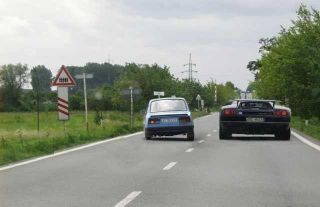
    For those not too upset to play again, here is the next contest in the series. Good luck!

    Image013
  • Just because we CAN do something doesn't mean we should. Just because a technology is developed doesn't mean it will improve our lives. Just because something makes communication more convenient doesn't mean it makes it better. Just because we can be contacted anytime, anywhere, for any reason, doesn't mean we should. And, just because everybody else is doing it doesn't mean it's right.
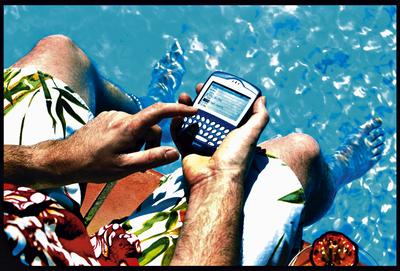
    Technology Addiction
    Years ago a practice was developed among doctors where partners would take turns scheduling time to be "on call." This was a way of splitting coverage for the time when all of them would be away from the office but still have the requirement of providing urgent care and answers for their collective group of patients. This was originally looked upon as a special responsibility of the medical profession since medical situations could not be made to conform to office hours. It was and is still an effective practice. Participating doctors agree not to leave the geographic area and vow to remain accessible. This has always been considered a significant commitment and one that justified the high compensation medical professionals received. Such a burdensome program was rotated among the partners to share the load.

    Then came thousands of inventions designed to "improve our lives." In just over fifteen years, cell phones went from being carried in large bags and used for emergencies to being attached to every adult, teen, and adolescent like binkies in a nursery. Now, without realizing it, EVERYBODY has voluntarily placed themselves "on call."  Only they haven't done it for a weekend here and another there, they've done it for every day of their lives!  Statistics show that an amazing 61% of Americans check email every day while on vacation!  And by the way, only 14% of Americans take two weeks of vacation at a time to begin with! 

    We've got email and its annoying notifications, instant messages providing constant interruption, text messages and voice mails. We are awash in means and methods of communication that increase the talk and decrease the listening. After a while one becomes numb.

    In yesterday's post I quoted the famous Thoreau statement that "Most men lead lives of quiet desperation." The only thing that has changed from Thoreau's time is the quiet. It's gone. Today, men lead lives of desperation amongst an endless stream of noise, interruption, and dwindling opportunities for the important moments in life; moments without a chime or a beep or a ring. Moments without an electronic addiction of any kind. Moments of freedom.

    My father never once got interrupted by a cell phone call when he played football catch with me in the backyard. He certainly never threw the ball while pinching a phone to his ear with his elbow (as I see at least seventy-five percent of the time in parks and yards. Look for yourself).  I never once heard my mom say to me in the car, "Quiet! I'm on the phone!" When my parents were with me, they were WITH me. This is true today only in extreme cases of either chance, or with parents wise enough to fight back.

    It makes me wonder. Before we got hit with this onslaught of technological "improvements," did we ever stop to ask whether it would be better? Of course not. Nobody could have seen how frenzied things would become in just fifteen years, nor how addicted people would be to their needless interruptions and electronic tethers. Besides, we are a society that always assumes more is better, that technology is always an improvement, and that the relentless push forward can always be called progress.

    I for one, disagree.

    We have given up something precious; and we have barely noticed.
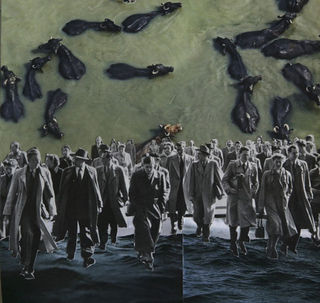
  • There is a lot to be said for the concept of individuality. We have long celebrated the rugged individual, the loner, the stand-out, the rebel. There seems to be something attractive about a person who can remain what and who they are, even when under constant attack from "the world" and the court of "they" which are always on hand to apply pressure. Your parents told you to be one thing, your friends another, and now your college professors, boss, and co-workers give you more "guidance." It seems that these days, everyone from your closest friends to pundits in the media have an idea of who you should be.
    Herds
    The real question, however, is, "Do YOU know who you are? Do YOU know who you should be?"

    For some reason there is a tendency for the masses to go along with the masses. Call it group think, the madness of crowds, or laziness. 

    Going along is the coward's way out, however. Standing firm for what one believes in, for who one is, and for those one loves is the essence of courage; it's the character to be a character! 

    Think about it: the most interesting characters in a novel are always those who are not afraid to be themselves, who are a little different, who stand apart as more authentic than the rest. We may marvel at their foibles, laugh at their idiosyncracies, and maybe even judge them, but we always, deep down, admire them. I believe the reason for this is that, as Thoreau said, "Most men lead lives of quiet desperation." They are stuck inside a shell of a life that spends too much of its time seeking to please others and not enough following their calling; their true authentic purpose. But when we see someone with the character and courage to be their own person, lead by their own inner passion, following the calling given them by their Maker, we understand that we are witnessing greatness, and we long for it ourselves!

    Incredibly, it is only a decision. A simple choice to become an individual, to think for yourself, to dare to be who you were created to be! As Charles Mackay wrote, "Men, it has been well said, think in herds; it will be seen that they go mad in herds, while they only recover their senses slowly, and one by one."
  • "Our greatest fear should not be of failure, but of succeeding at something that doesn't really matter!"  D.L. Moody
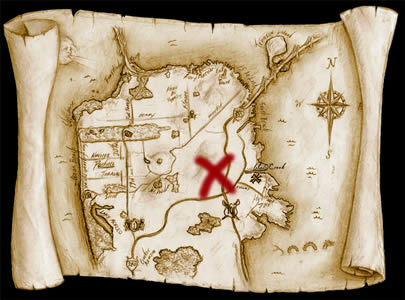
    X-marks-the-spot-map
    So how is your life going?

    Is it what you always wanted?

    For most people, the answer to those two questions is not good. They somehow have worked hard for a chunk of their life only to end up some place they don't want to be. Not good, indeed. 

    Let's not even bother analyzing in this article how you got to be where you didn't want to be. We'll delay that until I'm feeling more philosophical. Instead, let's cut to the chase. If you don't want to be where  you are (figuratively, and perhaps physically speaking, too), the question is, "Where DO you want to be?"

    The answer to that question for most people, interestingly, is fuzzy! And therein lies the problem. If you don't know where you want to be, you sure as heck won't end up there.

    So what's it look like; the life you've always wanted? What does it feel like? Who's in it? What do you do with your time? Whom do you serve, love, and laugh with?

    The key to answering these questions comes from knowing yourself. What has your Creator given you? What are you good at? What makes you feel rejuvenated and alive? What makes your adrenaline pump? Also, what stirs your soul, stokes your righteous anger, and brings out your courage? It is there, at THAT red X on your Life's Treasure Map, where you should start to dig. 

    It's your life. You only get one chance. Don't waste it doing something that you weren't built to do. Don't invest your life in something that doesn't matter.

    Dream Big. Serve Hard. Live Large.