As promised, our second caption contest of the year! Same prize for the winner as the last one!

-
Okay, this was a tough one! I really enjoyed all your inputs on the caption contest, and determining a winner was almost impossible. But with the help of some expert judges (my children), we have finally arrived at who will be receiving a free, signed copy of Launching a Leadership Revolution:
1st place goes to Andy Young and his post of January 9, 2009 at 12:07 pm2nd place (because it was actually much like Andy's and posted before his) goes to Dave & Mely Arndt who posted on Jan. 8, 2009 at 11:29 am.Both of these incredibly blessed participants will be shipped their complementary signed books as soon as they post their mailing addresses in the comment section of this blog (don't worry, I will keep them confidential, and of course will not post them, and will keep no record of them once your books are shipped).Congratulations all both of you! (Hey, maybe I DO have more than 3 readers!?)Stay tuned, there will be a new caption contest tomorrow! -
Okay, we've had quite the run lately of postings on this blog concerning the government and it's headlong dash towards destruction. Let's get more specific and work together on something, shall we?
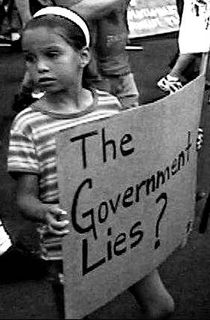
My idea was inspired by a recent comment from reader Owen Derry (Thanks Owen). One of the reasons the American public has allowed its government to creep into every area of its life and well outside what Ronald Reagan so appropriately called "it's rightful parameters" is that most people are not educated on what's really happening. In addition to that, the government, of course, comes up with words and phrases to misdirect people's understanding. As long as the appropriate term can be given to something, a disguise can be placed on what's actually taking place. Below are just a few starting examples I thought of to get us started. I thought it would be interesting for each of you three readers out there to collaborate and provide some of the lies told by the government.1. Inflation is about higher and higher prices (wrong: its about an increase in the money supply).2. People should have a CHOICE (wrong: they say a woman should have the choice to abort her baby, but not the choice of which school her child can attend).3. Tax loopholes and deductions are for "the rich" (wrong: over eighty percent of tax deductions and loopholes are taken by the middle and lower class).4. Government spending helps spur on the economy (wrong: deficit spending only weakens the economy further, just like it does in our personal economies)Which ones can you think of? -
The Great Depression is the classic example of what happens to a free market economy when government genuises think they can make better decisions than millions of free consumers. What started out as a normal market correction was followed by government interferance in the form of price fixing, output caps, increased taxes, rampant government spending, huge protective tariffs, and government meddling in areas that should have been left to free enterprise (power and lighting, among others), which effectively prolonged a recession, spawned a depression, then created an even bigger "depressions within a depression."

Franklin Delanore Roosevelt (FDR) (Democrat) became famous for his "fireside chats." His smooth voice and fatherly reassurrances calmed a nation on the front end while he yanked and pulled on every string available to government on the back end. The President that preceded him, Hebert Hoover (Republican), was not much better. Between their two administrations, the U.S. government began to meddle in American affairs more so than at any other time since the Civil War.At first, the government experimented with different manipulations, looking for the right combination to "fix" things, all the while being sure to appear as if they were "doing" things on behalf of Americans. Then, they began prosecuting all kinds of scapegoats to take the American people's minds off the fact that all the changes weren't working and to place the blame elsewhere. This persecution was against former Treasury secretaries in the previous administrations, small business owners who were accused of violating some brand new, super-complicated tax rule, large industries that were operating exactly how they always had but somehow were suddenly being called illegal, and stock traders and investors. The sensational news stories about the government cracking down on the people that had "caused all of this" kept their minds distracted from the real culprits. It was an era in American history that mirrored Caesar's "bread and circuses" program in which he pacified and distracted the mobs in Rome with free grain and gladitorial games.Let me be as clear as I can be: more government is not the answer. It never has been, and never will be.It has been tried.It has failed.Every time.Why must we repeat it again?Why must we dive into the same terrible spiral of suffering and blame and flagging economics and loss of freedoms and encroaching bureaucracies, only to discover that they still don't work?FDR called his escapade of government manipulation the "New Deal." It is safe to say that much of the New Deal was an extremely Raw Deal. Now we are entering into an era where people seem to count more and more on the government for "answers" and "fixes" to problems that it created in the first place! Only what do you call it after the New Deal is found not to work? Do you call it an Even Newer Deal? Or the This-Time-It-Will-Be-Better New Deal?Let's keep it simple folks: More government = Wrong Answer! -
On September 27, 2008, the favored Florida Gators football team was upset in a stunning loss to Ole Miss. The Gators, led by the soft-spoken, Christ-declaring, Heisman Trophy winning (last season) quarterback Tim Tebow (home schooled, by the way, with parents who are missionaries), quickly lost their goal of an undefeated season. Their national standings also slipped, of course, and they were forced to play the rest of the year in catch-up mode.
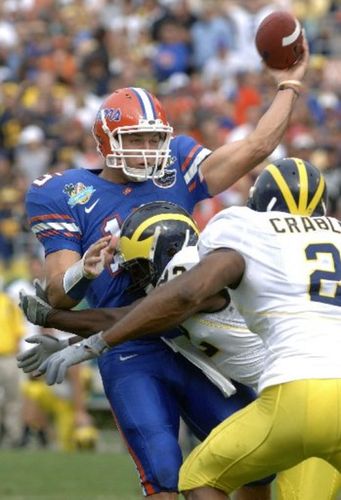
After the loss to Ole Miss, Tim Tebow gave the usual after-game analysis. It was full of the normal salutations to the other team, what Florida could have done better, etc. But then, unexpectedly, at the end of these statements, young Mr. Tebow did something special. He spoke from the heart.Last year, Tim Tebow won the Heisman trophy, the pinnacle of college football individual achievement. But life is not always winning and awards, as the Florida Gators lost the Florida Citrus Bowl to the Michigan Wolverines 41-35 (In a game that had me split in half, for sure)! Then, early in this season, Tebow and the Gators were upset by Ole Miss.Champions don't always win. The skies are not consistently rosey for anyone. Everybody takes shots, experiences losses, gets knocked down, and gets dealt losing hands. I wish statements like this next one didn't start to sound like cliches, because it robs them of the power of their truth, but:"It's not what happens to you, it's how you respond."Think about that statement.I deal with all types of people from all walks of life. The one thing I can say that consistently separates the winners from the rest is the attitude embodied in this statement, and in the type of comments made by Tim Tebow following his loss to Ole Miss.Notice Tebow didn't promise victories; he knew he couldn't guarantee that.Also notice that he didn't make excuses; he accepted responsibility.But he instead went toward hard work, encouraging others, and team play. That's what champions do. They come back strongly.And perhaps the best thing Tebow said was, "a lot of good will come out of this."That's the attitude of a champion. In the seeds of adversity is found the good of future strength.I don't know what troubles you may be facing in your life. I don't know what reversals this tough economy might be putting you through. But I do know that if you have the attitude of overcoming, of a proper response, of courage and perseverance, and you respond to your challenges and setbacks by allowing them to make you better and stronger; you will win. Oh, not always.After all, it's not about winning every game.It's about becoming a champion in the process.That's what Tim Tebow and the Florida Gators did. And for the way in which they did it, I congratulate them. -
Okay, I confess, I don’t know how many of these we’ve had. But I thought we’d lighten it up a bit from the political fare as of late and get back to some caption contests. Only now I want to juice it up a bit and offer a reward to the cleverest of you (three) readers out there: whoever comes up with the funniest caption will receive a free, signed copy of business partner and co-author Orrin Woodward and my book, Launching a Leadership Revolution. I will announce the winner on January 14th. Have fun! (You can click on the photo to enlarge).

-
How did our government get to be as big as it is? How did we ever get to a place where we have millions of people casually (certainly not critically) thinking that the government can take care of them, that more and more taxes can be a good thing, and that bureaucrats can regulate economies better than free market forces?History has given its answer very strongly to these theories, but they are harder to kill than the Terminator and The Agents from The Matrix put together.
"There is nothing so permanent as a temporary government program," said Ronald Reagan. And here we approach the root of the problem. What starts as a small program, perhaps well-intended extremely limited, promised only to apply to a select "few" (which is always a different set of people than those to which the appeal to support it is pandered; in the words of Congressman Bob McEwen, "When you rob Peter to pay Paul, you can always count on the enthusiastic support of Paul!"), and maybe even hailed as a temporary measure, undoubtedly becomes entrenched, spawns new agencies and administration, gets expanded (something called "bracket creep" in the military), and grows to an indestructible size.
Take for instance the U.S. Income Tax. In 1913 the 16th Amendment to the Constitution made income tax a permanent method of revenue collection for the U.S. government; something that had previously only been primarily a war-time expedient. Promises were made that it would only affect "the rich" (sound familiar?), and that it would always remain small (do any of you think that 24 to 38 % is small?). In fact (and I think you'll notice the appeal to class warfare and envy in this statement, something else that should sound familiar) the income tax was sold to the people as a "Class tax" and not a "Mass tax." Although it is progressive, can anyone truly say it doesn't impact the masses? It impacts almost all of us.What happened?In the eighteen hundreds, Yale professor William Graham Sumner said that "well-intentioned social progressives often coerced unwitting average citizens into funding dubious social projects." Andrew Mellon, secretary of the Treasury during three presidential administrations in the early nineteen-hundreds, wrote, "Any man of energy and initiative in this country can get what he wants out of life. But when initiative is crippled by legislation or by a tax system which denies him the right to receive a reasonable share of his earnings, then he will no longer exert himself and the country will be deprived of the energy on which its continued greatness depends."In other words, if progressives in favor of big government and increased taxation are able to dupe enough people into following their programs, the goose that lays the golden eggs will eventually, pardon the pun, give up the goose. Taxing the engine of production that pulls the whole train along can only work to a certain extent. Eventually, the overtaxed engine can no longer pull against the resitance and all forward progress stops.Do we really have to relive the 1930's all over again to prove that a big government and its interventions can kill an economy? -
In 1927 a group of intellectuals set sail on an ocean liner for Europe and Asia. The overall objective of their trip was to gather information about the great Bolshevik experiment in Russia. Two of these men were Stuart Chase and f.J. Schlink, the founders of Consumer Reports magazine. Another was a peace activist named Roger Baldwin who had founded the ACLU. Union men, magazine writers, and of course, college professors, made up the rest of the band.
Taking a trip to a foreign land in search of confirmation for one's progressive ideals may sound naive to our modern ears. In fact, such trips are now passe, and even expected of America's "elite" intellectuals. Who from that era doesn't remember Jane Fonda's trip to Viet Nam, or more recently Jimmy Carter's visit with Fidel Castro in the early 2000's, or even Brad Pitt and Angelina Jolie in the middle east?I love international travel. Foreign cultures, cuisines, geography, history, and especially the people are fascinating and wonderful. I highly recommend international experience to anyone as a fundamental part of their education. There is very little one can do to learn so much so fast, get large doses of a different culture, and the ever-popular-but-still-true broadening of one's horizons. I was fortunate enough to live for an entire season in East Asia and learned some language, forged some lifelong friendships, and gained invaluable lessons.Things are different when such trips are taken for the purpose of confirming already held misconceptions, however. Under such circumstances, learning can't help but be hampered. This is because the lesson begins with stubbornly held and unexamined assumptions. Observations serve to confirm opinions instead of leading one to truth. For the distinguished passengers on the trip to Russia in 1927, Stalin began rounding people up, shipping them off to the gulags, and executing them even as the intellectuals sailed home with stars in their eyes and visions of government interference and control in America. They had been given a "dog and pony" show and bought it hook, line, and sinker. One of the travelers, in refering to his trip to Russia, had the blindness to write, "I have seen the future, and it works."The trends were aligned with these intellectuals in that age. It didn't take long for them, the people they supported, and the candidates they advanced to begin implementing more and more government control on the American public. The advance soldier in that process, unwittingly, was President Herbert Hoover. Confident of his own ability to take ahold of the controls of government, he used the scare of the drop in the stock market of 1929 (which was not an emergency, did not shut down banks, and did not cause more suicides than New York had experienced even in the previous year; to explode just a few of the myths of that time) to begin meddling in industry and municipalities. A normal correction in an inflated exchange after a decade of real, substantial, economic growth (backed by actual expansion in GNP, GDP, and capital and productive capabilities, one of the largest growth decadees in American history) was perfectly normal. The real question isn't what caused the temporary drop in aggregate stock values in October of 1929; the real question is why did the trouble persist so long after it happened? AND, why was there in fact a Depression within a Depression? (1933 and 1934 being worse than 1929 and 1930).That brings us back to our "boatload of meddlers" and their trip to Russia. Men of their ilk were duped into believing all the emerging economic theories of their time; theories that all involved faulty economic assumptions and recommended more and more governmental interference in the money supply, markets, international trade, and spending. This meddling is what caused the runs on banks. This meddling is what took a small incident and prolonged it. This meddling is what stretched a short, normal, economic correction into an international catastrophe.The actions of the following decades would usher in the "triumph of the welfare state" concept that still haunts us today. This is the idea that the government knows best, is responsible for fixing all problems, and can and should intermix itself in the affairs of economics and enterprise.What happened in the late 20's and throughout the 30's is akin to a patient with a head cold getting advice from an over-reactive doctor. Based on some new, exciting techniques just picked up by the doctor at an international conference, the doctor administers drugs that don't treat the cold but make it worse. Seeing this, the good doctor, surrounded and encouraged by other doctors doing the same thing, confidently administers even more medicine. Only this time, there are additional side effects. The doctor, however, doesn't see it that way. Instead, he sees confirmation of just how sick this patient was in the first place and, gee whiz, good thing there's a doctor on the scene to help! Further meds produce more side effects and soon the situation is drastic. Emergency life support measures are required or else the patient will surely die. The patient is not really living any longer, strapped to the tubes and machines of life support as he is, but he is not dead either. This encourages the doctor and his colleagues to congratulate themselves on keeping such a terminal patient alive and strengthens their resolve to formalize the life support system. It is at this point that the doctors can't believe their ears when someone has the audacity to suggest that perhaps the patient never needed anything other than a chance to recover from his cold naturally. "As sick as he is?" they cry, "you non-doctors are so naive!"This analogy is not meant to reflect poorly on doctors at all. It is directed at the intellectuals in government that operate under the false assumption that bureaucrats in Washington know better than our founding fathers, the forces of the free market that got us our prosperity in the first place, and the proven concept of representative government and individual freedom.We have no need to take junkets to foreign countries looking for gold in their government strategies. We need merely look to our own effective history. Groping around for new strategies and forming more and more government agencies is only killing the patient. We need fresh air. We need a little space to live naturally. We need freedom. Perhaps the intellectuals in Washington should hail a cab, take a trip to the Library of Congress, and read our founding documents. That would be a worthy junket!Update: you will see in the comments below some quotes from long-time loyal reader Cathy. This one hit me so hard I just had to add it to the body of this article (Thanks Cathy!):William James is attributed to have said, "A great many people think they are thinking when they are merely rearranging their prejudices." -
Technology advances with the promise of improving our lives by offering conveniences and connectedness we never had before. There are so many products on the market today that didn’t even exist twenty years ago that our language staggers to keep up. We still say “roll up” your car window, we still call them “record companies,” movies are still called “films,” we still say “take your picture,” and even the term “computer” doesn’t much describe how the machine is actually used (in fact, there are probably hundreds of these out-of-date sayings, and it would be fun to hear from you readers out there any you can think of). We are definitely in a new era. It is surely not the Agrarian Age anymore, nor is it the Industrial Age. Yes, my friends, we are in the Information Age.
Only, I’m not sure that term is sufficient or even accurate. My business partner and co-author Orrin Woodward has lately taken to calling it the Conceptual Age. Some have said the Communication Age. Others the Connected Age.For me? I call it the Noise Age. Or the Clutter Age.Okay, maybe it’s just my mood today. But does it seem to anyone else (or is it just me?) that with all the advances in communication and electronics that we have more stuff and less substance? Is anyone else tired of the tyranny of cell phone calls, voice messages, faxes, emails, text messages, facebook notifications and messages, twitter @messages and notifications, spam, popups, and instant messages? Now don’t get me wrong (as Chrissy Hynde would sing), I appreciate and utilize all of these things myself. I am just as impatient as the next guy if I can’t get a hold of someone immediately. And I can’t imagine doing the things I do for a living without all of these great tools. But there is a by-product of all this “connectedness,” and it’s another word that certainly hasn’t gone out of style or become old-fashioned: “Harried.”Harried: beset by problems, harassed.That’s how I feel from time to time; harassed. Stop ringing phone! Stop filling up, email box! I’m trying to actually get something accomplished!Remembering that focus and consistency are key to success in any area, it is important that we understand how to shut out the noise and allow for productivity. It’s okay to turn off all the electronic communication tools in your life so that you can have time to think and pray. It’s still fundamentally important to have quiet time to read and study. And spending quality time in physical proximity to the ones you love, smelling the baby hair, hearing the toddler giggles, seeing the dimpled smiles, and receiving the oatmeal kisses, are still way above texted photos and IMs in my book.So there. I am not a nostalgist, nor am I as old as this diatribe might make me sound! But I do recommend that for true accomplishment in life both professionally and personally, we must learn to manage the noise. Technology should be made to work for us. We don’t work for it!(Now email this to everybody. Be sure and put it on your Twitter. IM all your friends about it. And leave me a comment if you can)!๐ -
Between the fall of the Roman Empire in the fifth century A.D. and the formation of "country states" by the beginning of the crusades some five-hundred plus years later, an interesting symbol began dotting the landscape of Europe: the castle.
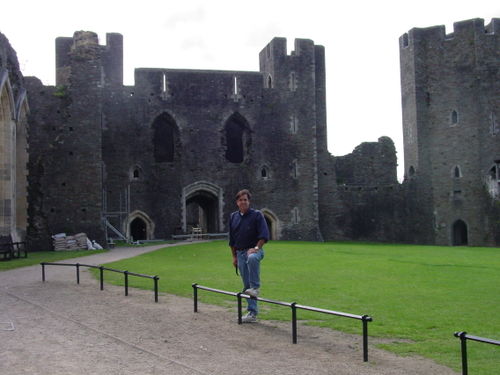
As an amateur admirer of architecture, and the designer of my own home, I have long been intrigued by the design, beauty, and function of castles. On a tour of England once I developed a near fanatical interest in ramparts, portcullises, loopholes, dungeons, keeps, and the like. Every bit an instrument of war as much as shelter, of projected power as much as protection, castles throughout the period demonstrated enormous diversity and creativity. Over the years their construction evolved from wood to stone to humongous masonry structures designed to repel the assaults of seige machines such as catapults and trebuchets.Architecture aside, however, castles were also representative of the sociological change of the times. Power and the rule of law had been centralized in Rome, with local vassal kings and imperial governors selected by the emperor. Once Roman power had been transplanted eastward to Constantinople and the remaining authority in Rome disintegrated, the landscape was open to ambitious princes and dukes. From time to time would-be Caesars attempted to knit the ancient empire back together in all its glory, but none of these efforts ever had the scale or durability of what had gone before. Eventually, it became obvious that might ruled the day and slaughter and conquest was the secret to advancement. As hundreds of princes scattered across Europe made claims to noble blood lines, they constructed castles on every possible hilltop and cliff to project their hegemony. With banditry and violence everywhere, peasants needed protection and were herded into villages within retreat-able distance to the local castle. Where once a people had been (at least to some degree) "free," now they were transformed into "serfs" in one of the largest protection rackets the world has ever seen (the Mafia has nothing on these guys).The castle, then, became the symbol of the oppression of ancient liberties. The peasantry was not ignorant to what was happening; they came to resent the castellans' grasping of power at their own expense. There were some notable revolts, such as the attacks on the Harzburg castle in Saxony, but there was little the poorly armed, unorganized peasantry could do. If there had ever been a time when the common European could have prevented the putting over of himself of a castellated lord, that time had passed before anyone was aware of it. In the final analysis, the last remnants of freedom for the peasants had disappeared with the rule of Roman law.It is a shame that in our own day the encroachments on our freedoms aren't as visible as the castles of the Dark Ages. We, too, like the peasants of old, are losing our freedoms as the rule of law gradually disappears. The structures that are being erected to control and mollify us are not ones of stone and mason, but of government bureaucracy and majority rule. And just like the serfs of Europe who longed for the extinct pax romana (Peace of Rome), we too may awake one day yearning for the good old days of Republican, representative government.Most historians appear to agree that the peasantry of Europe was largely powerless to stop the onset of feudalism. Common people were not sufficiently informed or knowledgeable of the changes creeping in around them, and they never organized in a fashion that would blunt the trends effectively. In our society today, we may be faced with the same combination. The average American is uninformed about the erosion of his freedoms, and has at his disposal little chance to make a difference. In a two party political system that offers very little difference (in terms of actual governance, not in terms of the rhetoric) to the voter, in a government controlled by special interest lobbies, what can the common citizen, concerned as they may be about his future and that of his children, actually do? This is the question, more than any other, that I am asked the most frequently.For starters, we can become educated ourselves about what kind of government we are supposed to have, and what we actually are experiencing now. Next, we can share this information with others, disseminating materials, websites, video clips, and (in short), the truth to everyone we can. That is the purpose of my business partner and co-author Orrin Woodward and his excellent recent series of articles on these very topics. Pass these URLs to others, get people awakened to the facts. Thirdly, get active in the political process. Vote. Write your representatives. Join organizations that believe in what you believe in (which will require the odious task of determining just what that is, first! ๐ I look forward to hearing your comments and ideas on the subject as well!There is a lot we can do. We don't have to be serfs, watching the construction of a castle with fear and trembling. These are not the Dark Ages. Nor, while we have anything to say about it, will it be said of our future, either!