
 (Click on picture to enlarge) Take a gander at the items these two thought most important to save!
-
-
 I had the opportunity over the weekend to hear a fascinating presentation from Erik Weihenmayer, the blind mountain climber who summited not only Mt. Everest, but all the other tallest peaks on the planet. Weihenmayer and his team of twenty-one members set a world record by having nineteen of them make the summit.
 What was more incredible than Weihenmayer's feats of conquest, however, was the class and heart he displayed, without effort, on stage. I have rarely heard anyone speak so highly of teammates and the accomplishments and assistance of others. Weihenmayer was a master of giving credit away and shining the spotlight elsewhere. For a blind man to reach the top of the tallest mountain in the world, a team was definitely necessary. No one could have been more appreciative of their team than Weihenmayer; no sighted person could have had more of a twinkle in his eye.
As I listened to the captivating details of Weihenmayer's climbs, it occurred to me that the spark of something I caught in Weihenmayer's character came from two things central to his existence that are not to be found in the lives of most people I meet:
1. Weihenmayer was doing exactly what he was meant to do with his life, living in the center of God's purpose for him, and
2. He was doing it with all of his (dis)ability.
The pictures and film clips that he showed demonstrated these two facets of Weihenmayer's life very clearly to me. He was living his life in the zone.
These observations set me to wondering. Why is it that so many people, given perhaps more physical blessings than someone like Weihenmayer, do so much less with their lives? Why do most people waste their days without ever seeking that purpose for which they were built? Why don't people take the risks to pursue what their God-given talents and passions point them towards? Then I happened upon the question: If we had been blessed with less, would we be accomplishing more?
Sure, Eirk Weihenmayer has an obvious physical disability. But everyone, including Weihenmayer, has mental "disabilities." We are all limited by pride, ego, fear, lack of confidence, laziness, passivity, indifference, and the desire for comfort. Perhaps Weihenmayer became good at overcoming his limitations because he was forced to do so in the case of his lost eyesight. The same mental toughness he developed to overcome his physical disability may have become supremely instructive in how to overcome his mental disabilities.
I took great lessons away from Weihenmayer's talk. I realized how important a team is to individual success, and I learned from a master how to share credit and lift up others. I felt ashamed that I hadn't sacrificed more of myself toward my purpose, and I understood, for the hundredth time, that life in the zone is the only place to really live. It's when we have the guts to push ourselves to the limit, to surpass all edges of comfort and familiarity, to step out far on the ledge, to force our bodies into submission to our minds, that we will maximize all the potential God put inside us. Anything less is cowardice and lack of gratitude for our blessings. Anything less would suggest that we had been given too much.
-
"Why do you like history?" someone once asked, "It’s so dull; dates and places and names I can’t remember."
Somewhere along the line in this person’s life he was given the wrong sample of the subject of history. This led to a grave misunderstanding. It would be like giving you an icecream sandwich that you spit out because you don’t like the taste of the paper. If no one ever unwrapped it properly for you, or taught you to do it for yourself, you might be stuck your whole life thinking icecream sandwiches taste like paper.
Amatuer teachers and poor writing have contributed to this effect as regards history and its interest. There are few things quite as interesting, or "tasty" as history clearly presented. History is not names and places and dates, although those features are present. History is also not about politics and war and government, although these aspects seem to get a large share of the focus. Rather, history is the consideration of life lived by others, in previous times, in differing circumstances than ourselves, but from the same human perspective. History is the mystery of time, the wonder of others, and the finality and authority of God’s laws all mixed together. History is pain and suffering, joy and celebration, and relationships good and bad. History is memory and tradition and lightness and darkness. History is human nature and nature in juxtaposition. History is a story told in old photographs, a myth told around campfires, the meaning in old-fashioned words. History is real. It happened. And what makes it most interesting; it happened to them.
They will always be the most interesting part of it all; the ones before us. They were the ones who lived it first hand. Our ancient is their modern, our old was their new. Our mystery of history was their reality. Our fictions their truths. I see them in yellowed photographs, staring blankly while holding still for a process that took minutes to our milliseconds. I see them in their writings and their architecture and their art. I see them in their descendents and their creations, and I see them in myself. Each tragedy, each triumph, each dramatic scene, however painted by the sketchiness of the facts that remain to us, each of these were real and vivid to them. They were not better than us, and they were not worse. They were not backwards, and they were not always right. But they do have one thing over us, an advantage we cannot claim until the wheel moves further round its axis, and that is the plain, solid fact that they were there.
This is where history comes alive for me. I feel what it might have been like to have been amongst them. I sense their fears and aspirations as they faced events blindly that we see through the adventageous lense of the passing of time. I wonder at their decisions and choices, and yearn to learn from both their failures and weaknesses. I stand in awe that God arranged to put them here before me, and wonder why it is so. I think about why we are placed where we are, and when we are. And I remember that many of them, an extreme many of them, if I understand the mathematics of the generations properly, were my ancestors. Their blood is pumping through my vines. We have inherited not only the very dirt upon which they have trod, but the very tour of duty they have already completed. They have had their turn, and now we have ours. As George Washington said to John Adams at Adams’ inauguration, "Now I am fairly out and you are fairly in." It is our turn, now. Let’s see if we can do any better at it than they did. We do have an advantage, after all. We can learn from them. As long as we first take off the wrapper.
-
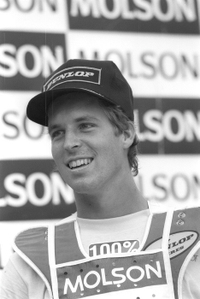
 Way back when I was a teenaged motocross junkie, one of my heroes was Ricky Johnson, a multiple Outdoor National and Supercross Champion. On several occasions I got to see him race in person, and each time it was a treat. I have always admired greatness, and seeing Ricky Johnson at the prime of his motorcycle career was an inspiration.
Today, Mr. Johnson is one of the country’s top dirt truck racers. In a movie documenting the incredible Baja 1000 desert race, Ricky Johnson was interviewed. I found his comments very prescient, and one of the best descriptions of "living in the zone" that I have ever heard. Here is what he said:
"I’ve had what I consider a few moments where I felt greatness, when I raced. A lot of people, if you ask them, will say, break it down, what was your best race? And it might not be they won, but they had a moment. You’re so present, and everything is happening effortlessly, flawlessly, while outside it’s utter chaos, it’s chaos all around ’em. And they’re sitting in the middle of the tornado, the eye of the storm. You make a correction before a reaction starts.
They’re not scared, they’re not afraid, and t
 hey don’t think they can get hurt. You don’t have time to be afraid. Afraid comes afterwards!
It’s not because you’re crazy or you’ve got a death wish. It’s competition. Fighters dont’ fight to hurt people, they fight to win. Races don’t race because they want to die, they want to go fast, and that’s my high. That’s the way I manipulate my life, is through the mechanics of a machine." (emphasis added)
A big part of successful living is doing what you do to the fullest extent of your abilities. Somewhere in that range lies "the zone;" the place where all the fulfillment of God’s promise in you comes into broad relief. You are doing what you were built to do and in harmony with all that you’ve ever wanted to become.
As Ricky Johnson described it, he manipulates race machinery to forge a life that keeps him in the zone, to keep himself alive and pushing to become great at what he was created to do. Each of us has that kind of greatness deep inside. We were built to accomplish and push and strive to utilize all the gifts God has given us. Each of us was given our own arena in which to compete. It may not be off-road racing (which is a shame), but there is a special calling within each person waiting to be fulfilled. It’s inside of that calling that one feels what Mr. Johnson labors to explain in this fascinating quote.
So do what you do, while you can. There will be a day when your chance has passed, when your "racing" days are done. What would you give, in that time, to go back and have one more lap? One more mile? One more opportunity to live "in the zone?"
The key to a life that counts is seeing these truths in advance, realizing that there are doors that won’t stay open forever, and you’ve got to charge through them while you can!
And don’t worry; when you get there, when you operate fully and honestly in the center of your calling, you won’t even be scared. You’ll be great!
-
Habits are the auto pilot in our lives. If we form good ones we will get good results. Bad ones, likewise, produce results of their own kind.
Most of the significant problems we face in life are not the result of sudden calamity, though those are certainly to be encountered from time to time. Rather, most of our problems were brought on slowly, over time, either by things we did wrong, or by things we didn't do that were right.
One of my favorite quotes comes from two characters in a novel. One asks the other, "So how did you go bankrupt?" to which the other answers, "Very gradually, and then suddenly."
That's the way it is in our lives. We abuse our body in little, consistent ways over the course of years. Then one day we are sitting on a doctors table and get the bad news. We are shocked, scared, and regretful. But by then it's too late. Financially speaking, it's the same way. Nobody goes broke in a day. Usually, it's the long term duplication of bad practices that add up over time.
Never underestimate the power of accumulated action over time. Good action can produce staggeringly successful results. Negligent actions can produce catastrophically dire consequences.
As leaders, we understand that the choice is ours. We don't get to pick the cards we're dealt, so to speak, but we are responsible for how we play them. And don't think that everything depends on those initial cards. I've studied enough successful people to realize that the dealing of the cards is never the complete story, just the "back story." If you were dealt some pretty tough cards financially or physically, it doesn't mean that you can't overcome the odds and still gain some success. It just means that it will be interesting and will demand the best you have to give. But that's not so bad. You're supposed to be giving your best, anyway!
So spend less time considering the hand you were dealt and give more attention to how you are going to play your cards. Form good, productive, healthy, long-term, purpose-driven, integrity-rich habits. Over time, which will in that case actually be on your side, you might just amaze yourself at how "the game" ends up.
Or, sew poor habits into your life and, rest assured, you will be heading for a train wreck. The choice is yours.
-
One of my readers, Jerry Lovelace, sent me the following hilarious statements made by witnesses in actual court proceedings. These are supposedly actual statements made! I hope you enjoy them as much as I did! Thanks, Jerry, for submitting these!
ATTORNEY: What gear were you in at the moment of the impact?
WITNESS: Gucci sweats and Reeboks.
______________________________________
ATTORNEY: This myasthenia gravis, does it affect your memory at all?
WITNESS: Yes.
ATTORNEY: And in what ways does it affect your memory?
WITNESS: I forget.
ATTORNEY: You forget? Can you give us an example of something you forgot?
_____________________________________
ATTORNEY: What was the first thing your husband said to you that morning?
WITNESS: He said, ‘Where am I, Cathy?’
ATTORNEY: And why did that upset you?
WITNESS: My name is Susan!
______________________________________
ATTORNEY: Now doctor, isn’t it true that when a person dies in his sleep, he doesn’t know about it until the next morning?
WITNESS: Did you actually pass the bar exam?
____________________________________
ATTORNEY: The youngest son, the twenty-year-old, how old is he?
WITNESS: Uh, he’s twenty-one.
______________________________________
ATTORNEY: She had three children, right?
WITNESS: Yes.
ATTORNEY: How many were boys?
WITNESS: None.
ATTORNEY: Were there any girls?
WITNESS: Are you ******* me? Your Honor, I think I need a different attorney. Can I get a new attorney?
______________________________________
ATTORNEY: How was your first marriage terminated?
WITNESS: By death.
ATTORNEY: And by whose death was it terminated?
WITNESS: Now whose death do you suppose terminated it?
______________________________________
ATTORNEY: Can you describe the individual?
WITNESS: He was about medium height and had a beard.
ATTORNEY: Was this a male or a female?
WITNESS: Guess.
_____________________________________
ATTORNEY: Is your appearance here this morning pursuant to a deposition notice which I sent to your attorney?
WITNESS: No, this is how I dress when I go to work.
______________________________________
ATTORNEY: Doctor, how many of your autopsies have you performed on dead people?
WITNESS: All my autopsies are performed on dead people. Would you like to rephrase that?
______________________________________
ATTORNEY: ALL your responses MUST be oral, OK? What school did you go to?
WITNESS: Oral.
____________________________________ __
ATTORNEY: Do you recall the time that you examined the body?
WITNESS: The autopsy started around 8:30 p.m.
ATTORNEY: And Mr. Denton was dead at the time?
WITNESS: No, he was sitting on the table wondering why I was doing an autopsy on him!
_________ ___________________________________
ATTORNEY: Are you qualified to give a urine sample?
WITNESS: Huh….are you qualified to ask that question?
______________________________________And the best for last:
______________________________________
ATTORNEY: Doctor, before you performed the autopsy, did you check for a pulse?
WITNESS: No.
ATTORNEY: Did you check for blood pressure?
WITNESS: No.
ATTORN EY: Did you check for breathing?
WITNESS: No.
ATTORNEY: So, then it is possible that the patient was alive when you began the autopsy?
WITNESS: No.
ATTORNEY: How can you be so sure, Doctor?
WITNESS: Because his brain was sitting on my desk in a jar.
ATTORNEY: I see, but could the patient have still been alive, nevertheless?
WITNESS: Yes, it is possible that he could have been alive and practicing law -
Nearly all the noteworthy leaders throughout history have been big readers. Reading is the shortcut to successful thinking, the route to accurate perspective, and the doorway to knowledge. Reading can be fun and entertaining, enlightening and inspiring, and should always lead to a better understanding of our lives and the world we live in.
It is tragic that in our entertainment society we are losing our literary bent. From what I can tell, although every airport has a book store, and although Barnes and Noble and Amazon seem to be doing fine on-line, there is a decline in the habit of reading. With video games, movies, television, Internet, sports, traffic, hobbies, organizations, kid's sports and activities, longer working hours, and that endless list of errands that need to be run, we seem to have very little time for simply reading. I suggest, however, that it is important for us to make time to read. As busy as people get, it seems that they always find a way to do the things they want to do. Reading should be a priority that is worthy of a spot in our busy schedule.
Think about how much of our daily living is just thrashing against the current. It doesn't carry us forward toward our goals and dreams, nor does it even hit on our priorities. In fact, a major percentage of our lives is spent and not invested. But reading is an investment. It is important. It should be a priority in itself. It jump-starts our brain and reminds us that we were created for more than just the daily grind.
Have you read the classics? Do you have at least a working knowledge of some of the writings from the greatest minds of history? Do you read from several different genre? Have you had a book that has touched you deeply or awakened you to something grand?
Let me suggest that you make it a priority to increase the quantity and quality of reading in your life. Make it part of your daily schedule; something that becomes habitual. The more you do it, the more you'll like it, until you find yourself yearning for the next break in your schedule where you can enthrall your mind once more. There is a whole world in the pages of great books. Go discover it for yourself!
-
Communication is a category in which leaders must become excellent. Poor communication leads to confusion, distrust, and an overall feeling of disarray that does anything but inspire confidence among the troops. It doesn’t take very many "I thought I told you," or "That’s not what I said," or "I guess we should have made you aware of that," for a group of followers to lose faith in their leader.
Good communication makes people feel like they are valued by the leader. It helps people to feel included. It makes sure that they have the proper information to act upon and therefore their actions align with the direction and vision of the leader. Clear, timely communication also builds harmony and group spirit, as everyone is "on the same page" and can feel confident that they aren’t wasting their time heading in the wrong direction.
There are several things to consider when communicating:
1. Clarity: it is important to be clear. As one of my professors used to say, "Be clear, be clear, be clear, and if all else fails, be clear!"
2. Timeliness: Get information and announcements out in plenty of time to be useful, calming, and relevant.
3. Informative and Complete: Irrelevant communication is worse than none at all. Incomplete communication looks hokey and kills trust in the leadership.
4. Honest: Nobody wants "spin." Be candid and straight in good news and bad.
5. Using Multiple Channels: With today’s technologies, there are so many ways to communicate that leaders should have an easy job of it. Be sure and use multiple channels for getting your message out. One method reinforces another.
6. Personal: When you can, especially for important matters, use personal communication. Messengers, go-betweens, emails, and other "third-party" communication can actually be bad if the news is bad, of a critical nature, or sensitive and possibly offensive to the recipient. Never use email or phone messages or texts to address behavioral issues or character problems. For the important things, there is no substitute to direct communication.
7. Pervasive: There is nothing that creates division in an organization more than scattered, incomplete communication in which some parts of the organization are "in the know" while others aren’t. Unless there is a specific reason to the contrary, spread information evenly and completely throughout your team.
8. The Law of Buy-In: Many communications should more naturally take in your biggest leaders and influencers first. This gives them a chance to " buy in" to the communication and also gives you, the leader, a chance at feedback before the communication reaches a wider audience. Ignore this one at your own peril.
In addition to this list, it always behooves a leader to become good at public speaking. The better a leader is at expressing himself verbally, in front of a group, the more credibility he is given and the more people are willing to follow. Many leaders could increase their effectiveness significantly if they could just improve their speaking ability.
You have to be able to cast in order to cast a vision. To lead effectively you will have to learn to communicate effectively.
-
"The significant problems we face cannot be solved at the same level of thinking we were at when we created them." - Albert Einstein
Success requires proper thinking. Notice in this famous quote how Einstein, without stopping to defend his supposition, as if it were just the most obvious thing in the world, basically says that our thinking created our significant problems.
Our thinking?
If you listen to many of the political pundits these days you would not be lead to believe that our thinking created our significant problems. Rather you would learn that our parents are to blame, or the our ancestors, or the color of our skin, or our socio-ecomic standing, or American imperialism, or an unfair educational system, or tax breaks for the rich, or . . . . all of these reasons and more are sold to the American public as the reason for the significant problems we face. It follows naturally, then, if the problems are not your fault, they must be somebody else's. This would naturally then extend to mean that someone else is responsible for fixing them! Oh, how "the people" love this kind of stuff! Anyone who comes along and blames their problems on others, relieves them of personal responsibility for fixing them, and promises easy solutions "if you vote for me" has a ready-made following.
Unpopular, however, is the person that dares to suggest that people are the creator of their own problems. First, that would require getting people to admit responsiblity – always a dangerous thing. Second, it would imply that the person himself would be responsible for fixing his problems – shear heresy! Third, it would feel harsh and unfair, and you know how sensible our feelings are these days.
Am I being tongue-in-cheek? Do you think so? Sadly, I don't think so.
Step One in successful thinking is realizing that we are responsible. We might not be entirely to blame, but that is beside the point. Blame never accomplishes anything. We, and we alone, are responsible for our conduct and our results. Any time we try to assign that responsibility to others we lose freedom on the altar of negligence. As we allow someone else power over our results, we give them proportional power over our conduct. It can work no other way.
Step Two is realizing that thinking is what produces problems or gains. Our actions flow from our thinking, and our results flow from our actions. Our thinking is what is responsible.
So how do we take control of our lives and utilize our freedom? By learning to think properly about success, personal responsibility, and the results we have in our lives. By confronting brutal reality as it actually is, then owning up to the steps we can take to make an impact on that reality. The way out of our problems is neither blaming others nor asking for their help in digging out, but rather learning to think better than we did when we made our messes originally, then changing behavior accordingly. It is difficult, but it is the only way out of an endless cycle. As the saying goes, "If you want to change some things in your life, you've got to change some things in your life." Try starting with your thinking.
Just think about it :)
-
Leaders must learn to build relationships. It is through relationships that we are able to influence others, be influenced ourselves, and receive some of life’s richest blessings. The relationships in your life should be some of your most prized "possessions."
One of the things I have always tried to teach about building relationships is to "get history" with people. This means spending time with them and experiencing the things that life throws at us, together. Sometimes this will involve funny occurrences, strange events, memorable experiences, or touching moments. There is little substitute for time spent together. Time allows shared experiences. Those shared experiences build bonds and create lasting connections. Think back through your life and the relationships that have mattered. Weren’t there special memories and fun times that marked those relationships in your life?
People can be challenging, prickly, annyoing, and grating. But they can also be enjoyable, fun, inspiring, and warm. Choose carefully the type of people you’d like to spend the days of your life with. Look for those who reciprocate your warmth, positive attitude, and beliefs. Look for those who will lift you, encourage you, stand by you, and contribute to your life. Then find ways to spend time together, letting the things happen that will happen. Be intentional about the building of relationships in your life. Contribute to others, be an up-lifter and a good-finder. Ask yourself if you are the kind of friend a friend would like to have. Be there when needed. Keep promises. Find little ways to be an enhancer in the lives of others. Do all these things and I promise that you will not only have some of the best campfire stories to tell at the end of your days, but there will be many people there who’ll want to hear them!


 Welcome to Chris Brady's Blog
