Welcome to
Chris Brady’s
Blog

“The only way to be happy, is to give happy.”

  • Leadership is with, for, and about people.  One of the most important things for a leader to learn is how to deal with people.

    I am amazed at the vast veriety of people in our world.  From different cultures, races, creeds, geographical locations, and a whole host of other orientations, the range of people out there is extremely diverse.  This variety is amazing.  It also poses challenges for any would-be leader who has to learn to engage with people with such differing outlooks, perspectives, beliefs, attitudes, and world-views.

    Leaders not only have to get along with people, but they have to get along side people. They have to find a way to connect, to find common ground, to find something they can share, and ultimately to find a way to influence that person.

    I am shocked when leaders complain about the people they lead, or act disappointed when people don’t meet their expectations.  Anyone could lead perfect people.  But imperfect leaders are called to lead imperfect people.  Leaders who expect their people to be perfect, or to be just like themselves, don’t understand the realities of life OR leadership. 

    Leaders lead groups of imperfect people who squabble with each other, get their feelings hurt, get offended, hold grudges, play mental games, pout, fight with each other, are spiteful, selfish, and do unfair things.  All this should be expected.  The quest isn’t for perfect people to lead, but for the leader to improve toward perfection so he or she can be more effective in leading people the way they actually are.

    Don’t get me wrong.  The goal is to help people improve, grow, and change.  There is no excuse for misbehavior and the selfishness I’ve just described.  But leaders must deal in the reality that with people comes challenges, and they must grow to be mature enough to endure it, thrive in that environment, and guide it all in a productive, vision-driven direction.

    How do leaders do this seemingly impossible task? 

    Primarily by loving their people.  By having an accurrate, realistic understanding of the fallen condition of humanity, and then being full of the love of Christ in dealing with those people, understanding that some of the same faults and shortcomings also reside within!  This is done by having thick skin, being slow to anger, quick to forgive, and keeping one’s eye on the bigger picture.  It’s also easier said than done.       

  • TerriAt the risk of this blog becoming a public romance, (especially in light of the nice surprise she cooked up for me on my birthday), I have decided to feature my incredible wife, Terri Brady, as the next leader in this series of noteworthy contemporary leaders.

    Many women ask what the proper role of a woman should be in leadership.  The best answer I can give of this is for people to simply observe Terri Brady in action.  And regarding Terri I have a great perspective for this – I am married to her!  I get to see her on a daily basis, living and carrying out the principles she teaches from stage. 

    I believe one of Terri’s biggest strengths as a leader is how Christ-centered she is.  It has been this way since I met her.  She loves the Lord Jesus Christ and is desperately concerned to do His will and to serve His purposes.

    Another area in which Terri shines as a leader is in her incredible personal discipline.  Each day she rises early and does her Bible study, then does one of her many workouts.  No matter how much we have been traveling, working, or whatever, she rarely misses an early morning of her routine.  She is very disciplined in the areas of self-denial, waiting on purchases or food splurges or whatever she has determined must come under her powerful force of self-discipline.

    Terri is also incredibly "other focused."  This can readily be seen in her surprise to me on this blog where she wanted to honor me and include all of you in the game!  It can be seen in the way she takes time with her children to educate them, enjoy them, train them, discipline them, and guide them.  It can be seen in how she treats me: always quick to apologize and to give me the benefit of the doubt.  And, probably the most striking: the amazing amount of time and energy she spends thinking about others and what they might need. Terri is ALWAYS asking me about someone else, Did they get out of the hospital? Did they mention if so-and-so had the baby?  Did they need anything from her?  Would it be okay to send her a card?  Do you think I should call her?  Do you think we could pray for them?  These are the questions Terri asks me tirelessly in her concern for others.

    Terri is also quick to forgive and slow to be offended.  I have seen her take shots most men couldn’t handle.  She has been as mistreated and harshly dealt with as any leader who dares to stand for something and make a public stand, and she handles it with strength, poise, and grace.  Usually, if something goes wrong, she is quick to assume she is the one to blame and that she must have done something wrong.

    Terri is also hungry for personal change.  Of all the leaders I have been privileged to work with over the years, she has grown personally more than all of them.  She reads, prays, asks me about how she can improve, and holds herself accountable without mercy.

    Courage also comes to mind.  Terri is an old-fashioned "scrapper," and is not afraid of confronting injustice.  Reminiscent of Abigail Adams, she does not shy away from a fight and she doesn’t have a cowardly bone in her body.  I don’t mean this in a bad way, as if she is contentious, but rather that she is valiant and willing to push through her fears for the right reasons no matter what.   

    One last area, although I could literally fill pages about her, is that when I mess up, forget to inform her about something, change her schedule without notice, have to change something I promised, or have to push her considerations to the side because of some pressing business matter, she NEVER makes me pay a price for it!  I mean never!!  I have broken off dinner dates with her, flat cancelled others, changed the plan, then changed it back, then changed it again so many times I cannot count. And incredibly: she doesn’t count them either! I am never hit with a guilt trip, pouting, or "wharehousing" of offenses stored up for a later fight.

    Each of these Terri Brady strengths are great examples for anyone on the leadership journey to emulate.  I know I certainly appreciate the up-close example of someone who is truly a great leader, and an incredible wife to a crazy man!  If Terri has been a great example to you, encouraged you, or inspired you in some way, feel free to share it!


  • Victory One of the most important things to understand about leadership is that it is not about YOU.  People who crave what leadership can provide, thinking that this entails perks, power, position and status, are really not fit for the position.  Reluctant leaders, a term that at first seems like an oxymoron (as opposed to the regular, run-of-the-mill moron), is actually one of the prerequisites for the job. 

    History is full of people who were reluctant to assume the mantal of command, but through that very humility, contributed in enormous ways to their cause.  Usually, the injustice, cause, and/or vision is so compelling to the leader that he or she cannot help but get involved and start shaping events in that direction. 

    What leaders discover is that leadership is not about themselves, perks, power, or position, but rather about empowering and serving others.  The better the leader, the more he or she serves others.  Empowerment sounds like a corporate buzzword, but is actually extremely important.  As author Marshall Goldsmith (whom I have quoted eslewhere on this blog) states:

    "The higher up you go, the more you need to make other people winners and not make it about winning yourself."

    Remember: the world’s biggest and best leaders make other people into winners.  That is what Orrin Woodward and I attempted to explain with the Five Levels of Influence in our Launching a Leadership Revolution book.  The higher level leaders do more and more to make others effective.

    To determine how well you, as a leader, are doing in this area, ask yourself the questions: How much did I deposit into the lives of others today?  What did I do specifically to add to their capabilities, opportunities, and belief systems that can help them move on as leaders and winners?  How are the people around me doing in their leadership development?  Who can I help win?  How?

    Be mindful of this requirement in the world of leadership.  Don’t ever forget that leadership is about turning others into winners, and take some positive steps in that direction each day!

    Lead on!   

  • On March 16, 1967, an amazing leader was born. My husband probably wouldn’t want me to put this on his blog (although he has asked me if I would contribute sometime, but not THIS), because I wanted to write about my favorite leader, him.  (He doesn’t know I’m posting right now.) I have heard it said that the biggest test of a leader is not how he leads a company, a church or large organization but how he leads his home.  If that were the biggest test, I’d say, from the insider’s look, he surpasses all expectations.  Although I would love to get all mushy about the man I love, I would rather list some qualities of his from which I think others can learn.  I know I have become a better woman because of his influence and I’m sure many could comment here on his birthday of the way he has influenced them as well.  (Of course, he wouldn’t want those comments, because he wants this site to be about the three people who read it J and not about he, himself.)

    A leader is “hungry”:  The Bible says “blessed are those who hunger and thirst for righteousness.”  Chris hungers in a healthy, driven way.  A recent six months could have been time for rest. He used the time as he always does – asking, “in 5 years, what will I wish I had done with today?”  He doesn’t know how to “brood.”  He doesn’t “rest” when righteousness has not been achieved.  He is hungry to know more, to help more, to achieve more and to provide for others who can achieve more.  He is continually reaching up for the next rung of personal improvement and bringing others with him.

    A leader is humble:  You see him as the star of the stage in front of tens of thousands.  I see him as a soccer dad, a church elder and a customer at the local family restaurant.  Chris treats others as valuable human beings who were created by the same God as he. He doesn’t boast or brag, yet his humility goes beyond.  It’s evident in the way he asks questions and learns from everyone, esteeming others as better than himself.  I see his humility in the way he treats even me.  I want to be the biblically defined submissive wife, and Chris allows me to feel so respected in my role, he makes my job easy.  I often hear men complain that their wives don’t follow their lead and they feel like they are dragging an anchor.  I feel like Chris proudly displays me on the bow of the boat so I can feel the wind and don’t have the chance to think of becoming an anchor.  He gives honor when he feels honor is due, and often when I don’t feel worthy of it.  He continually lifts me and the roles I play and points out their value to him.  He says, “thank you” for my stay-at-home mom duties as if there’s no way he could survive without them. He tells me he “needs my brain on this one.” When I know his brain could certainly handle anything without me, I feel respected in being asked.  This gracious spirit shows a humility from which so many of us can learn.

    He is NOT dependent – and I actually don’t mean “independent.”  Chris is not dependent on approval of others.  This is such a strong quality of a leader. Of course, it takes the pressure off of me, his wife. If he were dependent on me for his joy, I would feel overwhelmed and pressed down.  He gets his joy and peace despite circumstances from the Lord, so it’s difficult for a man to sway his direction.  Thank goodness my moods don’t swing us both!

    He forgives:  I am inspired by Chris’s ability to say, “but for the grace of God go I” and forgive.  He allows people back into his graces before they have left the room from apologizing.  He doesn’t know how to brood.  He doesn’t know how to send people on a guilt trip.  He just moves forward and helps others do it too.

    He gets angry! (righteously): This may be under the “hunger” category, but his hunger turns to anger at such great causes. He gets mad about questions like: why do we protect owl eggs by law and yet allow killing of unborn baby humans? He gets angry over schools not being allowed to teach the Ten Commandments, but states (California recently) not allowing parents to school their own children.  He can’t stand that some people wallow, feeling like failures, when he knows what’s inside of them is the same thing inside of himself.  He doesn’t sit back and stew, though.  He fights with all that God has given him.

    He drives:  He is a driven man. He is focused on a destination and keeps that always in mind.  One time, when we were going 70mph on an exit ramp, I questioned whether it was the right exit or the best way to get to where we were going. I’m sure I commented on the speed at which we took the exit as well.  He looked at me and took his hands off the wheel as if to let me control the wheel from my side of the car.  We jumped the median and went into the opposing lane before he grabbed the wheel and brought us back over to the right side of the road again.  Believe it or not, we laughed. We still laugh today about that night. I needed that.  I needed to be shown that driving the vehicle from the passenger side distracts the driver and puts us in danger that would not have been there if I had not asked.  I realized that night that I am the most blessed woman to be married to a man with the guts to hold the steering wheel, point it in the Right direction and DRIVE.  That’s the kind of leader we all want to follow!

    In light of Chris’s birthday, I asked for another’s comments as well:

    This is written for his birthday, March 16.  Chris Brady is a very kind man who I know very well.  He took the time to play Legos and Duplos with me even when I was just a three-year-old.  I love the stories he tells about a cowboy, Buster and his part Indian friend, named Jack-Jaw Crowe. They’ve gone on amazing adventures together back in time and have seen real history as it happens.  My dad is so amazing to make these up while he sits at my bed.  That shows how creative he is.  He has let us fish out of the boat by slowing down, even when I’m pretty sure he doesn’t want to go slow.  That shows how self-sacrificing he is.   He works a lot of the time when he doesn’t have to.  That shows how disciplined he is.  Sometimes he’ll play with us, even when he has a lot of things on his mind. That shows how fun and kind he is. He has a great sense of humor and tells lots of funny stories.  That shows how funny he is.  I lost track of how many books he’s written recently.  He’s generous too.  When I ran out of paper, he gave me a whole new pad!  He let us tell him our Bible verses and encouraged us, even though he was really sick.  He’s always trying to toughen us boys up in lots of different ways. He has shown us different movies, like Lord of the Rings and Rocky.  He’s a great athlete. He’s good at lots of sports.  In my eyes, he’s pretty good at everything!  He has taken me to meetings and read to me.  I get to grow up with him and we do everything possible with my brother too.  When times are really hard, he doesn’t whine or complain.  He is probably my hero.  The biggest thing about him, though, is that he’s a Christian.  He has lots of friends, mostly because he’s such a nice person.  He’ll take us to beaches when we are in Florida together, go swimming, and do lots of stuff with us.  He is also organized.  His office always has different books in different piles. He’s let me read some of his books.  He’s showed me things on his blog.  Chris Brady is a wonderful man.  I want to write some books too!  I like everything about my dad.  He’s a hard worker; he’s disciplined; he’s kind; he’s smart; he’s written five books (I think); he doesn’t brag; he’s self-sacrificing; and most of all, he’s Christian.  I think he’s one of the most important men. Thanks, Dad, for all you do for the team and your family!

    Love, Casey [age 10]

    Update:  Thanks to everyone, my awesome wife and family most of all!  I don’t deserve even a portion of this, but I appreciate it all!  (And, all three of you readers out there are fantastic!)

  • After talking about this topic at a Men’s Leadership meeting last evening in Flint, Michigan, several men asked if I could post these points.  Here they are!

    Inspired by the statement, "When the going gets tough, the tough get going!"

    Principles of Leadership Toughness

    1. It’s not going to be fair (leaders often carry an unfair load)

    2. Leadership is an inside job (nobody is responsible for motivating you, but yourself)

    3. Expect Obstacles (cute little fella) and problems (remain calm, remember it’s not what happens but how you respond, remember the axiom "This too shall pass," and stay committed to the purpose)

    4. Success is never easy

    5. "It’s a long climb from the bottom and a short drop from the top" (don’t get cocky, and don’t stop doing what you did to get success in the first place)

    6. Winners play hurt (remember the phrase "Doesn’t matter, doesn’t matter, doesn’t matter . . . . )

    7. It’s always worth it to be a hero (you’ll never regret the times you gave of yourself to others)

    8. To be tough, you must find the source of your courage

    9. Being tough does not mean being mean, cold-hearted, bossy, or abusive. 

    10. The role of leadership requires the uniform of thick skin

    11. Purpose is the key (you must be tough in the name of something.  Find you purpose and live your life serving it)

    Other points:

    To make a difference, you’ve got to be different.

    To make a stand, you’ve got to stand out.

    You will be remembered for something, what will it be?

  • "The barriers are not erected which can say to aspiring talents and industry, "This far and no farther."  – Ludwig van Beethoven

    "When I have fully decided that a result is worth getting I go ahead on it and make trial after trial until it comes"  – Thomas Edison

    "March on.  Do not tarry.  To go forward is to move toward perfection.  March on, and fear not the thorns, or the sharp stones on life’s path."  – Kahlil Gibran

    "Don’t let the bastards grind you down."  Joseph W. Stilwell

    "A man either lives life as it happens to him, meets it head-on and licks it, or he turns his back on it and starts to wither away."  – Gene Roddenberry

    "There are days when it takes all you’ve got just to keep up with the losers."  – Robert Orben

    "Most people give up just when they’re about to achieve success.  They quit on the one-yard line.  They give up at the last minute of the game, one foot from a winning touchdown."  H. Ross Perot

  • Back_large_2When entering the corporate world there are all sorts of important things to learn.  One of the most critical is verbal communication.  Many people might assume that talking at work is the same as everywhere else in life, but that is logical and therefore not true.  In the corporate world, there is an unwritten rule that prohibits anyone from saying anything original (there are also restrictions against thinking anything original, but that exceeds the scope of this essay).  The challenge then becomes knowing how to speak at all.

         Thankfully, a whole bunch of clever some-bodies have developed a language unique to the corporate world called Analogy Phraseology, Corporate Speak, Buzzwordonics, B-Bonics, or Corporate GaGa.  This simple, straight-forward language can be learned only by contact with fluent speakers, and is normally disseminated in long, boring meetings conducted at work over the course of several years.  The best way to identify an Analogy Phraseologist is to detect whether or not this corporate language has carried over into their private conversations outside of work.  If so, they are very boring.  This automatically makes them qualified to teach you.

         When reviewing the following list, it may be the most useful to you if you write down five to ten of your favorites.  Then, when questioned at work about something, you can randomly choose one of the phrases from your list and offer it in response.  Statistics have shown that this method is ninety percent effective at least half the time!

         To help acquaint you with this new language, I am here providing the first list of the most popular Analogy Phraseologies.  This is by no means complete, but each and every phrase has been authentically obtained in meetings in the corporate world.  I hope these will help you in your career (but doubt it).  Should you happen across any further samples, you are welcome to share them with the rest of us in the comment section of this post.

    • Driving home the point
    • Being held out to dry
    • Get our ducks in a row
    • “Sit Down” and discuss it
    • Run that flag up a pole
    • Think outside the box
    • Tail wagging the dog
    • Fox in the henhouse
    • Stepping on our @#$#$^$%^#@ s
    • Put our foot in our mouth
    • Barking up the wrong tree
    • Climbing the wrong ladder
    • Egg on our faces
    • Got our knickers in a knot
    • Make sure everyone’s in bed together
    • Fold up our tent
    • Pull up stakes
    • Mending fences
    • Eating crow
    • Being taken to the cleaners
    • Fishing for answers
    • Rolling in dough
    • Bleeding us dry
    • Nickel and diming us to death
    • Getting hen-pecked
    • Throwing good money after bad
    • Sinking like a stone
    • Leaking like a sieve
    • Slower than molasses in January
    • We’re off in the weeds somewhere
    • Can’t see the forest for the trees
    • Keeping us in the dark
    • Trying to drain the swamp
    • Swallowing an elephant
    • The whole ball of wax
    • Up to our axles in alligators
    • Getting cut off at the knees
    • Head them off at the pass
    • Swallowing this thing whole
    • Turning up the heat
    • Playing with fire
    • Fight fire with fire
    • Don’t mince our words
    • Have our cake and eat it too
    • Put the cart before the horse
    • Dot our “I”s and cross our “T”s
    • Mind our “P”s and “Q”s
    • The train is leaving the station
    • Cross that bridge when we get to it
    • Come Hell or high water
    • We’re all in the same boat
    • Has the cat got your tongue?
    • *^*$(%#$ or get off the pot
    • Fish or cut bait
    • Carry our weight
    • Light off a powder keg
    • ($#($#$@ hits the fan
    • Dog and pony show
    • Cat and mouse game
    • Playing with an empty deck
    • Skating on thin ice
    • Gather our forces
    • Up the creek without a paddle
    • Up @#$@#$#@ creek
    • Robbing Peter to pay Paul
    • The right hand doesn’t know what the left hand is doing
    • Blind leading the blind
    • When it rains it pours
    • Just another pretty face
    • Can’t teach an old dog new tricks
    • Like trying to nail curd jelly to the wall
    • Make sure everyone’s on the same page
    • Make sure everyone’s singing from the same song book
    • Circle the wagons
    • Charging Hell with a squirt gun
    • Gone to Hell in a hand basket
    • That went over like a fart in church
    • Like a Chinese jigsaw puzzle
    • Rubbing salt in the wound
    • Make up for lost ground
    • Dancing on the ceiling
    • Whistling

      Dixie

    • Hogging the ball
    • Stealing the show
    • Taking the floor
    • Holding our own
    • Get our heads together
    • Bought the farm
    • Deep sixing it
    • We’ll be pushing up daisies
    • Re-invent the wheel
    • Plowing new ground
    • Digging our own graves
    • Like a bull in a

      China

      shop

    • A real barn burner
    • Taking candy from a baby
    • Get our marching orders
    • Tackle the issues
    • Take a bird’s eye view
    • Hold your horses
    • Keep your pants on
    • Don’t get your shorts in a bundle
    • Bite the hand that feeds you
    • Don’t get caught with our pants down
    • Left out in the cold
    • Like selling ice cubes to an Eskimo
    • He needs a lot of hand holding
    • It pushed him over the edge
    • Out for blood
    • Going for the jugular
    • Burying the hatchet
    • Making waves
    • Throwing stones
    • Slinging mud
    • Giving it a lick and a promise
    • Don’t want to tip our hand
    • That’s just the tip of the iceberg
    • Cut off our noses to spite our face
    • Stacking the deck in our favor
    • Firing a shot across their bow
    • Tipping the scales
    • We’ll eat their lunch
    • Getting rid of the bad apples
    • Mixing apples with oranges
    • Not until the fat lady sings
    • At the end of the day
    • Finding a needle in a hay stack
    • Coming in from the cold
    • We’ll sleep like babies
    • Keep us afloat
    • Whatever trips your trigger
    • Whatever floats your boat
    • Whatever sinks your sub
    • Does a bear @#$@#$ in the woods?
    • Feel like an all day sucker
    • A shot in the dark
    • We’re taking some shots
    • It’s like a house on fire
    • Close the barn door on that one
    • Close the book on it
    • Plug the dam
    • Dam breaks loose
    • We’ll lose the whole kit and caboodle
    • Farting in the wind
    • #@@#$ up hill
    • Lose the shirt off our back
    • We all put our pants on one leg at a time
    • Grasping at straws
    • Head over tea pot
    • Ship of a different color
    • Playing second fiddle
    • Left holding the bag
    • Swatting flies with a sledgehammer
    • A crock of @#$@%^%$
    • The pot calling the kettle black
    • Putting ten pounds in a five pound sack
    • Too many strings attached
    • Cut through all the red tape
    • Pick or poison
    • Pull our punches
    • Hammer out the details
    • Give it a Nerf toss
    • Sleeping with the enemy
    • Throwing the baby out with the bath water
    • Burning bridges
    • Where there’s smoke there’s fire
    • A snake in the grass
    • Watered down
    • The straight skinny
    • Reading

      the riot act

    • Honest to gospel
    • The full monty
    • The whole enchilada
    • A tough nut to crack
    • Woke up on the wrong side of the bed
    • Swinging for the bleachers
    • Time to punt
    • Learning the ropes
    • Taking it on the chin
    • Walking a tight rope
    • Dancing around the main issue
    • Shake the tree and see what falls out
    • Brown nosing
    • Stabbing in the back
    • Passing the buck
    • Banging our heads against the wall
    • Falling off the deep end
    • Feeling our oats
    • Ruffle their tail feathers
    • Make our mark
    • Pushing the envelope
    • If not it’s “Katie bar the door”
  • Boatsigna_2 (Check out the name of the boat!)

  • I recently came across a very scholarly work regarding slavery in early America and was fascinated by the interesting angle from which it analyzed that horrible institution.  I have chosen a few segments upon which to comment, my remarks in blue following each section.

    A New Perspective on Antebellum Slavery: Public Policy and Slave Prices

    Yanochihk, Ewing, Thornton

    Atlantic Economic Journal, Sept. 2001

    Robert Fogel and Stanley Engerman [1974] revolutionized the economics of slavery and established the "capitalistic character" of antebellum slavery. They showed that the price of slaves and the profitability and long-run viability of slavery in the American South were based on economic factors such as the demand for plantation output, capital markets, and the entrepreneurial ability to organize slave labor and increase productivity. Fogel [1989, p. 11] recognized that "the slave economy did not operate in a vacuum. Both its original economic successes and its ultimate collapse were heavily influenced by the legal and political conditions." However, while Fogel [pp. 11, 201-417] places great emphasis on political forces in the destruction of slavery, he maintains that economic conditions were the overriding factors for explaining the success of the institution [pp. 60-80]. Many scholars have recognized the importance of the slave codes for determining the legal character of American slavery and the treatment that slaves received from their owners, but public policy and the slave codes continue to be ignored as a factor in the economics of slavery. [1] Whip
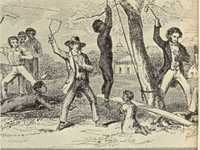
    This article posits that one of the over-riding reasons slavery continued to work in the south was because it was carefully established to remain economically viable.  This was done through several factors, but two that are rarely heard about are Public Policy and Slave Codes (using the government and the legal system).  The whole arrangement of slavery was for the "many" (slaves) to do all the work so that the "few" (slave owners) could be prosperous.  I guess it should not be surprising that the large plantation owners of the antebellum south used their clout, wealth, prestige, resources, and influence to bend the local laws to their advantage. 

    The relationship between public policy and the profitability of antebellum slavery is explored here with an empirical investigation of the impact of manumission laws and slave patrol statutes on the market value of slaves. Empirical testing confirms that these public policies did have a sta tistically significant relationship with slave prices. These results provide a new perspective [2] on antebellum slavery: the profitability of slavery and the political institutions of slavery–the slave codes–were dependent on public choice. [3]

    The more successful the wealthy slave owners were at getting statutes passed and using laws to "trap" slaves into their condition of bondage, the wealthier they became as a result.  In essence, the more trapped the slaves were, the more valuable they were to the wealthy plantation owners who amassed all the resultant wealth of production and shared almost none of it with the slaves.

    The Political Economy of Slave Security

    Economists John S. Mill [1987] and John Cairnes [1863] identified public policy and other institutions as important constraints on the value of slaves. They also recognized that monitoring slaves was the important variable in determining the efficiency and profitability of slave labor. Combining these insights, this paper investigates the role that public policy played in the monitoring of slaves and, thus, the economic Underrr2viability of slavery in the Antebellum South.
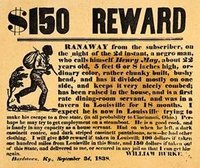
    Monitoring slave labor consists of both supervision and security. Productivity supervision is common to both free and slave labor and is necessary to prevent shirking and increase labor productivity. This type of monitoring includes direct supervision, the threat of punishment, output incentives, and other advanced management techniques. A central contribution of the new economic historians was to identify the supervision of labor in the gang system as the key to the productivity and efficiency of slave labor in the Antebellum South.

    Security monitoring or policing was necessary to prevent slave labor from escaping and was unique to slave management. [4] Security monitoring to prevent the loss of slave capital has both internal and external functions. Internal security involved the use of lookouts, armed guards, spies, natural and artificial barriers to escape, as well as intimidation of slaves with guns and whips. External security consisted of resources to track down escaped slaves and discourage escape attempts. Internal security is a private sector function while external security can be both private and public.

    Private external security included the use of free labor with guns, horses, and dogs to find and capture escaped slaves. Slave owners also posted reward notices, took out newspaper advertisements, and hired bounty hunters to track, capture, and return escaped slaves. Public external security consisted of laws and public policies that were designed to increase the cost and reduce the likelihood of successful escape. The slave codes were state statutes that provided public external security. [5]

    The value of the whole system rested upon the ability to keep the slaves trapped.  To manage this, a complex arrangement of Internal and External controls were erected, over time.  First, there would be direct supervision and tight security provided by the slave owners themselves.  If any slave ever got caught fleeing, he or she would be brutally and publically punished, sometimes unto death.  The purpose of this was to deter the others from "getting notions of freedom."  In effect, Internal Control required a physical example that others who would try to escape could expect the same drastic fate.  External Controls were the contrivances of local laws, statutes, and even the sermons of local preachers, all which combined to ensure an external threat to slaves attempting escape.  Even if they could outrun the restrictions of bondage provided by their direct slave owner, "out there" awaited a system equally constructed to infringe upon their freedom.  In essence, to "get away" was not to escape, it would simply take the slave into the second ring of defense – the public system.

    In addition to being the distinguishing feature of slave management, there are several reasons why security was crucial to the management of slave labor. First, the primary concern of any investor is the preservation of capital, and a single slave represented a substantial investment. Second, large-scale slave escapes or rebellions represented a great risk to other property such as homes, barns, and livestock as well as the lives of slave owners and their families. Thus, while the subject of supervision was relegated to agriculture and business journals, security issues such as the slave codes, the Dred Scott decision, and John Brown’s Raid were topics of intense political and public debate. Indeed, Franklin [1952, pp. 52-3] has described the South as an "armed camp" and labeled the efforts to subjugBibb45lq0ate the slave population a "cornerstone of Southern civilization."

    As is true of many enterprises, it is easier to secure for itself the prizes of its investment, rather than to risk it on the open market of competition.  Business history is full of examples of companies and leaders who, once having secured an asset or market share or whatever, suddenly leaves the realm of capitalism and begins scrambling for whatever means possible to secure their holdings and procure an advantage that doesn’t have to continue to be earned in the free market. 

    Notice how slave holders were fearful that a successful slave revolt could lead to a large-scale revolt, which would threaten their whole system.  It is a clear understanding of this that explains the barbarity with which a single escaped slave was treated.  In essence, the other slaves had to "see a dead body."  Otherwise, if escape, especially on a large scale, were ever shown to be possible, the remaining masses of slaves just might rise up together and escape en mass.  This, in effect, would topple the whole institution. 

    Since the whole economy of the antebellum south was predicated upon extracting value from people against their will, the protection of this entrapment had to have top priority.  In fact, it is quite easy to speculate that more effort was placed on keeping, trapping, and enslaving the slaves than was expended in making them more productive, comfortable, or efficient.  Instead, slave owners placed their focus upon Internal and External means of keeping the slaves in bondage, rather than on becoming more competitive in an open market.

    The Antebellum South is generally characterized as a free market, agricultural economy based on slave labor. Slave owners exploited the value of slave labor and benefitted from the rising world demand for cotton generated by the Industrial Revolution. However, slave owners were also in a position to control the political process. It has often been noted that slave owners had political power at the national level, and indeed, the history of the antebellum period centers on the conflicts and compromises between the slave power of the South and the mercantile interests in the North. Slave owners certainly had dominating political influence at the state and local levels.

    One of the most effective ways of maintaining the bondage of slaves (and therefore their unfair economic advantage) was for wealthy plantation owners, many of them second and third generation, to use their influence in the public processes to enact laws to their advantage.  The more influence on the political process they could weild, the more External help they would have in keeping their institution protected.

    While large-scale slave owners were not a majority, there is little question that they could control the political process. First, restrictive voting laws ensured that white male property owners dominated the electorate. Second, the economic power of slave owners surpassed that of nonowners. Third, the combination of slave owners and aligned interest groups suc h as financiers (bankers and factors), lawyers, brokers, and owners of transportation facilities ensured that slave owners could manipulate the political process to their own advantage. With respect to slave security issues, their power was reinforced by the general population’s fear of slave uprisings and racist ideology. Whippedslave
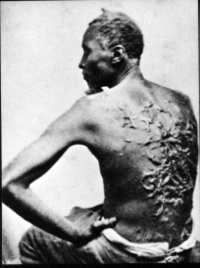
    Because of their wealth, large-scale slave owners could muster a disproportionate level of influence on the public policies of their state and local governments.  In effect, they had more power to help shape laws and control the various forms of government than anyone else.  Their wealth also opened doors with other powerful figures in what today would be called "special interest groups." 

    Also, the wealthy plantation owners had successfully propagated a common public fear of a general uprising, so that, unwittingly, the non-wealthy local populations inadvertently added to the constraints on the freedoms of the slaves.  As long as an argument could be made to show how what was bad for the wealthy plantation owners was also bad for the "common, little guy," this process of mass exploitation could continue.

    Slave patrol statutes were state laws that mandated local police patrols to examine the passes of traveling slaves, monitor slave meetings, enforce other aspects of the slave code, and capture escaped slaves. Naturally, these patrols enhanced the security of slave assets and reduced the private costs of security to slave owners. Public security against escape in effect extended the average work life of a slave at public expense, and this was expected to increase the capital value of slaves. [6]

    The longer wealthy plantation owners could keep slaves trapped, the more valuable they were.  The more they could get external forces to work to their advantage, the more complete the encirclement of the individual slave.  The more the wealthy plantation owners could get the forces of government to do their work for them, the cheaper it became for them.  In effect, by employing the forces of public policy, the wealthy plantation owners were getting the government to help them trap slaves, and at a discounted rate!

    Manumission laws restricted the right of a slave owner to grant freedom to slaves or to allow someone to purchase a slave’s freedom. [11] The purpose of these laws was to prevent the emergence of a large, free black population who could facilitate the escape of slaves or help organize slave rebellions. Most importantly, black slavery in a free white society provided a distinct security advantage because slaves could be identified by the color of their skin. [12] If slave owners were allowed to free their slaves (or to sell them their freedom), then the proportion of free blacks would rise as it had in other slave societies. A large population of free blacks would reduce the security advantage of black-only slavery and drive down the profitability and the price of slaves. Generally, manumission laws did permit owners to free their slaves, but only if the slaves were exported to other states or to Liberia, a fact that emphasizes the security nature of such laws. [13] Flyer

    Not only were wealthy plantation owners doing everything in their power to entrap their own slaves, but, in order to keep the whole house of cards standing, they had to infringe upon the rights of other slave owners to free their own slaves!  "Since I’m working so hard to keep mine trapped, you don’t have the right to free yours!"  Notice how the motivation for this was how dangerous it would be to have a bunch of "free blacks" walking around.  This could lead to confusion as to who was free, and bring us right back to that old fear again of a general uprising.  The phrase for these genteel plantation owners was, "Once a slave, always a slave."  Notice how it also, once again, is all about profitability.

    There is much more in this article by Yanochik, Ewing, and Thornton, but I have culled the main points for our purposes here.  For those interested in digesting the whole thing, you can find it here. 

    Why this negative illustration from history?  What can someone on the journey of leadership development learn from all of this?

    Benjamin Franklin once said, "Any society that would give up a little liberty to gain a little security deserves neither, and loses both."

    This is true in an economic sense, as well.

    Leaders must understand that the pursuit of "advantage" is a losing proposition.  What is gained in the battle of free enterprise cannot and should not ever be secured by means other than competition.  A leader must always guard against the tendency to arrive at a place only to "pull up the draw bridge" behind them.  Instead, real leaders must understand the need to stay in the battle, to be willing to continue doing the things that brought them success in the first place, and to resist the temptation to become more concerned about securing what they have than in advancing to new accomplishments.  Whenever "securing property" takes precedence over "fulfilling destiny," leaders are simply not leading anymore.  Worse, they are becoming weak and increasingly succeptable to becoming eclypsed by a new competitor who does not fear the battle of free competition.

    African slavery in the Antebellum South is one of history’s most glaring examples of what happens when men strive to secure for themselves an unfair advantage at the expense of others.  Protectionism, tariffs, import duties, and the like, in the economic world, weaken those who are "protected" until they no longer are fit to compete.  Their abilities grow so weak under this protected position that they become slaves themselves to the protections they have set up for themselves.  In other categories, the principles are true, as well.  Whenever someone tries to arrange "security" at the expense of competition, weakness results. 

    In such cases, as Benjamin Franklin said, BOTH security and liberty are lost.

    The wealthy plantation owners not only lost everything they had, including their entire way of life in a bloody civil war, but they will live on in the memories of time as some of the most vile, greedy, mostrous examples of ambition-gone-wrong.  By refusing to compete with the outside world on even terms, by enslaving human beings against their will, by manipulating the public system of laws and security to aid them in their efforts, they corrupted themselves and became one of history’s "best" worst examples of leadership.

    And those they enslaved, whipped, tortured and killed in an effort to suppress the thoughts of freedom and rebellion in the breasts of all the other slaves?  History remembers them with respect and admiration, for the dignity and perseverence they showed in unbelievable circumstances.  The scars from whips and chains, meant to deter and frighten, instead look to us like badges of courage and honor, and serve as a constant reminder of the evil man is capable of.