Welcome to
Chris Brady’s
Blog

“The only way to be happy, is to give happy.”

  • August_05_001I have been inspired recently to begin a new category for this blog.  I trust that many of you readers (perhaps all three of you) enjoy the historical examples of leadership that we have been discussing – I know I certainly do. I thought it appropriate, and also very illustrative, to present a few leadership examples from contemporary observation, lest anyone think that all the good leaders are dead!

    I would like to start with someone who I have had the distinct privilege of having as my business partner and friend for roughly fifteen years.  I believe that I am in a position, perhaps exceeded by only his wife, to comment upon Orrin Woodward’s particular leadership abilities in a way that nobody else can.  I have had a front row seat for what has been so far, and promises to continue as, a thrilling journey.  Orrin and I have built businesses together, written books, invested money, and seen the ups and downs of many aspects of leadership in our lives.  Based on this experience, I make the following comments that I hope will help all students of leadership grow in their abilities.  I could say many things, and tell many stories, and perhaps there will be an appropriate time in the future to expand upon this article (I have told Orrin many times that I have the rights to his authorized biography.  Movie rights, too, by the way, so don’t even think about it)!  But for now, I want to begin with a few of the largest strengths of leadership I have seen consistently demonstrated (and increasingly so) by Orrin Woodwarrd over the years.

    1. Courage – Orrin Woodward continually exemplifies this foundational quality of leadership.  I have seen him attack issues head-on when, by far, the easiest and most expedient path would have been to do the opposite.  Where many lesser leaders would likely turn a blind eye, flee, fix blame, or ignore issues or controversy, Orrin has consistently and continually charged right in.  He has sat with accusers and conversed with them calmly.  He has said difficult things to powerful people with dignity and grace, but courageously and unfalteringly at the same time.  He has somehow mustered the courage to do what he believed was the right thing without calculation or regard for his own advantages. 

    2. Vision – It would be impossible for anyone associated with Orrin not to be able to repeat his vision of reaching a "million people" with the positive message of leadership development.  It is a vision so compelling, and so consistent, and so needed, that thousands have bought into it.  Orrin Woodward assaults the status quo in pursuit of a vision so compelling he can do nothing else.

    3. Focus – in a world where distraction is the norm, where dilution of effort is taught as "diversification," and where focused intensity is called "fanaticism," Orrin focuses in on his objectives with laser-precision.  He is not distracted by the trappings of success, by opportunities that present themselves as "good" but not great, as short term but not long term, and as compromises of his overall vision.  If something doesn’t fit the picture in his mind’s eye of where he is determined to go, he pays it no credence.

    4. Capacity for Personal Growth – As I make these comments, I hope sincerely that nobody gets the wrong impression.  I am not deifying Orrin Woodward or making him out to be some kind of superior being.  I am close enough to him to see his faults, as I’m entirely sure he sees mine!  But I am continually impressed with his ability to identify an area he deems necessary for his personal growth, and then execute on the improvement.  What was once a weakness becomes a strength.  I could prove this with specifics, but since Orrin doesn’t even know I’m beginning this series with him as subject matter, I am not sure how much liberty I should take with details.  Let’s suffice it to say that I have seen areas where I know for a fact that he was unhappy with himself, only later, perhaps years later, people comment on his ability in that exact area as though it is one of his natural strengths!  This is true, and it is an inspiring example for all of us on leadership journeys that would like to improve some things about ourselves!

    5.  Relationships  and being a "Good Finder" – Orrin Woodward is a master at building and maintaining relationships.  This is because he cares, you can tell in moments once around him that he cares, and he makes no pretenses about who he is or what he is about.  He will make incredibly warm, uplifting statements to you that somehow, deep down in your heart, you know to be correct.  I personally find this very hard to do.  I may be thinking something fantastic about you, your abilities, your talents, your achievements, but it is not natural for me to articulate it to your face.  I’m more likely to send you a note later, if I do anything about it at all.  But not Orrin.  He will look you square in the eye and tell you something great about yourself that you know to be true, and you appreciate like crazy that someone took the time to notice. 

    There is a long term quality to his relationship abiltiy, too.  We have clipped along together in all sorts of times and settings for a decade and a half and he has never let me down.  Pretty incredible.

    6.  Honesty – Most of my dealings with Orrin have in one way or another involved money.  I have probably been involved, in one way or another, in more financial transactions with him than anybody.  He has always been entirely straight, searched relentlessly for "fair," and executed on all promises.  We have never had a dispute of any kind over any sum of money in any transaction.

    7.  Passionate for Purpose – Orrin has always had a charge of destiny about him.  He is open and passionate about his love for Christ, is concerned about the spiritual well-being of those around him, and is quick to remind people about the eternal picture of things.  He is passionate about returning our nations to their founding truths, to spreading the good news of the gospel of Jesus Christ, and to enlarging the influence of those who want to keep our societies open and free.  In short, he is wholeheartedly committed to making a difference.

    There is more I could say.  A lot more.  But I will stop for now and instead recommend that anyone interested get their hands on some Orrin Woodward CDs, read some of our books, and visit his very active and highly visited blog.  Also, for any readers out there who have personally been helped or inspired by Orrin Woodward, I would invite you to add to this article by posting in the comment section below.

    We have talked a lot on this site about leaders from history.  I hope you have enjoyed hearing a little bit about my friend who is a leader that is making history! 

  • Jugen Throughout history, one of the key ingredients in waging an unjust war is the tight-fisted control of information to those whose support the tyrant was required to retain.  In order to wage an unjust war, and to make one’s actions appear not only acceptable but justifiable, the tyrannical force needs to lay a continuing foundation of false beliefs upon which to operate. 

    Perhaps the most dramatic example of this is what occurred under the Third Reich in Germany during World War II.  Adolph Hitler is famous for "the Big Lie" theory, which basically involves telling a lie so enormous that nobody would ever believe you would risk making up something so preposterous. 

    The Nazi propaganda machine followed the strategy of mis-information to a tee.  First of all, it needed a scapegoat.  For this, they found the Jews.  Secondly, they needed an event.  For this, they had the Treaty of Versailles, which they famously thought was unfair and laid a harsh burden upon Germany for starting World War I (which it did, and which they did)! 

    Armed with a focal point and a scapegoat, the Nazi propaganda machine spun into high gear, attempting to "spin" the story to fit its desired ends.  In doing so, the Nazis certainly satisfied the "Big Lie" theory, acting like they were only doing what was justified when in fact they were doing what was unimaginable. 

    It all began with economics.  First, the Nazis blamed their financial woes on the Jews.  Instead of having to face the fact that they had started a World War, and were caught up in a depression that had not only engulfed Germany, but the entire world, the Nazis instead found it convenient to blame the Jews.  Instead of facing their own responsibility for the mess they were in and working on solutions, they found someone to blame. 

    Next the Nazis built up the concept of "protection" from their enemies.  They understoGerman_friendod the power of fear in making people take leave of their common sense, and they played upon it shamelessly.  After all, it is not easy to entice an entire civilization to butcher another (or to at least turn its head while it is happening), so to accomplish this, they needed to strike fear in the heart of the average German citizen.  This was accomplished by talking about the power of Germany’s enemies, and the need to "protect" the people from these terrible enemies.  After all, hadn’t Germany’s enemies devastated the businesses of a number of German citizens?  Hadn’t the enemies of Germany jeopardized the livelihoods of thousands of German people?  The Nazi party had gone to war because it had to, in order to protect the interests of innocent German citizens everywhere.  Wasn’t the economic decline felt by Germany the fault of someone else? 

    Further, the Nazi propaganda machine was designed to build morale, even when the Nazi cause was failing miserably, when the world was finding out about its shady, hidden operations, and when its armies were being crushed in the field.  The way this was done was by very craftily telling the German people over and over again that the Nazis were winning.  No matter what happened in the court of world opinion, the Nazi government would tell its trapped citizens that it was winning, and that anything that didn’t appear to be a victory was either lies from its enemies, rumors, reverse-propaganda, or the like.  As long as the Nazi government could "spin" events into appearing to be victories, it thought it could keep its people fooled.

    This whole strategy worked very well for a time.  But a house of cards cannot stand forever.  As the Allied armies pushed further into the German interior, and as the losses became more and more substantial, and as the failed ideology of blaming a nation’s entire host of problems on a small group of people began to play itself out, the world was finally allowed a glance into a horror it could not have conceived.  As the truth became known, it was so despicable, so terrible, so horrifying, that one wonders how monstors like Joseph Goebbels (one of Germany’s head propagandists), could sleep at night.  The lies, the mistreatment of an innocent people, the butchery, are a stain on Germany’s (and mankind’s) history that will never be erased or forgotten.  Hitler_propaganda

    Goebbels and Hitler and the Nazis are all dead and gone.  But the legacy of their lies remain.  And that becomes a lesson for any leader:

    Lies outlive spin.

    And as the Bible says, be sure that the truth will find you out.

    Leaders everywhere can learn a valuable lesson from this negative example.  Leaders deal in truth, honesty, integrity, character, and what author Jim Collins calls "confronting brutal reality."  Anything less than this is not leadership.  And if it’s not leadership, it’s not worthy to be followed. 

  • Ideas shape the course of history  – John Maynard KeynesSharingbrain

    All great ideas are controversial, or have been at one time  – George Seldes

    There is only one way in which a person acquires a new idea: by the combination or association of two or more ideas he already has into a new juxtaposition in such a manner as to discover a relationship among them of which he was not previously aware  – Francis A. Cartier

    An idea is a feat of association  – Robert Frost

    There is one thing stronger than all the armies in the world: and that is an idea whose time has come  – Victor Hugo

    It’s just as sure a recipe for failure to have the right idea fifty years too soon as five years too late  – J. R. Platt

    It is  impossible for ideas to compete in the marketplace if no forum for their presentation is provided or available  – Thomas Mann

  • Philip II of Spain’s father was a brilliant soldier and statesman named Charles V, and when he passed on, he left the world’s largest empire in the hands of his son.  Philip had been trained since childhood in the arts of leadership and diplomacy.  At age sixteen he was made Regent of Spain.  His "marriage of conquest" was to the Queen of England, Mary Tudor (known to history as "Bloody Mary" for her butchery of Protestants).  Philip was handed the world’s largest empire, encompassing the lEliz1rainbowargest King_philipii_of_spain_3territory, the most colonies, the best ports, and access to more natural resources than any other country.  But during his long reign, he would manage to squander away his position atop the world’s heap of power, and through his mistakes, allow a fledgling little island country led by an indecisive Queen to plant the seeds that would grow into world dominance.

    What happened?

    You might not be surprised to learn that it came down to leadership.

    A quasi-war of sorts had been waged between England and Spain for decades.  Queen Elizabeth’s "gentleman pirates," including Francis Drake, John Hawkins, Walter Raliegh, Martin Frobisher, and Charles Howard, had pecked and picked away at Spain’s holdings in the New World, and had managed to disrupt and even steal large amounts of South American treasure bound for Spain’s coffers.  Drake’s circumnavigation of the globe and capture of one of Spain’s largest treasure galleons was only one example of the daring feats the English carried out at Spain’s expense.  In the meantime, King Philip was behind numerous assassination attempts directly aimed at Queen Elizabeth, and the two countries were at war against each other for the religious choice of the people of the Netherlands. 

    When Queen Elizabeth sentenced Mary, Queen of Scots, to death for treason (a confirmed assassination attempt on Elizabeth), it brought the two countries to the edge of declared war.  Philip began preparations to amass a large "armada" of ships that would sail in something called The Enterprise of England.  The "Enterprise" was supposed to be a secret plan to attack the island of England itself, but the large-scale buildup of supplies and ships in Spain’s ports could hardly go unnoticed.  Sir Francis Drake was able to delay the launch of the Armada by at least a year by attacking and destroying a major fleet of ships and supplies in the port of Cadiz.

    Then, somehow, peace negotiations were proferred.  Diplomats from both sides began testing the waters for terms of settlement.  Queen Elizabeth, despite violent opposition from nearly every one of her advisors, was extremely interested in a peaceful settlement.  England was a small island country, by no means able to match the enormous wealth and stature of Spain, and it had virtually no way to defend itself should armed forces actually land on her shores.  Queen Elizabeth was also a bit of a realist, and she understood the enormous cost of fighting the world’s only Super Power in a protracted war.  For these reasons, she was able to make huge concessions for the peace process as long as they didn’t compromise her principles and the things she had promised her people.

    King Philip, however, was not disposed towards peace.  He sat atop the World’s richest empire, its largest military, he held most of Europe under his control, he had recently annexed Portugal and with it enormous territory in the East Indies to add to his dominance in the West Indies.  According to author Neil Hanson, "Philip’s correspondance shows that he gave not the slightest throught to any compromise.  He could have had peace in the Netherlands on several occasions, but [as Philip said himself], ‘With regard to Holland and Zealand or any other province or towns, the first step must be for them to receive and maintain alone the exercises of the Catholic religion and to subject themselves to the Roman church, without tolerating the exercise of any other religion . . . There is to be no flaw, no change, no concession by convention or otherwise of liberty of conscience or religious peace, or anything of that sort.’" 

    Although Elizabeth was all for the concession of allowing religious tolerance, Philip was dead against any "liberty of conscience" whatsoever.  It became a classic struggle of tyranny versus freedom of choice, of big versus small, Goliath pushing around David.  Again, according to Hanson, "[the entire conflict] was partly about money . . . partly about political and dynastic imperatives, and partly about the loss of face that Philip had suffered through attacks on his own coast, but it was also genuinely driven by religious fundamentalism and Philip’s obsession with restoration of Europe to the Catholic faith.  A flexible and pragmatic ruler in his youth, he was now a stubborn and dogmatic old man, brooding alone . . . . the only solution that would satisfy him would be the overthrow of Elizabeth and the total destruction of the Dutch rebellion."

    Instead of negotiating for peace in good faith, Philip played games.  In his own words: "I declare that my intention is that these negotiations shall never lead to any result, whatever conditions the English may offer.  On the contrary, the only object is to deceive them and to cool them in their preparations for defense, by making them believe such preperations will not be necessary." 

    Analyzing the details of this history, we see that Philip’s fatal choice to launch the Armada against England came from the following four factors:

    1. money

    2. political and dynastic imperatives (nepotism and power)

    3. the loss of face (pride)

    4. religious fundamentalism (tyranny and the suppression of freedom)

    The details of the Armada, its mammoth size, its incredible expense to Spain’s treasury, and its resulting failure, are story enough for a future post.  But the launching and failure of the Spanish Armada in 1588 represented the "high water mark" in the world-dominance of Spain.  Its cost, and its loss of prestige for Spain throughout the world, were blows too large from which to recover.  Even though Philip had inheBhc0264rited the world’s largest power from his father, he would hand it on as a much reduced, debt-ridden, and shrinking power.  England, a tiny island country, would rise on the ashes of the fading Spain and over the course of time would rise to become the world’s largest empire, and it would hold that position for a long time until one of its former colonies, The United States of America, would gain that postion in the twentieth century.  The entire period from the Armada in the sixteenth century to the beginning of World War I, with the American Revolution as the sole exception, would witness the rise and dominance of Great Britain as the world’s pre-eminent empire.

    Leadership is critical to the success of any endeavor.  Leaders lead best when motivated by visions that build up instead of destroy, that seek to help rather than hinder, and that become more concerned about what can be accomplished than by who can be oppressed.  In the case of Philip II of Spain, his motivations were all wrong.  Money, power, pride, and oppression of the freedoms of others became the seeds of his own destruction.  At many points along the way he could have made an acceptable peace with a smaller, but stubbornly principled and belliegerent nation – but he would have nothing of it.  It was all or nothing for Philip.  He made his choice accordingly, and his empire dwindled to insignificance as a result.  Image

    Remember the story of the Armada as you lead in your life.  Be careful of your motivations.  Never get suckered into believing that oppressing the freedoms of others, grabbing for money, fighting for power, or struggling to regain "lost" pride are worthy pursuits.  Don’t get fooled into launching your own "Enterprise of England."  If you do, you can rely on having to face a Sir Francis Drake, a Sir Walter Raliegh, or any number of individual privateers who will take to the waters to oppose you.  And never underestimate the power of a storm or two to dash your ships on the rocky shores.

    It’s much better to lead from a position of integrity, to fight for good, to stand for freedom, and to defend the individual and his or her rights.  That’s the side on which all the heroes of history have found themselves.  That’s the side on which the true leaders live!

    Lead on, and if you lead for good, fear no Armada that comes against you!   


  • Billary_clintonIf you don’t laugh at these fabulous combinations, you’ve got something broken!Obama_clinton_split2_4 Mccain_washington_2 

  • Community_rightIt is an interesting study to find out why people stick with a certain organization, company, business plan, etc.  In recent corporate-speak, this concept has come to be know as "community."  Building communities is one of the most spectacular, rewarding, fun, frustrating, interesting, mysterious, heart-warming, infuriating, pleasurable experiences.  This is because people are people, and they come in all shapes and sizes (figuratively as well as physically).  Through life’s journey, it is people that bring meaning and richness to life, and it is people who also bring trial and tribulation.  Some you love, and some you, well, you get the picture.

    Building communities is all about surfing through the various waves of human interaction in a positive, lifting manner, learning the skills of knitting together relationships.  It is also about heart and caring and perseverence in the name of brotherly love.  This might all sound a bit weird for a corporate setting, but the basic fundamentals of successful human interaction are the same everywhere.

    What becomes funny is when corporations, managers, or so-called leaders think they have other means to keep people in community.  The first thing amatuer leaders think of is compensation.  If people were simply paid better, they would be happier within an organization and more productive, sticking around to enjoy the benefits.  Others seem to think that programs and slogans will get it done.  Others have proposed work environment solutions, or leadership styles, or ongoing training, or trendy techniques.  Still others rely on corporate "spin," telling their people how great the organization is over and over and thinking that the people are actually buying into the misrepresentations.  But as Abraham Lincoln said, "you can fool some of the people all the time, and all of the people some of the time, but you can’t fool all of the people all of the time (paraphrased)." Spin becomes the things a company tells its employees and the public that neither believe to begin with. The saddest in the corporate world try intimidation, dogmatic dominance, litigation, red tape, and entrapment to keep their people in community.  Stories abound of employees or business associates being mistreated as a way to try to get them to stay in a community.

    Author Marshall Goldsmith reports the findings of an extensive study that gets to the bottom of human interactions and what actually keeps people in community.  According to Goldsmith, it boils down to three things:

    1. Meaning and happiness, NOW

    2. "I like the people here"

    3. I can follow my dreams here.

    If any of these are violated, a person will check out of the community; first emotionally, and then physically.  In fact, the best way to see how an organization is doing at building and maintaining community is to see how many are leaving.  The leading indicator and predictor of the organization’s future is to see how many people haven’t yet left physcially but have "left the building" emotionally.

    Want to become effective at building communities in your workplace, church, business, or community organization?  Try reading through the three points from the study results above.  Ask yourself how you are playing your part to deliver each of those three to your people.  Check your organization and see if people are leaving phCommunity_picysically, and if not yet, see if you can spot where they have left emotionally. 

    Also notice how compensation didn’t even make it into the top three, unless following dreams is tied directly to income (which in many cases it certainly would be).  But people want meaning first!

    Let me repeat: people want meaning first!

    Then they want to like and get along (read "trust") the people they are forced to associate with.

    Finally, they want to fulfill their dreams.

    Not so much to ask.  But a lot to take in.

    As leaders, we must always ask ourselves how we are doing delivering these three things to the people who have volunteered to follow our influence.  As Noel Tichy said, "You can always tell how you are doing as a leader by looking at how your people are doing."  And I would extend that further: you can always tell how a company or organization is doing by looking at how well their people are doing.

    Many, many organizations miss the mark entirely.

    Why?

    Leadership.

    As leaders, we must never allow ourselves or our organizations to drift away from the real heart matters that build and sustain communities.  I know it sounds like "soft side" stuff, but love, understanding, care, relationships, integrity, character, trust, and sacrificial self-service will never go out of style.  If an organization or leader thinks they have gone out of style, they will likely, instead, find themselves out of business.

    I hope this helps!

    Lead on!


  • UntitledEven Fox News agrees that we have three Democrats running for President.  (Hey, I had to put up something from the "other side," after posting that Clinton thing yesterday)!

  • Billary_and_hillI thought it would only be fitting to put up a political caption contest.  Sorry to choose the Democratic side, it’s just that the Republican side, by comparison, is so BORING.

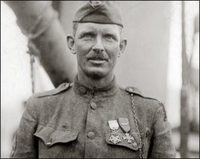
  • Alvinyorkmh0906Alvin York is perhaps America's most famous World War One personality.  In the following short biography, his exploits are clearly represented, and the myth is well separated from the man.  Many points along his journey are very illustrative of the life of a leader, and my comments are in blue.

    Alvin York (from Dr. Birdwell and the York Institute website)

    Known as the greatest [American] hero of World War I, York avoided profiting from his war record before 1939. Born December 13, 1887 in a two-room dogtrot log cabin in Pall Mall, Tennessee, and raised in a rural backwater in the northern section of Fentress County, York was a semi-skilled laborer when drafted in 1917. Quite literally having never traveled more than fifty miles from his home, York's war experience served as an epiphany awakening him to a more complex world.

    Many leaders don't realize the full scale of the task God has before them.  We don't determine our destinies; we discover them.

    The third oldest of a family of eleven children, the York family eked out a hardscrabble existence of subsistence farming supplemented by hunting, and York became a competent marksman at an early age. Living in a region that saw little need for education, York had a grand total of nine-months schooling at a subscription school he attended in his youth. York's father, William York (who died in 1911), also acted as a part time blacksmith to provide some extra income for the family. Prior to the advent of the World War, York was employed as a day laborer on the railroad near Harriman. As a result, York had little experience with managing money and later suffered from chronic fiscal problems. (York spent money when he had it, gave it away to other people who he believed needed it, and invested poorly).

    As York came of age he earned a reputation as a deadly accurate shot and a hell raiser. Drinking and gambling in borderline bars known as "Blind Tigers," York was generally considered a nuisance and someone who "would never amount to anything." That reputation underwent a serious overhaul when York experienced a religious conversion in 1914. In that year two significant events occurred: his best friend, Everett Delk, was killed in a bar fight in Static, Kentucky; and he attended a revival conducted by H.H. Russell of the Church of Christ in Christian Union. Delk's senseless death convinced York that he needed to change his ways or suffer a fate similar to his fallen comrade, which prompted him to attend the prayer meeting.

    In the lives of many leaders occurs a "wake up call."  These tumultuous events, though painful at the time, often lead to radical change in the lives of a future leader and become the foundation for later achievement and character strength.

    A strict fundamentalist sect with a following limited to three states–Ohio, Kentucky, and Tennessee–the Church of Christ in Christian Union espoused a strict moral code which forbade drinking, dancing, movies, swimming, swearing, popular literature, and moral injunctions against violence and war. Though raised Methodist, York joined the Church of Christ in Christian Union and in the process convinced one of his best friends, Rosier Pile, to join as well. Blessed with a melodious singing voice, York became the song leader and a Sunday School teacher at the local church. Rosier Pile went on to become the church's pastor. The church also brought York in contact with the girl who would become his wife, Gracie Williams.

    By most accounts, York's conversion was sincere and complete. He quit drinking, gambling, and fighting. When the United States declared war on Germany on April 6, 1917, York's new found faith would be tested. York received his draft notice from his friend, the postmaster and pastor, Rosier Pile, on June 5, 1917, just six months prior to his thirtieth birthday. Because of the Church of Christ in Christian Union's proscriptions against war, Pile encouraged York to seek conscientious objector status. York wrote on his draft card: "Dont [sic] want to fight." When his case came up for review it was denied at both the local and the state level because the Church of Christ in Christian Union was not recognized as a legitimate Christian sect.

    Leaders often try to resist their calling without even realizing it.  The more we try to shape events, the more they sometimes shape us.

    Though a would-be conscientious objector, drafted at age thirty, York in many ways typified the underprivileged, under-educated conscript who traveled to France to "keep the world safe for democracy." With great reservations, York embarked for Camp Gordon, Georgia to receive his basic training. A member of Company G in the 328th Infantry attached to the 82nd Division (also known as the "All American Division) York established himself as a curiosity–an excellent marksman who had no stomach for war. After weeks of debate and counseling, York relented to his company commander, G. Edward Buxton, that there are times when war is moral and ordained by God, and he agreed to fight.

    Leaders must be sold out to the cause in order to be effective.  Halfheartedness is not in them.  Also, it is extremely painful for a leader to be forced into acting against his or her conscience.  As the saying goes, for a true leader, their "heart has to be in it."

    Also, leaders don't have a "lock" on knowledge.  Sometimes, new information or circumstances alter previously firmly-held convictions.  Leaders are not too big to experience a change of mind if confronted with compelling evidence. 

    York's role as hero went beyond his exploit in the Argonne and continues to both inspire and confound. On October 8, 1918, Corporal Alvin C. York and sixteen other soldiers under the command of Sergeant Bernard Early were Alvinyorkdispatched before sunrise to take command of the Decauville railroad behind Hill 223 in the Chatel-Chehery sector of the Meuse-Argonne sector. The seventeen men, due to a misreading of their map (which was in French, not English) mistakenly wound up behind enemy lines. A brief fire fight ensued which resulted in the confusion and the unexpected surrender of a superior German force to the seventeen soldiers. Once the Germans realized that the American contingent was limited, machine gunners on the hill overlooking the scene turned the gun away from the front and toward their own troops. After ordering the German soldiers to lie down, the machine gun opened fire resulting in the deaths of nine Americans, including York's best friend in the outfit, Murray Savage. Sergeant Early received seventeen bullet wounds and turned the command over to corporals Harry Parsons and William Cutting, who ordered York to silence the machine gun. York was successful and when all was said and done, nine men had captured 132 prisoners.

    Leaders are required to face an "unfair" load.  They will be forced to act upon incomplete information in times of uncertainty against enemies dead-set on their destruction.  Leaders not only survive, but thrive in such environments.

    That York deserves credit for his heroism is without question. Unfortunately, however, his exploit has been blown out of proportion with some accounts claiming that he silenced thirty-five machine guns and captured 132 prisoners single-handedly. York never claimed that he acted alone, nor was he proud of what he did. Twenty-five Germans lay dead, and by his accounting, York was responsible for at least nine of the deaths. Only two of the seven survivors were acknowledged for their participation in the event; Sergeant Early and Corporal Cutting were finally awarded the Distinguished Service Cross in 1927.

    A leader's exploits sometimes grow into legend, bumble leaders give away credit.  And what is common among many true heroes: when questioned about their endeavors, they don't understand why everybody makes such a big deal out of them.  Their attitude is that they were just doing their duty, and anybody else would have done the same thing.   

    York's war exploit typified that of the nineteenth century American hero. He appeared larger than life and was most often compared to three peculiarly American icons: Daniel Boone, Davy Crockett, and Abraham Lincoln. Literally growing up in a quasi-frontier existence tucked away in a remote Tennessee backwater unscathed by industrialized America, York was born and raised in a log cabin near the Tennessee-Kentucky border–a region which bore no resemblance to the break-neck bustle of New York, Chicago, or Los Angeles–so York seemed to belong to another more idyllic time. As late as 1917, he hunted squirrel, raccoon, quail, wild boar and deer with a muzzle-loader. York's life caught fire in the American imagination not because of who he was, but what he symbolized: a humble, self-reliant, God-fearing, taciturn patriot who slowly moved to action only when sufficiently provoked and then adamantly refused to capitalize on his fame. Ironically, York also represented a rejection of mechanization and modernization through his dependence upon personal skill. George Pattullo, the Saturday Evening Post reporter who broke the story, focused on the religio-patriotic nature of York's feat. He titled his piece The Second Elder Gives Battle, referring to York's status in his home congregation in Pall Mall, Tennessee.

    Leaders inspire more by who they are than by what they do. Notice how the author describes York in this section: humble, self-reliant, God-fearing, patriotic, dangerous when provoked by a righteous cause, and incorruptible.  The reluctant leader is nearly always the most effective.  Leaders who desire power, status, prestige, and wealth are not basing their desire upon hunger but rather upon ambition.  True leaders desire change, growth, service to others, and lasting influence for good.  Many, many times throughout history we see very reluctant leaders rise to greatness on the strength of their convictions and the goodness of their "hungers." 

    Another subtle message in this section: reluctant leaders are extremely dangerous when pushed to the brink.  If convinced of their cause they will stop at nothing short of victory.  Enemies and obstructors may at first underestimate them, but they do so at their own peril.  True leaders will fight to the death for a cause in which they believe deeply.

    For his actions, York was singled out as the greatest individual soldier of the war and when he returned home in 1919 he was wooed by Hollywood, Broadway, and various advertisers who wanted his endorsement of their products. York turned his back on quick and certain fortune in 1919, and went home to Tennessee to resume peacetime life. Largely unknown to most Americans was the fact that Alvin York returned to America with a single vision. He wanted to provide a practical educational opportunity for the mountain boys and girls of Tennessee. Understanding that to prosper in the modern world an education was necessary, York sought to bring Fentress County into the twentieth century. Thousands of like-minded veterans returned from France with similar sentiments and as a result college enrollments shot up immediately after the war.

    Again, leaders viewpoints can change in the face of overwhelming evidence.  Also, the more experience a leader gains, the more hungry he or she is to learn.  Knowledge and learning become one of a leader's top priorities, and the joy of sharing this desire with others is strong.

    Throughout the 1920s York went on speaking tours to endorse his hopes for education and raise money for York Institute. He also became interested in state and national politics. A Democrat in a staunchly Republican county, York's endorsement carried a degree of clout for pols. York used his celebrity to improve roads, employment, and education in his home county.

    York receded from the national spotlight during the 1930s, and focused his waning political aspirations on the state rather than the local level. He considered running for the U.S. Senate against the freshman senator, Albert Gore (the dude's been around a long time.  Must have been back then that he started creating the Internet). In the 1932 election, he changed his party affiliation and supported Herbert Hoover over Franklin D. Roosevelt because FDR promised to repeal Prohibition. Once the New Deal got underway, however, York returned to the Democratic party and endorsed the president's relief efforts, especially the C.C.C. and the W.P.A. In 1939, York was appointed superintendent of the Cumberland Homesteads near Crossville.

    In 1935 York delivered a sermon entitled, Christian Cure for Strife, which argued that the vigilant Christian should ignore current world events, because Europe stood poised on the brink of another war and Americans should avoid it at all costs. Recalling his career as a soldier, York renounced America's involvement in World War I. In order to achieve world peace, Americans must first secure it at home beginning with their own families. The church and the home, therefore, represented the cornerstones of world peace.

    Leaders understand that the only person they can control is themselves, and that all organizational change occurs at the level of the individual first.  Leaders care about others and disdain anything that brings harm.  When away from "the battle" they can temporarily forget "the beast" that makes the battle necessary in the first place, and this can cloud judgment.

    At the same time, the threat of war had rekindled the interest of some filmmakers, most notably Jesse L. Lasky, into reviving the story of York's exploits during World War I. Lasky, having witnessed the famous New York reception of the hero from his eighth floor office window in May of 1919 had wanted then to tell York's story. While several other studios found interest in York's saga in 1919, only Jesse Lasky of Famous Players Paramount (later associated with Twentieth Century-Fox, and finally Warner Brothers) had persistently pursued him. In the late 1930s the world once again appeared on the verge of war and the official stance of the United States government was reminiscent of York's initial attitude toward the first World War. America (in 1939) and York (in 1917) both had to be convinced that war was not only justifiable, but sometimes necessary.

    When York at last relented, he announced that the film would "be a true picture of my life…my contributions since the war. It won't be a war picture. I don't like war pictures." Yet the film that bears his name definitely was a war picture. The original screenplay presented the war as an epiphany for York which forced him to recognize his own inadequacies but fulfilled his wish to improve himself and his homeland. The motion picture that arrived in movie theaters in July of 1941 not only signaled a profound change in York's pacifism but sounded the clarion for American involvement in World War II.

    York's heartfelt belief that war represented moral evil never wavered before his association with Lasky and the Warner Brothers. In 1937, York not only condemned war but also questioned America's involvement in the First World War. In that same year, York joined the Emergency Peace Campaign which lobbied against any U.S. involvement in the growing tensions in Europe. A pious peaceful man, York had fought his country's enemy only after great deliberation and had to be convinced that war was sometimes necessary. His personal struggle in World War I found new resonance in an America at odds over the recent European war, for York personified isolationist Christian America wrestling with its conscience over whether or not to engage in the current war abroad.

    Leaders enter the battle reluctantly, and again, must be totally convinced that it is right before they fight.  Always willing to try to accomplish justice with peace, true heroes know, however, that there are times when a fight is justified.  Peace without justice is not peace, but slavery and cowardice birthed in ignorance.

    Because the Church of Christ in Christian Union condemned movies as sinful, Lasky had a tough time convincing York that a film based on his life was justified. York finally agreed when he dec012569552937ided that the money made from the film could be used to create an interdenominational Bible school. As the film progressed the focus of the project changed and York's war exploit gained prominence. Through York's association with Lasky and Warner Brothers, he became convinced that Hitler represented the personification of evil in the world and turned belligerent. York's conversion to interventionism was so complete that he wholeheartedly agreed with General George C. Marshall that the U.S. should institute its first peacetime draft. Governor Prentice Cooper approved York's endorsement by naming him chief executive of the Fentress County Draft Board, and appointed him to the Tennessee Preparedness Committee to help prepare for wartime.

    Though slow to anger, true leaders awake like sleeping giants once they become convinced of injustice.  They throw themselves wholeheartedly into the cause because they hate evil and injustice.  Throughout history, the strain of hunger is consistent: leaders can't stand oppression, evil, cruelty, injustice, and tyranny.  Some of the world's greatest leaders have come to the fore in times when these things were flourishing. 

    In 1940-41, York joined the Fight for Freedom Committee which combated the isolationist stance of America First, and York became one of its most vocal members. Up until Pearl Harbor, York battled another legendary American hero, the man who symbolized America First to the general public, Charles Lindbergh. Meantime, the film Sergeant York starring Gary Cooper, became one of the top grossing Warner Brothers films of the entire war era and earned Cooper the Academy Award for Best Actor in 1942.

    Once a leader buys into a cause, he or she is "all the way in."

    During the war, York attempted to reenlist in the infantry but could not do so due to age and obesity. Instead, through an affiliation with the Signal Corps, York traveled the country on bond tours, recruitment drives, and camp inspections. Ironically, the Bible school that was built with the proceeds from the movie opened in 1942, but the very people the school was intended for had either enlisted in the armed services or moved north to work in defense related industries. The school closed in 1943 never to reopen.

    Not all dreams come true.  Leaders must be aware of that and continue on regardless.

    York's health began to deteriorate after the war and in 1954 he suffered from a stroke that would leave him bedridden for the remainder of his life. In 1951, the Internal Revenue Service accused York of tax evasion regarding profits earned from the movie. Unfortunately, York was practically destitute in 1951. He spent the next ten years wrangling with the IRS, which led Speaker of the House Sam Rayburn and Congressman Joe L. Evins to establish the York Relief Fund to help cancel the debt. In 1961, President John F. Kennedy ordered that the matter be resolved and considered the IRS's actions in the case to be a national disgrace. The relief fund paid the IRS $100,000 and placed $30,000 in trust to be used in the family's best interest. Sergeantyorkportrait
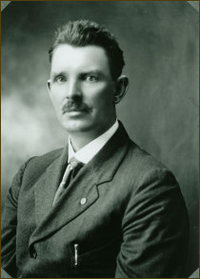
    York died on September 2, 1964 and was buried with full military honors in the Pall Mall cemetery. His funeral was attended by Governor Frank G. Clement and General Matthew Ridgway as President Lyndon B. Johnson's official representative. He was survived by seven children and his widow.

    When asked how he wanted to be remembered, the old sergeant said he wanted people to remember how he tried to improve basic education in Tennessee because he considered a solid education the true key to success. It saddened him somewhat that only one of his children went on to college, but he was proud of the fact that they all had received high school diplomas from York Institute. Most people, of course, do not remember him as a proponent for public education. York's memory is forever tied to Gary Cooper's laconic screen portrayal of the mountain hero and the myth surrounding his military exploits in the Argonne in 1918.

    Alvin York's story is a great illustration of the principles of leadership at work.  We see a humble, good-natured, God-fearing man who is time and again pushed to the brink of his convictions and forced to fight against evils he hates.  Not relishing the battle, nor the glory that accompanies it, he nevertheless pushes ahead and accomplishes incredible feats of heroism, refusing to capitalize on even his own exploits unless they can be turned for the good of others.  On more than one occasion he had to battle strongly with his conscience, making sure he knew what he fought for before he fully engaged: but once engaged, his focus was complete and his effectiveness near legendary.

    A leader is remembered more for who he is than for what he does.  And we are still talking about Alvin York and what he stood for nearly a century later.