
 I just wanted to put out a great big "Thank You" to all the readers of the Launching a Leadership Revolution book out there. We just received word from our publisher that we have surpassed the 100,000 copies mark! Incredible. We are excited about the amount of funds this project is raising for All Grace Outreach. Thanks for being a part of something special!
-
-
Discipline reminds the body that it is the servant of the mind
A leader’s first calling is to grow
Leadership is all about maturity
Followers want to change only when they aren’t happy and usually when it doesn’t require much risk or sacrifice on their part
Care: the fruit of an honest community
A leader is always expected to be on duty
Most real learning comes through stories
The problem with today’s formal education is that it ignores the development of character
(Source: Author Dan B. Allender)
-
One thing that is a common temptation for leaders is to lose patience with higher-level forms of influence and instead resort to an authoritarian style. After all, isn’t it easier to bark out orders and make demands, flexing one’s "authority" muscles and showing subordinates your "stripes?" I ran across a great paragraph by author Dan B. Allender in his excellent book Leading with a Limp:
"The temptation for all leaders is to encroach on human freedom and take away the suffering of humanity through some form of authoritarian order. Indulging this temptation underlies the fascism of all utopias. Removing human freedom is done with sincerity and the desire to serve the forsaken and bent brood of humanity. But all of this is a lie. If limiting human freedom tempted Jesus before he began his calling as the Christ, then it will conceivable be an ongoing temptation for all who fall into leadership."
First, one can clearly see where compassionate politicians take a wrong turn. With m
 isplaced compassion, they propose programs and government agendas to relieve the sufferings and hardships of certain peoples, only to end up limiting human freedoms in the process. And it is a short argument to state that government is better at messing things up than they are at executing programs. It is almost a rule that government programs grow and take on an unmanageable growth-life of their own. What may begin sincerely enough as a measure to help others (giving the benefit of the doubt and ignoring the very likely possibility that there is self-serving "vote selling" involved, as well), apparently well-meaning politicians end up actually limiting human freedoms and accomplishing the opposite of what they claim they intended. As Ronald Reagan said, "The scariest words you could ever hear are; I’m from the Government and I’m here to help."
So much for politicians. What about companies? It seems there is always controversy swirling regarding some form of competition among companies: those that cry unfair competition with others, those that
 want government protection against foreign competition, those that try to monopolize their position in the marketplace instead of having to face the pressures of competition. But all of business life is about competition. Competition is the gymnasium of discomfort from which stronger companies emerge. The history of business in free enterprise societies shows that the society, through its customers, is nearly always better served when competition is allowed to reign freely. Any time it is constrained artifically, or when certain entities are given a "pass" from the rigors of competiton, the customers and society suffer. Examples are plenty. One such example is the de-regulation of the phone companies. Another is the de-regulation of the airline industry. Another is the market driven "de-regulation" of the software industry through the concept of "open source programs." Each of these de-regulations spawned new days of freedom in those industries, and while change was painful and even fatal for some of the more entrenched and inflexible entities, the result was one of lower prices and better service for customers, and an improved competitive environment for companies that not only made the surviving ones better, but became a breeding ground for a host of new, agile, creative players on the scene.
 One of my favorite examples of this is Southwest airlines, which had a competitive new idea and such excellent execution of its idea that the old, stodgy, poor-service, entrenched airlines didn’t want to have to compete with the new upstart. Instead, the "big boys" resorted to lawsuits. They deter
 mined to utilize the full strength of their corporate financial resources to protect "their territory." Their strategy was that it would be easier to litigate a competitor to death rather than to beat them on the open field of play. Kill them while they were young, so to speak. After over a decade, however, Southwest airlines prevailed (even though a quick reading of the link above will show that companies continue to use courts to gain unfair advantages over competitors). Southwest Airlines not only survived the legal decimation strategy of scared-to-compete competitors, but have become a "big boy" themselves, consistently remaining the most profitable airline on the continent.
So much for companies. What of individuals? This is where I really want to focus. In my experience with leaders, the authoritarian style always appears to me to be the "amatuer approach." This is because, as Dan Allender so aptly points out, it is the easiest and most automatic. Without thinking, someone in a position of authority (and this can even be observed among little children!) most easily sinks to a level of relying upon their position for influence. John Maxwell calls this Positional Leadership. It is the lowest level of influence. "Do this because I have authority over you." And sometimes, the reason given by the leader for such behavior is the level of chaos encountered and the need for "drastic action." Certainly, there is a time for this, but it is rare. More often, influence of a higher order is called for. I find it interesting that Allender calls this tendency for leaders to slip into authoritarian influence a "temptation." If he is correct, we as leaders should always be on guard against our tendencies for control, and work ever harder to adhere to our purposes of influence and cause.
The Fivel Levels of Influence co-author Orrin Woodward and I discuss in the Launching a Leadership Revolution book, are to serve as a roadmap away from this temptation toward authoritarian leadership. Corporations, small businesses, governments, homes, churches, and community organizations will all be better served by leaders that understand the nature of true influence.
Real leaders have influence because people want to follow them.
Real leaders have influence because others buy into them.
Real leaders have influence because people get caught up in their vision.
Real leaders have influence because others buy into their cause.
Real leaders have influence because they have character, get results, share the credit, and accept the blame.
I wonder how much better our society would be if our politicians, corporate leaders, and individual leaders at every level of society understood these basic truths?
That is the point of this blog.
I hope it is helping.
-
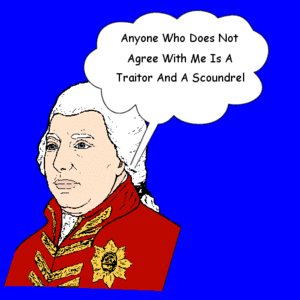
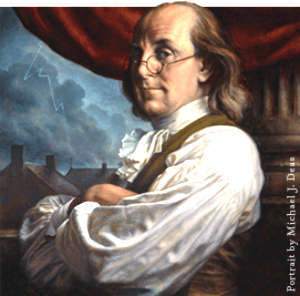 Benjamin Franklin was always a master of satire. During the early stages of the American Revolution he penned what I believe to be one of his funniest and most biting works. It is my favorite. I hope you enjoy it (I’m sure King George did)!
[Presented privately to a _late Minister_, when he entered upon his Administration; and now first published.]
An ancient Sage valued himself upon this, that tho’ he could not fiddle, he knew how to make a _great City_ of a _little one_. The Science that I, a modern Simpleton, am about to communicate is the very reverse.
I address myself to all Ministers who have the Management of extensive Dominions, which from their very Greatness are become troublesome to govern, because the Multiplicity of their Affairs leaves no Time for _fiddling_.
I. In the first Place, Gentlemen, you are to consider, that a great Empire, like a great Cake, is most easily diminished at the Edges. Turn your Attention therefore first to your remotest Provinces; that as you get rid of them, the next may follow in Order.
II. That the Possibility of this Separation may always exist, take special Care the Provinces are never incorporated with the Mother Country, that they do not enjoy the same common Rights, the same Privileges in Commerce, and that they are governed by _severer_ Laws, all of _your enacting_, without allowing them any Share in the Choice of the Legislators. By carefully making and preserving such Distinctions, you will (to keep to my Simile of the Cake) act like a wise Gingerbread Baker, who, to facilitate a Division, cuts his Dough half through in those Places, where, when bak’d, he would have it _broken to Pieces_.
III. These remote Provinces have perhaps been acquired, purchas’d, or conquer’d, at the _sole Expence_ of the Settlers or their Ancestors, without the Aid of the Mother Country. If this should happen to increase her _Strength_ by their growing Numbers ready to join in her Wars, her _Commerce_ by their growing Demand for her Manufactures, or her _Naval Power_ by greater Employment for her Ships and Seamen, they may probably suppose some Merit in this, and that it entitles them to some Favour; you are therefore to _forget it all_, or resent it as if they had done you Injury. If they happen to be zealous Whigs, Friends of Liberty, nurtur’d in Revolution Principles, _remember all that_ to their Prejudice, and contrive to punish it: For such Principles, after a Revolution is thoroughly established, are of _no more Use_, they are even _odious_ and _abominable_.
IV. However peaceably your Colonies have submitted to your Government, shewn their Affection to your Interest, and patiently borne their Grievances, you are to _suppose_ them always inclined to revolt, and treat them accordingly. Quarter Troops among them, who by their Insolence may _provoke_ the rising of Mobs, and by their Bullets and Bayonets _suppress_ them. By this Means, like the Husband who uses his Wife ill _from S
 uspicion_, you may in Time convert your _S uspicions_ into _Realities_.
 V. Remote Provinces must have _Governors_, and _Judges_, to represent the Royal Person, and execute every where the delegated Parts of his Office and Authority. You Ministers know, that much of the Strength of Government depends on the _Opinion_ of the People; and much of that Opinion on the Choice of Rulers placed immediately over them. If you send them wise and good Men for Governors, who study the Interest of the Colonists, and advance their Prosperity, they will think their King wise and good, and that he wishes the Welfare of his Subjects. If you send them learned and upright Men for Judges, they will think him a Lover of Justice. This may attach your Provinces more to his Government. You are therefore to be careful who you recommend for those Offices. — If you can find Prodigals who have ruined their Fortunes, broken Gamesters or Stock-Jobbers, these may do well as _Governors_; for they will probably be rapacious, and provoke the People by their Extortions. Wrangling Proctors and petty-fogging Lawyers too are not amiss, for they will be for ever disputing and quarrelling with their little Parliaments. If withal they should be ignorant, wrong-headed and insolent, so much the better. Attorneys Clerks and Newgate Solicitors will do for _Chief-Justices_, especially if they hold their Places _during your Pleasure_: — And all will contribute to impress those ideas of your Government that are proper for a People _you would wish to renounce it_.
VI. To confirm these Impressions, and strike them deeper, whenever the Injured come to the Capital with Complaints of Mal-administration, Oppression, or Injustice, punish such Suitors with long Delay, enormous Expence, and a final Judgment in Favour of the Oppressor. This will have an admirable Effect every Way. The Trouble of future Complaints will be prevented, and Governors and Judges will be encouraged to farther Acts of Oppression and Injustice; and thence the People may become more disaffected, _and at length desperate_.
VII. When such Governors have crammed their Coffers, and made themselves so odious to the People that they can no longer remain among them with Safety to their Persons, recall and _reward_ them with Pensions. You may make them _Baronets_ too, if that respectable Order should not think fit to resent it. All will contribute to encourage new Governors in the same Practices, and make the supreme Government _detestable_.
VIII. If when you are engaged in War, your Colonies should vie in liberal Aids of Men and Money against the common Enemy, upon your simple Requisition, and give far beyond their Abilities, reflect, that a Penny taken from them by your Power is more honourable to you than a Pound presented by their Benevolence. Despise therefore their voluntary Grants, and resolve to harrass them with novel Taxes. They will probably compla
 in to your Parliaments that they are taxed by a Body in which they have no Representative, and that this is contrary to common Right. They will petition for Redress. Let the Parliaments flout their Claims, reject their Petitions, refuse even to suffer the reading of them, and treat the Petitioners with the utmost Contempt. Nothing can have a better Effect, in producing the Alienation proposed; for though many can forgive Injuries, _none ever forgave Contempt_.
 IX. In laying these Taxes, never regard the heavy Burthens those remote People already undergo, in defending their own Frontiers, supporting their own provincial Governments, making new Roads, building Bridges, Churches and other public Edifices, which in old Countries have been done to your Hands by your Ancestors, but which occasion constant Calls and Demands on the Purses of a new People. Forget the _Restraints_ you lay on their Trade for _your own_ Benefit, and the Advantage a _Monopoly_ of this Trade gives your exacting Merchants. Think nothing of the Wealth those Merchants and your Manufacturers acquire by the Colony Commerce; their encreased Ability thereby to pay Taxes at home; their accumulating, in the Price of their Commodities, most of those Taxes, and so levying them from their consuming Customers: All this, and the Employment and Support of Thousands of your Poor by the Colonists, you are _intirely to forget_. But remember to make your arbitrary Tax more grievous to your Provinces, by public Declarations importing that your Power of taxing them has _no Limits_, so that when you take from them without their Consent a Shilling in the Pound, you have a clear Right to the other nineteen. This will probably weaken every Idea of _Security in their Property_, and convince them that under such a Government _they have nothing they can call their own_; which can scarce fail of producing _the happiest Consequences_!
X. Possibly indeed some of them might still comfort themselves, and say, `Though we have no Property, we have yet _something_ left that is valuable; we have constitutional _Liberty_ both of Person and of Conscience. This King, these Lords, and these Commons, who it seems are too remote from us to know us and feel for us, cannot take from us our _Habeas_ _Corpus_ Right, or our Right of Trial _by a Jury of our Neighbours_: They cannot deprive us of the Exercise of our Religion, alter our ecclesiastical Constitutions, and compel us to be Papists if they please, or Mahometans.’ To annihilate this Comfort, begin by Laws to perplex their Commerce with infinite Regulations impossible to be remembered and observed; ordain Seizures of their Property for every Failure; take away the Trial of such Property by Jury, and give it to arbitrary Judges of your own appointing, and of the lowest Characters in the Country, whose Salaries and Emoluments are to arise out of the Duties or Condemnations, and whose Appointments are _during Pleasure_. Then let there be a formal Declaration of both Houses, that Opposition to your Edicts is _Treason_, and that Persons suspected of Treason in the Provinces may, according to some obsolete Law, be seized and sent to the Metropolis of the Empire for Trial; and pass an Act that those there charged with certain other Offences shall be sent away in Chains from their Friends and Country to be tried in the same Manner for Felony. Then erect a new Court of Inquisition among them, accompanied by an armed Force, with Instructions to transport all such suspected Persons, to be ruined by the Expence if they bring over Evidences to prove their Innocence, or be found guilty and hanged if they can’t afford it. And lest the People should think you cannot possibly go any farther, pass another solemn declaratory Act, that `King, Lords, and Commons had, hath, and of Right ought to have, full Power and Authority to make Statutes of sufficient Force and Validity to bind the unrepresented Provinces IN ALL CASES WHATSOEVER.’ This will include _spiritual_ with temporal; and taken together, must operate wonderfully to your Purpose, by convincing them, that they are at present under a Power something like that spoken of in the Scriptures, which can not only _kill their Bodies_, but _damn their Souls_ to all Eternity, by compelling them, if it pleases, _to worship the Devil_.
XI. To make your Taxes more odious, and more likely to procure Resistance, send from the Capital a Board of Officers to superintend the Collection, composed of the most _indiscreet, ill-bred_ and _insolent_ you can find. Let these have large Salaries out of the extorted Revenue, and live in open grating Luxury upon the Sweat and Blood of the Industrious, whom they are to worry continually with groundless and expensive Prosecutions before the above-mentioned arbitrary Revenue-Judges, all _at the Cost of the Party prosecuted_ tho’ acquitted, because _the King is to pay no Costs_. — Let these Men _by your Order_ be exempted from all the common Taxes and Burthens of the Province, though they and their Property are protected by its Laws. If any Revenue Officers are _suspected_ of the least Tenderness for the People, discard them. If others are justly complained of, protect and reward them. If any of the Under-officers behave so as to provoke the People to drub them, promote those to better Offices: This will encourage others to procure for themselves such profitable Drubbings, by multiplying and enlarging such Provocations, and _all with work towards the End you aim at_.
XII. Another Way to make your Tax odious, is to misapply the Produce of it. If it was originally appropriated for the _Defence_ of the Provinces and the better Support of Government, and the Administration of Justice where it may be _necessary_, then apply none of it to that _Defence_, but bestow it where it is _not necessary_, in augmented Salaries or Pensions to every Governor who has distinguished himself by his Enmity to the People, and by calumniating them to their Sovereign. This will make them pay it more unwillingly, and be more apt to quarrel with those that collect it, and those that imposed it, who will quarrel again with them, and all shall contribute to your _main Purpose_ of making them _weary of your Government_.
XIII. If the People of any Province have been accustomed to support their own Governors and Judges to Satisfaction, you are to apprehend that such Governors and Judges may be thereby influenced to treat the People kindly, and to do them Justice. This is another Reason for applying Part of that Revenue in larger Salaries to such Governors and Judges, given, as their Commissions are, _during your Pleasure_ only, forbidding them to take any Salaries from their Provinces; that thus the People may no longer hope any Kindness from their Governors, or (in Crown Cases) any Justice from their Judges. And as the Money thus mis-applied in one Province is extorted from all, probably _all will resent the Mis-application_.
XIV. If the Parliaments of your Provinces should dare to claim Rights or complain of your Administration, order them to be harass’d with repeated _Dissolutions_. If the same Men are continually return’d by new Elections, adjourn their Meetings to some Country Village where they cannot be accommodated, and there keep them _during Pleasure_; for this, you know, is your PREROGATIVE; and an excellent one it is, as you may manage it, to promote Discontents among the People, diminish their Respect, and _increase their Dis-affection_.
XV. Convert the brave honest Officers of your Navy into pimping Tide-waiters and Colony Officers of the Customs. Let those who in Time of War fought gallantly in Defence of the Commerce of their Countrymen, in Peace be taught to prey upon it. Let them learn to be corrupted by great and real Smugglers, but (to shew their Diligence) scour with armed Boats every Bay, Harbour, River, Creek, Cove or Nook throughout the Coast of your Colonies, stop and detain every Coaster, every Wood-boat, every Fisherman, tumble their Cargoes, and even their Ballast, inside out and upside down; and if a Penn’orth of Pins is found un-entered, let the Whole be seized and confiscated. Thus shall the Trade of your Colonists suffer more from their Friends in Time of Peace, than it did from their Enemies in War. Then let these Boats Crews land upon every Farm in their Way, rob the Orchards, steal the Pigs and Poultry, and insult the Inhabitants. If the injured and exasperated Farmers, unable to procure other Justice, should attack the Agressors, drub them and burn their Boats, you are to call this _High Treason_ and _Rebellion_, order Fleets and Armies into their Country, and threaten to carry all the Offenders three thousand Miles to be hang’d, drawn and quartered. _O! this will work admirably!_
XVI. If you are told of Discontents in your Colonies, never believe that they are general, or that you have given Occasion for them; therefore do not think of applying any Remedy, or of changing any offensive Measure. Redress no Grievance, lest they should be encouraged to demand the Redress of some other Grievance. Grant no Request that is just and reasonable, lest they should make another that is unreasonable. Take all your Informations of the State of the Colonies from your Governors and Officers in Enmity with them. Encourage and reward these _Leasing-makers_; secrete their lying Accusations lest they should be confuted; but act upon them as the clearest Evidence, and believe nothing you hear from the Friends of the People. Suppose all _their_ Complaints to be invented and promoted by a few factious Demagogues, whom if you could catch and hang, all would be quiet. Catch and hang a few of them accordingly; and the _Blood of the Martyrs_ shall _work Miracles_ in favour of your Purpose.
XVII. If you see _rival Nations_ rejoicing at the Prospect of your Disunion with your Provinces, and endeavouring to promote it: If they translate, publish and applaud all the Complaints of your discontented Colonists, at the same Time privately stimulating you to severer Measures; let not that _alarm_ or offend you. Why should it? since you all mean _the same Thing_.
XVIII. If any Colony should at their own Charge erect a Fortress to secure their Port against the Fleets of a foreign Enemy, get your Governor to betray that Fortress into your Hands. Never think of paying what it cost the Country, for that would _look_, at least, like some Regard for Justice; but turn it into a Citadel to awe the Inhabitants and curb their Commerce. If they should have lodged in such Fortress the very Arms they bought and used to aid you in your Conquests, seize them all, ’twill provoke like _Ingratitude_ added to _Robbery_. One admirable Effect of these Operations will be, to discourage every other Colony from erecting such Defences, and so their and your Enemies may more easily invade them, to the great Disgrace of your Government, and of course _the Furtherance of your Project_.
XIX. Send Armies into their Country under Pretence of protecting the Inhabitants; but instead of garrisoning the Forts on their Frontiers with those Troops, to prevent Incursions, demolish those Forts, and order the Troops into the Heart of the Country, that the Savages may be encouraged to attack the Frontiers, and that the Troops may be protected by the Inhabitants: This will seem to proceed from your Ill will or your Ignorance, and contribute farther to produce and strengthen an Opinion among them, _that you are no longer fit to govern them._
XX. Lastly, Invest the General of your Army in the Provinces with great and unconstitutional Powers, and free him from the Controul of even your own Civil Governors. Let him have Troops now under his Command, with all the Fortresses in his Possession; and who knows but (like some provincial Generals in the Roman Empire, and encouraged by the universal Discontent you have produced) he may take it into his Head to set up for himself. If he should, and you have carefully practised these few _excellent Rules_ of mine, take my Word for it, all the Provinces will immediately join him, and you will that Day (if you have not done it sooner) get rid of the Trouble of governing them, and all the _Plagues_ attending their _Commerce_ and Connection from thenceforth and for ever. Q. E. D.
-
 This one is probably dangerous.
 -
 In June of 1777, flamboyant General "gentleman Johnny" Burgoyne initiated his attack on the colonies from Canada. He commanded over seven thousand infantrymen, a combination of British redcoats and Hessian mercenaries, a small army of artillery specialists and 138 cannon, four hundred Native Americans, and some Canadians and colonial Tories.
 Burgoyne was not satisfied with the attacking power of his military force, however, for in addition to it he let loose a barrage of negative press. Chief among his efforts was a proclamation issued on June 23 in which Burgoyne "accused the leaders of the 'unnatural Rebellion' of perpetrating 'Arbitrary Imprisonments, Confiscation of Property, Persecution and Torture . . . without Distinction of Age or Sex, for the sole Crime . . . of having adhered in Principle to the Government under which they were born. And if the 'Phrenzy and Hostility should remain, I trust I shall stand acquitted in the Eyes of God and Men in denouncing and executing the Vengeance of the State against the wilful Outcast.'"
Despite his blowhard style, the threats and the condemnations, despite his bragging that he could command the "Vengeance of the State," Burgoyne was utterly defeated and ended up surrendering his entire army. He failed on many accounts, and he was aided in his failure by the decision of General Howe not to march to his aid. But although Burgoyne is generally acclaimed as a decent soldier, historians are largely in agreement that he was not a good leader. His arrogance and self-assuredness on topics in which he was not an exp
 ert (though he assumed himself to be), were the seeds of his undoing. Burgoyne totally underestimated the time and toil required to march a large army through the wilderness, and he missed entirely the strategies of battles in the woods and hills. He also failed to properly grasp the complexities of dealing with his Native American allies, and this was partly responsible for their desertion of him at an inopportune moment. Finally, Burgoyne made a beginner's mistake and violated the basic rule of engagement to never divide one's force in the face of an enemy, and split his into three.
 Although bold, brave and extremely perseverant, Burgoyne's weaknesses were too great to overcome. He lead a brave fight, but cost England dearly. The combination of Howe's refusal to coordinate strategy with Burgoyne's attack and Burgoyne's own mistakes and false assumptions resulted in an enormous defeat that shocked Europe. The timely news resulted in increased French involvement in the colonial cause, and a continuing drain on resources and supplies for the English.
Reading Burgoyne's proclamation of June 23 is almost laughable now.
The pages of history are littered with individuals who assumed too much about their own competence and then cost their causes, companies, or armies enormously as a result. But great leaders are humble creatures. They "know that they don't know," and they spend their lives learning and growing and asking and seeking. Great leaders are slow to beat their chests and slow to threaten. Great leaders are all about love, caring, compassion, commitment, and cause. In the words of theologian Stuart W. Scott, "The qualities that one must strongly possess in order to carry out a leadership role are wisdom, initiative, decisiveness, humility, courage, and personal involvement." Try to imagine an effective leader who is deficient in even one of these categories. Impossible. In the case of Burgoyne in the wilderness, he was strongly lacking in two: humility and wisdom. Curiously, he was quite certain of his own wisdom, thereby failing in the humility category as a result. This was his and his army's undoing. And ultimately, it lead to the failure of England's iron-fisted rule in the colonies.
Leadership matters!
-
Bullies are a very controversial subject. Any casual research into the topic reveals the deep level of emotional scarring that can occur in the lives of youth struggling to make their way in a difficult world. Most of the readers of this blog can probably recall moments of terror in their liv
 es when they were bullied (those who can’t, well, it probably means YOU were the bully)! Sadly, bullying doesn’t end with childhood, and tragically continues on in many households in the form of abuse. Bullying also exists in the workplace, and, as this thought-provoking article by Bob Parsons (founder and CEO of GODADDY.com, and himself a controversial character) shows, it can occur at the corporate level as well.
 Bullies come in all shapes and sizes. Many are corporations. How my Dad taught me to deal with them. When it makes sense to fight. Two prime examples.
My Dad taught me to never let anyone push me around.
As long as I can remember I have always confronted bullies and stood up for myself. My Dad — I sure miss him— taught me to never let anyone, or anything push me around. He told me that our problems become much worse when you let someone run over you unchecked. I’ve since learned that this applies both to our personal and business lives.Dealing with a bully in Marine Corps’ boot camp.
Back in 1968 during Marine Corps boot camp at Paris Island, I learned a lesson about dealing with bullies. One of the members of our platoon was a classic bully. He was mean, huge, muscular and a bit on the dumb side. Anyone he was around he purposely terrorized. Most of the recruits that he bullied simply took it and shrunk away from him. Then he would continue to bully and pick on them without mercy.The day the bully decided to pick on me.
One day, this monster (whose name I cannot remember) wound up being sent back to the barracks with me and several others for clean-up duty. Once back at the barracks he started pushing me and even slapped me in the back of the head. I knew that if I didn’t stand up to him, I would become his new whipping boy – so I turned around and with all my might, made a fist and hit him square in the jaw. I expected him to go down but instead he just stood there somewhat stunned that someone like me would attack him. To my disbelief and horror, he simply shook off the punch, gave me a look of sudden anger, clench ed his fists and roared that he was going to kill me.
 He threw a violent punch with the intention of knocking me into next week!
When he rushed at me, he threw a violent punch aimed square at my head — if it connected, it had the potential of knocking me into next week — but I ducked and jumped through his legs (he was a huge guy) and came up in back of him. I then leaped on his back and started hitting him on the side of his head and neck. He did everything he could to throw me off. He banged his back (and me) into a wall and threw himself backwards into the barrack’s floor. Inspite all of this, I hung on for dear life and kept hitting him as hard and often as I possibly could. He howled and unleashed a string of obscenitites. Then the rest of the guys jumped in and pulled us apart.After being pulled apart he tried a few more times to get at me, but between me making it a point to stay well clear of him and the others jumping in to restrain him, he didn’t get his hands on me. Then the others reminded him that the drill instructor would return shortly, and it was his fear of the drill instructor’s arrival that finally calmed him down.
The bully never bothered me again.
He pointed at me and said he was going to beat me to death when he got the chance. In turn, I looked him straight in the eye and told him to leave me alone. From that day forward he never bothered me again. The lesson I learned from this was a simple but valuable one. The moment anyone attacks you in anyway, and you are not able to defuse the situation or walk away, you must stand up for yourself.Fighting should always be a last resort. It’s much better to walk away.
There are caveats to this rule of mine, of course. If I ever encounter someone who is rude, obnoxious or who somehow threatens me, absolutely the last thing I want to do is fight. I would only fight if there is no other option. It’s much better to swallow my pride, walk away and avoid confrontation at all costs. If there is a personal threat and it is significant, it is best to let the police handle the situation.In similar fashion, when I’m driving and someone for whatever reason “cuts me off” or does something dumb, I never become upset and blow the horn. I may shake my head in disbelief, but that’s as far as it goes. If another driver becomes upset with me and “gives me the finger,” or makes some other unpleasant gesture aimed at me, I never respond. I know that it’s much better — for both of us — to simply let the situation go.
Once I had to take on the USGA.
I learned how important it is to stand up to bullies many times in business. One example that immediately comes to mind happened when I owned Parsons Technology and was unfairly challenged by the United States Golf Association (“USGA”).The disagreement was over a golf software program.
Back then I was an avid golfer, so I had my staff write a software program that let individuals compute their golf handicap. I approached Golf Digest (a well known golf magazine) and was able to strike a deal where our program was marketed using their name. I called the program “Golf Digest’s ScoreCard for Windows.”The USGA demanded that we substantially modify the program.
Upon learning of the program, the USGA became furious and sent us a letter stating we were violating their trademarks. They insisted that we modify the software so that it did not compute a handicap and no longer referred to several of their trademarks. Our earlier research indicated that what we were doing was, in fact legal because the way in which we were doing so was considered a “fair use” under the law.
The USGA showed me that they were indeed a corporate bully.
When we contacted the USGA and talked to their General Counsel we were surprised at the response. They said that they didn’t care what our research showed. If we went ahead with the program, they would sue us nevertheless. So they knew we had a right to use the trademarks but thought that since we were a small company and they (the “USGA”) were huge, they could bully us and get us to shrink away from a very expensive fight – one they could easily afford, but one that would tax our resources.I was left with no choice.
The modifications the USGA wanted, if I complied with their demands, would leave my software program with diminished appeal. So I was indeed backed into a corner. Since I knew that what I was doing was right under the eyes of the law, I decided to stand up to them.I immediately filed for a declaratory judgment.
There is a procedural mechanism known as a "declaratory judgment" through which a court determines the rights of parties without actually ordering anything be done or awarding any damages. This allows a party to nip controversies in the bud before getting into full-blown litigation. Simply put, if the court decides in your favor, the threat becomes moot. So I got together with my law firm, and immediately filed for a declaratory judgment.The USGA backed off and my interests were protected.
Realizing they were going to be beaten at their own game, they agreed to let us go ahead with the ScoreCard program and use th
e trademarks. In essence, they allowed us to do what we were already legally permitted to do. We signed an agreement that there would be no further legal activity with respect to the program and our filing was withdrawn.I fought because the USGA gave me no other option.
For the remainder of the time that I owned Parsons Technology and for a while afterward, we successfully sold the “Golf ScoreCard” program. This was only possible because I stood up to a huge corporate bully. Had I not stood up to the USGA, the deal I worked so hard to get with Golf Digest, and the hundreds of thousands of dollars I invested to develop the software program would have all gone for naught. The USGA gave me no option but to stand up and fight them, and fight them I did.I have had to fight corporate bullies many times.
Since the episode with the USGA I’ve since been confronted by other corporate bullies whose actions threatened to damage me in one way or another. Each time I’ve tried to defuse the situation without a fight. A few times I’ve been successful in getting a bully to back off, or have been able to modify what I’ve been doing so that there is no longer an issue. Several other times, however, I’ve had to take legal action to defend my interests. I’m happy to tell you that each and every time I have been successful.
Only fight battles you can win.
It’s important to never enter a fight unless you are reasonably certain that the law is on your side. Long ago, I was twice accused of trademark infringement and subsequent research showed that the accusations were not without validity. In one case I reached an amicable resolution with the complaining party and modified my trademark. In the other case I simply abandoned the trademark. In business it never makes sense to enter a fight you probably won’t win. If I feel the law is on my side however, I always stand up for my rights. Also I learned to do a much better job of investigating potential trademarks before I use them.Never let anyone push you around.
So my advice to you is simply this: Never let anyone push you around. First, try to defuse the situation. If you can’t do that, stand up and defend yourself.(source: www. bobparsons.com)
I do not necessarily endorse GODADDY.com nor its founder, but I thought this article was interesting because it comments very candidly upon a topic that affects nearly everyone. What do you think?
-
 by Charles Plumb
Sometimes in the daily challenges that life gives us, we miss what is really important. We may fail to say hello, please, or thank you, congratulate someone on something wonderful that has happened to them, give a compliment, or just do something nice for no reason.
Charles Plumb, a US Naval Academy graduate, was a jet fighter pilot in Vietnam. After 75 combat missions, his plane was destroyed by a surface-to-air missile. Plumb ejected and parachuted into enemy hands. He was captured and spent 6 years in a communist Vietnamese prison. He survived the ordeal and now lectures on lessons learned from that experience.
One day, when Plumb and his wife were sitting in a restaurant, a man at another table came up and said, "You’re Plumb! You flew jet fighters in Vietnam from the aircraft carrier Kitty Hawk. You were shot down!"
"How in the world did you know that?" asked Plumb. "I packed your parachute," the man replied. Plumb gasped in surprise and gratitude.
The man pumped his hand and said, "I guess it worked!" Plumb assured him, "It sure did. If your chute hadn’t worked, I wouldn’t be here today."
Plumb couldn’t sleep that night, thinking about that man. Plumb says, "I kept pondering what he might have looked like in a Navy uniform – a Dixie cup hat, a bib in the back, and bell bottom trousers. I wonder how many times I might have seen him and not even said good morning, how are you or anything because, you see, I was a fighter pilot and he was just a sailor."
Plumb thought of the many hours the sailor had spent on a long wooden table in the bowels of the ship, carefully weaving the shrouds and folding the silks of each chute, holding in his hands each time the fate of someone he didn’t know.
Now, Plumb asks his audience, "Who’s packing your parachute?" Everyone has someone who provides what they need to make it through the day. Plumb also points out that he needed many kinds of parachutes when his plane was shot down over enemy territory- he needed his physical parachute, his mental parachute, his emotional parachute, and his spiritual parachute. He called on all these supports before reaching safety.
His experience reminds us all to prepare ourselves to weather whatever storms lie ahead. As you go through this week, this month, this year…recognize the people who pack your parachute!
(source: businessfundamentals)


 Welcome to Chris Brady's Blog


