Welcome to
Chris Brady’s
Blog

“The only way to be happy, is to give happy.”

  • Okay, I couldn't help it.

    While traveling the other day as a family in our jumbo SUV, in which many noises and distractions abound, my ten year-old daughter piped up from the back wanting to read me something she had written. This, just so you know, is a common occurrence. It is also common to be shown art, comic books, dresses, doll's clothes, paper constructs, and many other products resulting from her abundant creativity. She is, quite frankly, the most prolifically creative person I have ever known. So I may be forgiven a little, perhaps, for not tuning in immediately to the quality of this particular composition. But as she attempted to read her poem above the Brady din, I gradually awakened to the realization that it was remarkable. 

    I had to – just HAD to – share it with you! I hope you enjoy it as much as I did. (And, in the interest of full disclosure, I am beginning to realize that I am the worst writer in our family!)

    So here it is (without any parental editing, I might add):

    The Eclipse
     
    The sun had set,
    The day they met
    The sun, the moon, and stars,
    They would never get
    Just one more bet
    So they all met, even Mars.
     
    They sang a song
    Of love and truth
    Of right and even wrong,
    They sang a song
    Of sad farewells
    And parting times too long.
     
    And no one saw this
    'Cept but I 
    The little tiny miss,
    And no one knew this
    'Cept but I 
    Who saw the two friends kiss! 
     
    So now I mourn
    That the sun and moon
    Can never meet again
    And now I cry
    That the sun and moon
    Are more than simple friends! 
     
    The sun was high
    And I would cry
    For the sun, the moon, and stars,
    I wonder why 
    And then I sigh
    For the sun, the moon, and mars.
     
    They sang a song
    Of love and grief
    Of right and even wrong
    They sang a song
    Of nice hellos
    And parting times too long!
     
    And no one knew this
    'Cept but I,
    The little tiny miss,
    And no one mourned this
    'Cept but I,
    Who knew of the great abyss!
     
    So now I mourn 
    That the sun and moon 
    Can never meet again
    And now I cry
    That the sun and moon
    Are more than simple friends. 
     
    The birds now tweet
    The song oh, so sweet,
    Of the sun, the moon, and stars,
    They say they will meet
    Again in a week
    But I say that that time is far. 
     
    The End
     
    (Poem, amazingness, and cuteness provided entirely by Christine Brady, age 10)


    Related articles

    An Audience of One
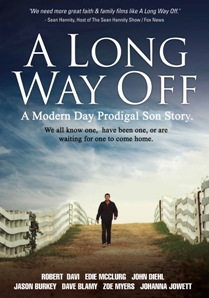
  • 140310longwayoffposterThe movie A Long Way Off is set to debut the day before Father's Day.  A modern-day rendition of the Bible's "Prodigal Son" story, the movie features several top name actors and is very well done.  It's central message is timeless, the script is convincing and moving without being preachy, and the movie even featurs a cameo appearance of the book A Month of Italy (but you'll have to look quick!).

    I highly recommend this family-friendly movie and hope you enjoy it!

    Click Here for an additional review and movie trailer.

    Thanks!

    Chris Brady


    Related articles

    "A Month of Italy" book to debut in July
  • As many of you know, having clever children is endlessly entertaining. My oldest son Casey decided to construct a "bad lip reading" version of one of my old talks. Then, like those Russian Matryoshka dolls that are stacked one inside another, he wrapped it in a succession of boxes until a huge one made up the outer shell. After tearing through layer after layer, the family was treated to the following (which, personally, I think may make more sense than did the original talk)! Enjoy!


  • I stumbled across this compilation of the entire 66 commercials of the famous “PC vs. Mac” days. To me, this is some of the cleverest marketing ever. Notice the subtlety with which the Mac guy wins these standoffs without appearing to be mean. Slamming a competitor this hard but making the audience laugh at the same time is a very difficult balance to strike. Well done. I also think it’s a bit of a laugh the way the “PC”guy slighlty resembles Bill Gates, and the “Mac” guy Steve Jobs. This cannot be coincidence.

    Of course, these are so funny because they ring with truth. Mac’s are unarguably miles above the rest.

    Enjoy!


    Sincerely,

    Chris Brady

    Album[1]

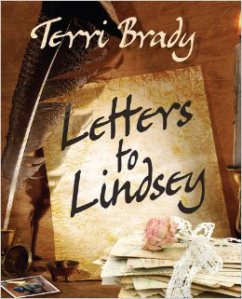
  • LettersLindseyIt took some finagling, a bit of sneaking around, and then a moderate amount of arm-twisting (you'll just have to read the book to find out what I'm talking about) but finally, in the end, Terri Brady's long awaited book Letters to Lindsey became a reality. It had a wildly successful debut at two different weekends of Life Leadership conventions in the United States and Canada, and is now available to the general public (here or here).

    Below is a short excerpt from the dust jacket inscription: 

    Speaker, business owner, blogger, wife, and mom, Terri Brady demonstrates in the pages of her book that sometimes we can learn the most profound lessons from the simplest experiences. Drawing upon everyday occurrences in her crowded life, she is a virtuoso at finding depth in daily living. Terri takes topics both serious and light and manages to turn them into unforgettable lessons. Whether it's the frustration of infertility, cute quotes from her four children, the fright of a brain tumor, or the complexity of female personalities, Terri dazzles.

    I couldn't have said it better if I'd written it myself!

    LettessigningI am thoroughly convinced that anyone who reads this book, man or woman, will discover both deep meaning and great entertainment, and will be inspired to live a better life. Terri, as a true example of what she writes, is the best kind of author. Enjoy!

    Sincerely,

    Chris Brady 

    Related articles

    Your Personal Brand and the "Margaritaville" Concept
    The Book is Here!
  • OldI sat in my little metal folding chair absolutely petrified. My hands were sweaty, my posture slumped, and I couldn't hear a word the presenter was saying. All my faculties were consumed with the fear of my impending doom.

    What was so downright terrifying?

    I was about to give my first official public presentation.

    I was eighteen years old and an engineering co-op student at General Motors. More for our benefit than anything else, at the end of each semester we co-op students were required to give a presentation of our work assignment and accomplishments that term. They were horrid affairs, to be sure, with a dim little old-fashioned bulb-type overhead projector, and amateur flimsies comprised of lots of really unimportant information. One by one each victim would get up and grind through a horrid three minutes. Soon, it would be my turn.

    My memory blanks out at this point. Perhaps it's some sort of protection mechanism, the kind of thing that eliminates our past tragedies from memory or at least preserves our self-image by refusing to remind us of what dorks we once were! At any rate, I can't recall one detail about that presentation except for how scared I was beforehand.

    It didn't go away any time soon, either. Year after year we'd go through the same drill and I'd be wigged-out-scared each time.

    Fast forward to today, where I basically make my living speaking in front of audiences around the world. I give somewhere around 50 public talks a year, and have been doing so (and often more) for almost 20 years. Now, I don't even break a sweat. I am not only NOT scared by speaking in public, I actually relish each moment! 

    What happened?

    First, the proverbial "time on the water." Anything we do a lot will eventually become comfortable. Notice I said "comfortable."  Just because we ultimately get comfortable at doing something that previously scared us to death, however, doesn't mean we actually get good at doing it!

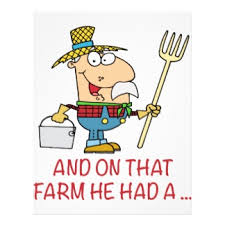
    To become good at public speaking, I've learned (and continue to learn) that one has to accomplish several things. I've written and spoken a lot on this elsewhere, so for this short article I'll just condense it into a nice little jingle taken from the world-famous smash hit song, Old MacDonald, as in, "Had a farm."  We all know how the next part goes: "E – I – E – I – O!"

    Let's use that little bit of wisdom in the form of an acrostic (I know, I know, I hate acrostics, but this one was just too cute and memorable not to do! Give me a little slack here, sheesh.)

    E = Educate – this means to teach the audience something they didn't know before. It should be a good reminder to deliver real content, something valuable, insightful, helpful, or profound.

    I = Illustrate – this is one of the most important things to remember; you haven't told them until you've shown them.  Use stories and illustrations to drive points home.

    E = Entertain – if you don't make it fun, it won't be memorable. Worse, if you don't keep their attention, they won't even hear enough to remember any of it anyway. So be entertaining, engaging, and fun.

    I = Inspire – this is where the emotional component comes in. Remember: the difference between being articulate and eloquent is passion. Eloquent speakers share their passion as much as their information.

    O = Outcome – What action do you want the audience to take as a result of your talk? If you don't give them marching orders, you can be sure they won't march anywhere other than away from your podium.

    That's it.

    There are millions of little, simple guides like this one, but I have to make the case that this little jingle from Old MacDonald just might be the most memorable. I hope it is. And I sincerely hope that when you next have the opportunity to speak in front of people, you think of this little acrostic and don't just have the jingle running through your head (because that would be annoying).

    "And on this farm he had some chicks . . . "

    Chris Brady

  • This is one of the most interesting worthless bits of trivia I've ever come across. Fascinating.

    The Bizarre Border Between Canada And The United States.

    Border

  • It's pretty sad, actually, that it's been so long between caption contests. In fact, I imagine all three of you readers out there actually FORGOT we had caption contests. This is possible to believe because I almost forgot that we had them! 

    To set things right, we will now reveal a new caption contest. But first: we must crown the winner of the last one.

    After much deliberation, argumentation, and food throwing, the winner was chosen by our distinguished panel to be the following entry from Steve Tokarski:

    And the Detroit Lions won the SuperBowl too.

    And now, with no further dithering, we introduce the next chance for one of you three to win a free book! Here it is (click on photo to enlarge):
    Newjs_600_x_450
  • CCEveryone has experienced walking
    into a room of strangers and not exactly knowing what to do.  Where do you sit? Who do you talk to?
    What do you do with your hands? Is everyone looking at you? What are they
    thinking?

    These feelings of insecurity are
    natural, but they don’t have to be permanent.  In fact, one of the worst things that can happen to your
    ability to relate to other people and to “fit in” is to be overly conscious
    about yourself and how you are coming across.  Being self-conscious means being less “other-conscious.”  This is bad, because it basically means
    you are too busy thinking of yourself to be thinking about the other people.

    “But I am thinking about the other people,” you might say.  “That’s why I feel so awkward in these
    situations.”  

    That may be true.  But you’re thinking about how those
    other people are thinking about you, which
    isn’t really thinking about them at
    all.  It’s really just another way
    of thinking about you, by thinking about what they are thinking about you.  Get it?

    There is a very helpful saying that
    goes something like this: You wouldn’t
    worry so much about what other people thought of you if you knew how seldom
    they did.

    Remember that.  It’s very helpful advice.

    One of the biggest areas in which
    you can have a breakthrough in dealing with other people is to realize that
    everyone feels as if he or she is at the center of the universe.  They are busier thinking about how they
    are coming across than they are noticing how
    you
    are coming across.

    So here’s what you do with all of
    this.  Here’s how you stand out in
    a world where almost everyone is self-focused and nervous too.  Enter a room with your head held high,
    your eyes making contact with others, and a smile upon your face.  Be the one who approaches other people
    and introduces himself first. 
    Don’t wait for others to make the initial contact.  You make it yourself.  Play a little game in your head by
    pretending that the one who makes the initial contact first wins!  Shake hands, give your name, and strike
    up conversations by asking others about themselves.  People are infinitely interesting when you care enough to
    dig into who they are and what they are about.  Try it.  You
    will be shocked how effective these little steps are.

    I mean it! Act comfortable even if
    you are not.  Force yourself to
    behave in the proper way and eventually it will become a habit.  No one will be able to tell that you
    are actually feeling a little nervous deep down inside.

    There is a line in a rock song that
    says, “Charisma is the key to opportunity.”  It may not be as simple as all that, but it’s not too far
    off the mark, either!  The world
    seems to make way for a person who knows where he or she is going.  And there is no better way to
    demonstrate confidence and a sense of direction than by being comfortable
    around other people.  Learn the
    habits of good interaction with people, whether they be older, younger, or much
    different from you.  Get good at
    being the initiator.  And stop
    worrying so much about what other people are thinking about you.  Trust me, if you do these steps often
    enough, they will think much more highly
    of you for doing so! 

    Sincerely,

    Chris Brady

    IMG_7689


  • FailureHere is a brief excerpt from one of my upcoming books (as yet untitled and unfinished):

    I
    was in a bookstore one day browsing through the section on historical
    fiction.  I am a sucker for a
    well-written novel set in a real historical time and involving characters from
    our past.  Thumbing through the
    familiar names of Bernard Cornwell, Conn Iggulden, and Jeff Shaara, I was
    surprised to come across a couple of books in this genre by Steven Pressfield.  I knew Pressfield to be the creator of
    the story behind the movie The Legend of Bagger
    Vance
    .  Intrigued, I bought both books and read
    them with relish.  They were
    remarkable.  They transported me
    back in time, immediately got me interested in their characters, and also
    taught me much about the epochs in which they were set.  Impressed with the breadth of
    Pressfield’s creative ability, I dug into the story of his success.

    Apparently
    it was seventeen years of trying before Pressfield got his first professional
    writing job.  It was a partnership
    on a screenplay for a movie called King
    Kong Lives.
      Excited and
    confident of success, Pressfield invited everyone he knew to the movie’s
    premiere.  Nobody showed.  Not a soul.  Then the review of the movie in Vanity Fair said of Pressfield and the other man who helped write
    the script, “. . .  Ronald Shusett
    and Steven Pressfield; we hope these are not their real names, for their
    parents’ sake.”  Talk about
    criticism! 

    Pressfield himself writes of that
    time in his life, “Here I was, forty-two years old, divorced, childless, having
    given up all normal human pursuits to chase the dream of being a writer; now
    I’ve finally got my name on a big Hollywood production . . . and what happens?
    I’m a loser, a phony; my life is worthless, and so am I.” 

    If the story had ended there for
    Pressfield, we may never have heard of him.  But something happened.  In Pressfield’s words: “My friend . . . snapped me out of it
    by asking if I was gonna quit . . . no! [Pressfield answered]. ‘Then be
    happy.  You’re where you wanted to
    be, aren’t you? So you’re taking a few blows.  That’s the price for being in the arena and not on the
    sidelines.  Stop complaining and be
    grateful.’”

    It’s hard to imagine sometimes the
    resistance and rejection successful people have overcome on their
    journeys.  We look at them and
    immediately see their genius, their ability, their authentic swing.  We know them by their Margaritaville.  But excellence comes only after the
    long struggle against any and all obstacles that come along.  This is easy to forget when looking
    upon someone who has “made it.”

    There is another, deeper lesson to
    be gained from Pressfield’s story, however.  In effect, he was told not to waste his failure.  Specifically, he was reminded to be grateful for it!

    We have already been through the
    discussion about how failure isn’t fatal as long as it isn’t final.  But we need to emphasize here that
    failures are extremely valuable if utilized properly, that is, if they are used
    as learning experiences and employed in the task of making us better. 

    Failures hurt.  In reading the account of Pressfield’s
    first professional flop, it is easy to feel his pain and embarrassment.  But fortunately for thousands of fans all
    over the world, Steven Pressfield did not allow his humiliations to define him;
    instead, he let them refine him.  The concept is simple but difficult to
    live out consistently: our failures should not define us, but rather they should refine us.

    Too
    many times we allow our failures to go to waste.  As a result of the pain of failing we quit, pout, lash out,
    lose confidence, and lose hope.  In
    such cases the failures hurt, but they are not allowed to instruct.  They knock us down, but then are not
    utilized to lift us higher.  They
    make us appear foolish, but are not allowed to help us grow wise.

    Author
    Frans Johansson wrote, “ . . . groundbreaking innovators . . . produce a heap
    of ideas that never amount to anything. 
    We play only about 35 percent of Mozart’s, Bach’s, or Beethoven’s
    compositions today; we view only a fraction of Picasso’s works; and most of
    Einstein’s papers were not referenced by anyone.  Many of the world’s celebrated writers have also produced
    horrible books,* innovative movie directors have made truly uncreative duds,
    megasuccessful entrepreneurs have disappointed investors, and pioneering
    scientists have published papers with no impact whatsoever on their colleagues
    . . . the best way to beat the odds is to continually produce . . . .”

    Any
    life lived will most certainly come with a litany of failures, mistakes,
    embarrassments, and humiliations.  If
    we are not mature enough to use these shortfalls as steppingstones, they don’t
    find their way into our legacy and are spilled out as waste instead.  In such instances, we have felt the
    pain but not grabbed the gain.   

    Never
    waste a failure.  Wring from it all
    the experience and learning you can to come back stronger and better the next
    time.  And no matter what, keep
    producing. 

    Sincerely,

    Chris Brady

    * He doesn't mean me!