A Month of Italy: Rediscovering the Art of Vacation goes on sale today! Visit the website here! Prego! Enjoy!

“The only way to be happy, is to give happy.”
A Month of Italy: Rediscovering the Art of Vacation goes on sale today! Visit the website here! Prego! Enjoy!
 "Excuses are useless, except when used for losing."
I love quotes like that. However, I think I've grown to realize that excuses aren't entirely useless. They do have another function. Excuses can be helpful in pointing out where you have blind spots, crusty attitudes, or inflexibility. If you'd like to figure out what might be a limiting factor in your thinking, take a good look at the knee-jerk reactions that pop into your brain (and probably out of your mouth) when someone hits you with a new idea or concept.
Let me give you an example.
Since my upcoming book, A Month of Italy: Rediscovering the Art of Vacation is coming out in just a few days, I've been communicating a lot recently about the concept of taking time off for the purpose of intentional renewal and restoration. I've shared statistics about how few North Americans actually take vacations, especially the types of vacations that involve truly unplugging from professional responsibilities and invasive electronics. When people are confronted with this type of information, some recoil and blurt excuses. "I can't afford to take time off work," or, "I don't have the time," or any number of similar, reflexive responses. I believe reactions such as these are helpful clues people can use to unlock their thinking and take it to a whole new level.
Let's start with the first one: "I can't afford it." If this is the automatic response then perhaps it indicates an out-of-control financial situation, incorrect financial thinking, materialism, or an overstressed condition. "Genius," you might say, "of course it means those things." But here's where this gets constructive. Now it's time to ask the question "Why?" How did things get this way and how can they be fixed? After all, financial difficulties are not a fatal disease, permanent condition, inevitable, or insurmountable. And proper time off to think or restore one's vigor (and to "think one's way out of difficulty") might go a long way toward breaking out of the financial doldrums. There is also the positive, productive tension that can be gained from dreaming about something beyond one's current financial reach (such as a "dream" vacation). So the very thing some people might think holds them back from proper breaks in their life may only be overcome with the strength to be gained from doing so in the first place. In effect, some people seem to say they need the medicine so badly they cannot take it.
The second one: "I don't have the time" is perhaps even more indicative of incorrect thinking. In effect, this mindset is proclaiming that one is too busy to become more effective. "My saw is so dull that I don't have time to stop and sharpen it!" However, I do understand legitimate external constraints placed on one's time by employers and clients, and in fact, wrenching the time out of one's calendar for proper breaks is the biggest challenge of all when it comes to this concept of "rediscovering the art of vacation." Therefore, let's slice this pie up into smaller pieces.
There are different types of restorative breaks. Restoration should be viewed as part of an overall strategy in which breaks of various sizes are scheduled into your life on an intentionally periodic basis. I like to classify these breaks into four sizes: Micro, Mini, Macro, and Radical.
Micro Break: This can be anything from a few hours to a whole day off.
Mini Break: This is from a weekend to a week or so.
Macro Break: This is somewhere between one to three weeks off at a time.
Radical Sabbatical: This is a break of at least four weeks and can last up to several months or even a year.
These random delineations are made here simply to convey the idea that all vacations are not created equal, and sometimes even the simplest "staycation" (in which the participant "stays" at home and doesn't go anywhere) can be effective. It doesn't take humongous sabbaticals to recharge one's batteries all the time, especially if different sized strategic breaks are being deployed in one's life on a regular basis. However, the lure and power of a true "radical sabbatical" should not be ignored. Just because it is out of reach financially or time-wise at the moment, doesn't mean it should not be placed on the horizon as a future goal.
So excuses can be instructive, and may even lead us to discover where we can grow and change. Check your responses to the concept of properly utilizing the "art of vacation" in your own life, and ask yourself if you've been offering up obstacles to yourself instead of opportunities. Turn your mind in the direction of "how can I" instead of "why I can't". This is true in all categories of life, not just vacations, but this particular illustration is just so fun. After all, who wouldn't want to learn how to be just as productive, if not more so, while having a greater amount of fun and being more rested at the same time? That's what the art of vacation is all about, and it's why your excuses should serve as pointers to possibilities instead of prohibitions on productivity.
He sat down at our table with an affable smile and a warm welcome that didn't require a single word of English. We stammered through broken greetings and soon learned he was the owner of the ristorante. Leio was his name, and he inquired about who we were, where we were staying, and how long we were in Italy.
"Il Trebbio," we said, pointing in the general direction of our villa, and mentioning also the name of the owner, "Maria Grazie," which always seems to bring acknowledgment and recognition. Leio smiled, nodded, and said, "Io nato il Trebbio!" meaning, "I was born at il Trebbio!" Astounded, we dug in further, straining our thin Italian to its maximum limits, but nonetheless determining that our new friend Leio, owner of the Bastian Contrario ristorante (which I mentioned briefly in my upcoming book, A Month of Italy: Rediscovering the Art of Vacation), was indeed born in the main house of the villa complex we are currently renting. Actually, we are in a farmhouse building thought to have been built in 1627, restored in 1839, and again in 1999. We are not in the main house, but a farmhouse out behind a more recently built palace of some sorts, that was probably constructed in the early eighteenth century. Leio, it seems, was born to some caretakers or workers who were living on the property of this marvelous, multi-generational (it is still in the same family as the original builders, themselves descended from land grants to French nobles by Charlemagne) estate. Next, Leio brought his own blend of "dolci vino" (sweet wine) to the table for us to try, and it was delectable, and probably not even alcoholic (but the best grape juice you ever did taste)! Then he brought out photograph after photograph of the marriage celebration of either his son or grandson (we can never be sure with this language barrier we are so desperately trying to work through) in Miami, Florida. We saw photos of Leio with Shamu at Sea World, Leio wearing funny glasses at a party, and Leio with a happy wedding couple who were also sporting crazy eye-wear. We parted fast friends with Leio, but not before discovering that the nice people with two kids at the adjacent table just happened to be the couple who had just taken up residence on our same property at the "cottage" next to our villa. More introductions and discussions followed as we learned that they were from Toronto, Ontario. Again, with promises to get our kids together the next day at the pool, we had made more friends in a foreign land.
In A Month of Italy: Rediscovering the Art of Vacation, I wrote about how we seemed to meet and become friends with people at every turn, finding interesting folks from around the world we felt we'd known forever. Just what is this phenomenon of meeting people from different cultures, lands, and backgrounds and striking out for common ground? Why is international travel so fraught with serendipitous relationships that occur so easily one barely has to make an effort?
Just this morning, Terri and I rode the motorcycle up the steep hills into the medieval city of Cortona, parking conveniently just outside the city walls and walking to a cafe in the Piazza Signorelli. Immediately, Terri spotted Alessandra, the cooking class instructor she so enjoyed the year before (and who makes an extremely favorable appearance in the A Month of Italy book), and upon approaching her to reacquaint ourselves and say a quick "hello," we were immediately invited to have a seat and join her and her new cooking class clientele about to embark upon an adventurous day of culinary delights. We chatted amicably, Alessandra spouting off many of her classic witticisms (such as, "The mother of the idiot is always pregnant") and promising to email Terri some new recipes. She absolutely refused to allow me to pay for the coffees and danishes, shouting to the owner of the cafe across the tables and umbrellas of the piazza. By the time I reached him with money in hand, he folded his arms, shook his head, and said, "It is impossible. Alessandra wants to pay," in broken English.
Maria Grazie and husband Massimo, owners of Il Trebbio and some of the most gracious hosts imaginable, invited us to dinner last Saturday night in the garden courtyard behind the main home on the estate. Then, plans changed as their younger son announced his intentions to arrive that evening from Florence with his three small children, wife, and mother-in-law. Maria Grazie and Massimo insisted we still come to dinner, and the party of expanded size gathered in the three-hundred year-old courtyard for wonderful Italian cuisine and even more wonderful fellowship. Laughter, scampering children, and conversation flowed as if we'd all been best friends recently reunited. Finer evenings have rarely been seen.
I could give more examples of these types of nearly spontaneous, serendipitous moments of quality time with interesting, warm-hearted people that seem to happen to us once we are loose and abroad in a different culture. Is it just that we are normally too busy with our daily lives to allow room for this type of unplanned, unexpected bonding when we are at home? Is it that we must first break out of our normal routines in order to experience new relationships that are anything but routine?
I chalk all this up to the wonder of travel, the art of vacation, and the endless possibilities for meaningful connection with other human beings once we're removed from self-importance and mundane responsibilities. I sincerely hope that I can inspire many more fortunate pilgrims to wander abroad, shake a foreign hand, and embrace those of other lands, generations, and cultures. Indeed, it is the richest reward of travel.
Sincerely,
Special thanks to Emily O'Boyle for a wonderful job of putting this video trailer together, and to Kyle Reeder for playing the guitar piece. Thanks also to the early reviewers of the book whose quotes were used therein. I appreciate you all. And to the three readers of this blog, I hope you enjoy the video! :)
In the process of preparing my latest book (A Month of Italy: Rediscovering the Art of Vacation) for publication, I have been blessed to work with many excellent professionals. One of these in particular, Deborah Brady (no relation) served on the final editing staff. She took it upon herself to write a most excellent review of the book that was so pleasing to me, not only because she has a cool last name, but also because she "gets" the book, and therefore the review rings true with what I was trying to accomplish. In anticipation of the release of the book in a couple weeks, I hope you enjoy Deborah's review provided below. Thank you Deborah, for such warm sentiments!
____________________________________________________________________________
Do you dream of traveling the world, going on fascinating adventures, meeting new and interesting people, discovering and admiring treasures of art, history, and architecture, marveling at the many varied landscapes and scenes of nature that can take your breath away, relishing the peace and tranquility of those scenes, and experiencing life from the perspective of a people and culture uniquely different from your own? Have you ever taken action to make those dreams come true? Or have you, like I have, let life get in the way of truly living and stuffed your wanderlust somewhere deep down inside in the realm of Someday, which you know may never come? Have you gotten to the point where your focus has become so myopic and your vision so limited that you aren’t even sure anything outside work and your normal routine even exists anymore, or how you could possibly find the time, energy, and money to take advantage of it if it does?
If you are anything like me and your wanderlust has been suffocating for so long that it’s barely breathing, I have good news for you. Your dreams can come true. And I want to introduce you to a book by NY Times, USA Today, and Wall Street Journal best-selling author Chris Brady entitled A Month of Italy: Rediscovering the Art of Vacation that will not only prove to you they can but will also demonstrate how, all the while removing any guilt you might be inclined to feel at such a prospect by illuminating the many-faceted benefits of vacationing.
Brady’s book details the one-month-long “trip of a lifetime” (what he calls a “radical sabbatical”) to Italy that his family took in order to enjoy quantity as well as quality family time; entrench themselves in the authentic, day-to-day life of a rich, fascinating, and warm-hearted culture; and “sharpen the saw” by, as Brady explains it, going “slow in order to go fast.” With wit and humor that will have you smiling, chuckling, and sometimes just bursting out laughing, Brady shares the highlights (and some not-so-highlights) of their month in Italy, illustrating how such a break from his normally frenzied life invigorated, rejuvenated, inspired, renewed, and changed him for the better, making him even more productive after his return. Within one year of Brady's sabbatical, he relocated his family home to another state as he had long dreamt of doing, founded a multimillion dollar company with several of his best friends, and wrote a best-selling book—not bad for the clarity provided by just one four-week break!
The author expresses his own frustration at not being able to truly and sufficiently capture and portray the wonder, awe, and amazement of the whole experience with mere words or even photography. But with as much skill as is linguistically possible, Brady takes you along on his family’s journey to Italy. You will feel the ground beneath your feet, the radiant sun on your skin, and the breeze in your hair. The aromas and tastes of pizza, pasta, cheese, wine, and gelato will fill you up and bring you sweet satisfaction. You will relish the suppleness of fine Italian leather and admire all of the beauty that surrounds you everywhere. Claustrophobia and motion sickness might set in as motorcycles whiz by you as you maneuver around tight curves in a big, white, clunky minibus. A competitive spirit will arise in you as you count Smart Cars with the kids. The weight of the locals’ stares will engender feelings of embarrassment at your obvious foreignness and humbleness for your lack of knowledge of the local area and its rules, customs, and language. But their accents, loud conversation, and sweeping gestures (and, trust me, you will catch yourself trying to imitate these!) will amuse you, and their warm hearts and smiles will welcome you. A profound sense of smallness and yet interconnectedness will overtake you as you consider the vast array of others who have trod that land before you and all of the history that has taken place there. The extreme heat and sweat will be oppressive as you climb many stairs and towers, and you will be enraptured and enthralled by the sight of all of the breathtaking, majestic views. In fact, you will feel so certain that you witnessed and experienced it all with the Bradys that you will realize your dreams are not lost.
“Hello, Wanderlust! I hear you breathing. You are alive and well!” And that is when you will start planning. And even here, Brady assists. In true leadership fashion, he offers some extra features to go along with his book to ensure that you are not only inspired to imagine but will also have the necessary tools to plan, prepare, and take your very own vacation getaway (or “radical sabbatical”) that you have been dreaming of for so long…and to do so without feeling even the tiniest bit of guilt!
Where will you go on your sabbatical, and what will you be inspired to accomplish when you return?
Traveling internationally is a wonderfully expansive experience. People are always interesting, and different cultures embody lessons and entertainment to no end. Some of these differences, however, can be annoying.
 When I first began spending time in Italy, I found the concept of "siesta" or "la pausa" charming, one of those cultural differences you look for and appreciate. In a world of international franchise brands and the leveling effect which seems to be obliterating regional uniquenesses, finding something truly different from your own culture is a little like kicking up a gold coin in the back yard. It's rare and almost immediately appreciated. However, unlike the gold coin, the southern Mediterranean region's habit of siesta quickly lost its lustre for me. As a spoiled American used to speed and service, efficiency and pace, I quickly became enemies with siesta. It seemed that just as I was ready to head into town, I would remember that it was siesta and all the shops were closed. I began to find myself planning my days around the fact that huge swaths of the productive daylight hours were unavailable for public commerce. What a pain.
Until this trip, that is. For some reason this week, as we've returned to the scene of so many happy memories for our family, I think I am finally getting it.
As usual, the summer heat in Tuscany is pervasive. As I write this it's not yet July or August, when the heat descends in oppressive blankets that seem intent on smothering you to a sweaty death, but it has still been hot. The sun, especially, rides herd with a merciless ferocity over those who dare expose themselves to it for any length of time. I find myself longing for the cooler mornings filled with birdsong, and the evenings of reprieve when the sun finally moves across the sky in search of other subservients to beat with its rays. These mornings and evenings are nothing shy of delightful. You want to stay up and enjoy it as darkness descends. Additionally, you find yourself promising to awake early and get active before the heat arrives. "If only I could sleep less hours at night," you think, "because I am wasting these nice, cool hours of evening and morning." And then it dawns on you (notice how I've switched to the second person, in effect putting the blame for this on "you" instead of "me?"), "I'll just sleep during the heat of the day, and therefore will need less sleep during the cooler, more luxuriant hours!" you think. And voila! Siesta is not such a bad thing, after all, eh, you foreigner?
Okay, I confess. These Mediterranean people are really onto something with this siesta thing. Who knew? Once again, the "Art of Vacation" comes to the rescue of ignorance through the activity of actually "being in" a country and not merely "traveling through" it.
And now, I lay me down to sleep . . . .
 I love "being in the zone" and feeling the enthusiasm for what I do professionally. I am blessed to be doing in life exactly what I want to do and (I believe very strongly) what God has called me to do. I have long been an advocate of hard work, maximum effort, and the full utilization of one's gifts. There are few things as sad as a wasted life.
However, in keeping with the theme of my latest book, A Month of Italy: Rediscovering the Art of Vacation, I have noticed that people who are hard chargers also seem to have a weakness: they have a difficult time grabbing the necessary down time in their lives. Or, in the cases where they do set aside time, they don't use it properly and to the greatest advantage. And finally, they don't establish restorative breaks as a matter of strategic habit. In essence, then, I feel that those of us who are driven in life need to be aware of the following three ways we mess up when it comes to the concept of "going slow in order to go fast." Here they are:
Strategically: First, people don’t seem to look at scheduled downtime as a valid productive strategy. It is as if there is a “leisure guilt” complex that holds people back from scheduling the time they need. Therefore, people are not intentional about scheduling breaks into their calendar. The result is an “I’ll get to it when I’m not so busy” mentality in which someday rarely comes as readily or as regularly as needed to truly maintain peak performance.
Properly: Second, people don’t seem to structure their downtime to produce the most restoration. Instead, they use it as a way to check the “visited family” or the “visited such-and-such an attraction” box. There is a correct way to spend your downtime to maximize your regeneration, and it needs to be tailored to the your individual needs and style.
Regularly: Third, breaks are not usually scheduled on a regularly occurring basis. We need to eat regularly, breath regularly, and even sleep regularly, then it certainly stands to reason that we need professional breaks regularly. But more often than not, official breaks occur only sporadically as more pressing professional matters allow (which is all too infrequently).
Don't become self indulgent, and never fall for the trap that pleasure is worthy as an end pursuit. However, also be careful not to ignore the needs of your body, mind, and soul to find rest and restoration in a constructive way.
Sincerely,
 The concept I've lately been calling "Strategic Sabbaticals" involves taking intentional, restorative respites on a regular basis. These breaks can be tiny (one hour or so), or large (four weeks or more), or anything in between. (Actually, since we're making this up as we go, they could be anything we devise!) The intent is not merely to provide space in which to enjoy life, but rather, and more so, to enhance peak performance and keep one operating optimally. In America in particular, we have largely lost this practice. In our culture there appears to be no shame regarding material accumulation and ostentation, but even small periods of downtime are somehow frowned upon. For me, I'd rather spend my money on memories than material. And if the memories come with recharged batteries, that makes them all the more legitimate in the getting.
So just what can be expected from proper, restorative breaks? I offer just a few below, and perhaps you can add to this list in the comment section.
Boost your energy levels and refill your tanks.
Provide a chance for you to re-center yourself and get grounded.
Allow time for spiritual focus and a period of growth, worship, and study.
Eliminate stress from your system and build up a buffer against it for the future.
Increase your productivity and creativity by providing you true rest and restoration.
Allow you time to deeply consider your priorities in life, and how to live them out better on a daily basis.
Give you time to forge stronger relationships through a dose of both quality AND quantity time.
Provide a format within which you can create lasting, meaningful, deep memories.
Provide you the important health benefits only proper time off can bestow. This leads to better longevity and sense of wellbeing.
Help you tap more fully into your potential and restore you to peak operating performance levels.
Help you realize that you should treat your time as importantly as you treat your money (remembering that time itself is your most valuable currency – it cannot be stored nor acquired in excess – you only get what you get).
 As the launch date for the release of A Month of Italy: Rediscovering the Art of Vacation book draws near (it's July 3rd, by the way), I thought it might be be enjoyable for you to have a sneak peak at the Preface. If you like it, feel free to send it to about 4,000 of your friends. If you hate it, well, keep it to yourself. Pretend you never saw it. Just go on about your business. And to all you beautiful people out there (whether you like my book or not), keep doing what makes you you!
Preface
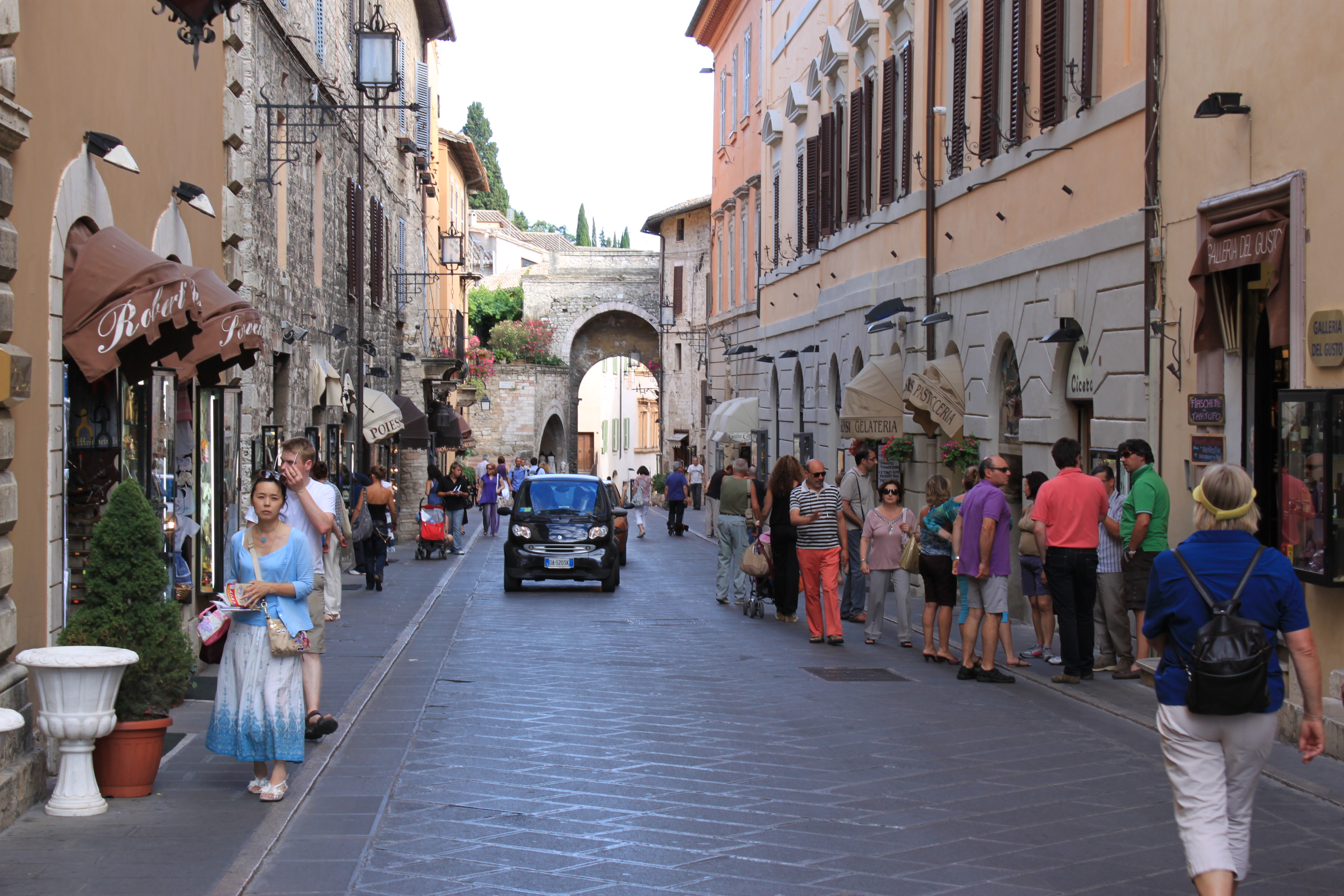
The morning sun is strong now but partially shielded by tall medieval buildings. I rest casually in the shade on old stone steps with no schedule, no plan, and not an ounce of hurry left in my body. It feels strange. I strain to remember if I’ve ever felt this way before. In childhood, perhaps, but such memories are hidden beneath the dusty veil of time.
A wedding party is kibitzing about the steps on which I sit, breaking up and heading for some tour buses somewhere. I know this because one of the boys yelled it loudly, as if in command of the group, which perhaps he is. One young lady, in the early bloom of her maturity and obviously intending to be sexy, is wearing a dress so tight old women shake their heads while young men find reasons to stop and turn. She pulls self-consciously at the shortness of it in a vain attempt to cover more of herself. I can tell she won’t wear it again, and smile, thinking that virtue has found her through embarrassment. Or perhaps she simply hasn’t struck the right chord, struggling as she is in the space between a girl and a woman.
Pigeons flutter overhead and doves coo. Old men, as I’ve seen everywhere throughout this land, have assembled at their posts in little clusters outside bars. They don’t begin their card games until afternoon. The mornings are reserved for staring. I find it interesting how they dominate the tables and chairs in front of these little snack shops, but never, even once, have I seen any of them with a single item purchased from inside. They lay claim to the territory solely on the authority of their age, and I wonder if there is a rite of passage into their silver-haired gang. I daydream about finding out first-hand for myself someday—that is, if foreigners are allowed.
“There are too many Germans in Cortona,” I hear a German say in thickly accented English, and I watch as he and others stroll by with shopping bags swinging.
Employees of the museum next to me work lackadaisically to set up street signs in the piazza. A policewoman in navy pants with scarlet stripe, powder blue blouse, and bright white helmet, harasses cars that enter to park. One young man, tall and strapping with long curly hair, jumps out of a Fiat Panda and deploys his flirtatious charisma, promising he’ll only be a minute. She succumbs with a smile.
In front of a fruit store, a barrel-shaped old woman angrily sweeps invisible dirt with a whiskbroom, while some middle-aged men in shiny suits sit smoking at tables nearby. Next to me on the steps rests a little jangle of American college students, apparently in town to study something. A tall blonde girl flirts openly with a boy more interested in his schoolwork. He rises to leave and an- nounces he’s not quite ready for the test. She mimes disappoint- ment but watches him walk away. One of her friends swats her on the shoulder.
Someone emerges from a ceramic shop and shouts at a man passing by with a dog on a leash. The man turns, smiles, waves, and stops to talk to his greeter. They lean against the building and chat—all the time in the world.
I retrieve my motorcycle from its spot against the stone wall of the old theater and saddle up. I need nothing but its brakes as I descend steep, narrow stone streets and gain passage into the wide-open countryside just beyond the city’s ancient walls. I turn onto smooth blacktop and roll on the power, olive trees whizzing past as I head for no destination but just ride.
After an hour I stop along a quiet road and kill the engine.
The sun is hot on my matted hair, and a gentle breeze is too gentle. Digging a camera from my shorts I attempt to capture the scene in all its glory. A beautiful abandoned limestone farmhouse stands in splendor atop a bright tan wheat field. Dark green cypress trees trace the old lane up to the building and stab the clear azure sky like soldiers in formation. Canopy pines provide shade in a peaceful cluster around the top of the knoll. Rigidly neat rows of grape- vines slant across a hill in the background, their obviously manicured condition a stark contrast with the adjacent ruined house. Farther in the distance looms a dull grey mountain range, jagged against the sky. These images comprise a stereotypically stunning Tuscan landscape—the kind that arrests my attention and conjures my wonder again and again.
I zoom in, walk around, play with the camera but cannot get the lenses to capture the full measure of reality. Despite my best efforts the photographs simply fall short. I so desperately want to share this, to bottle it up and take it back for others. I wish to pour it out for them and show what they too could be seeing, to give them an idea of what is out there and what they could experience. But my efforts are in vain. Sometimes, quite literally, you simply have to be there.
I’ll just have to tell the whole story, I think, motoring away. I’ll have to tell it in a way that brings it to life for others: enough to inspire them to launch out on their own adventures.
The story is one of going slow in order to go fast; a story about rediscovering and bringing back into favor a lost art; namely, the art of vacation, and it is—or rather should be—a story about you.
 One of the natural responses to the idea of taking breaks, vacations, sabbaticals, or whatever is, "But, I can't afford it!" I totally understand this reaction, and in this installment I wish to attack this obstacle in a way that, I hope, allows readers to understand that they can figure out a way. Also, I am inclined to believe that when people read my book, A Month of Italy: Rediscovering the Art of Vacation, they will also want to figure out a way! And certainly, it doesn't have to be Italy. A restorative break could occur right at home. The important thing to understand is that money is not able to hold you back from doing what you really want (and need) to do – unless you let it!
The current economic climate has been hard on people, and I in no way want to make light of that fact, nor discount the pressure one feels when experiencing financial hardship. There is no pressure quite like financial pressure. However, there are always options if one thinks hard enough and has the right attitude about money.
It is important to establish right up front that arranging for the financial means to take restorative breaks in one’s life should be a priority. There is no reason that a budget should not include some money to allow one to take the breaks needed to accomplish a little rest and, more importantly, restoration. It’s a matter of prioritization. In our materialistic culture we are sold the lie that more and more stuff will bring happiness and fulfillment. It simply isn’t true.
The other fallacy is that people actually believe “they can’t afford it.” But studies show that people who complain of having no money still manage to possess expensive smart phones, automobiles, air conditioning, cable or satellite television, video games, designer purses, large wardrobes of clothes, and any number of other things that cannot by any stretch of the imagination be considered necessary for living. The truth of the matter is that we’ve been conditioned by our materialistic society to have a lot of stuff we really don’t need. And in most cases, when people feel they "can't" afford a break, it's because they have become deeply indebted from purchasing stuff they really didn't need with money they hadn't yet earned. As we’ve been discussing, one thing we do need, however, is proper downtime. It’s a pity that we trade our limited resources for material items that don’t bring health and wellbeing but then claim we can’t afford to take time off which is proven to enhance our health and wellbeing.
We’ve simply got our priorities out of whack.
There are really two contexts in which to consider personal finances. One is defensive, the other offensive. Defensive personal finances means to preserve and conserve what you bring in. Slow down the materialism consumption machine a little bit and free up some funds for more essential aspects of living – such as restorative breaks. Offensive personal finances means to figure out ways to increase revenue and actually bring more money in. It is beyond the scope of this book to delve too deeply into this topic, but understand the old maxim that in order to get ahead financially you will need to do two things: spend less than you make, and make more than you spend. One without the other does not work. Sometimes people think that if they can only make more money all their financial troubles would disappear. This may be true to some extent, but not if they are dumb with their money. Others think they can save themselves to wealth. This may also be true to some extent, but not if what one earns is a pittance. One needs both to truly get ahead. (For more on this, see the “Financial Fitness Pack” pack).
Use the many tools available today to generate a budget that makes provision for less spending in order to pay for strategic breaks. Be creative with your strategic breaks so they aren’t that expensive. After all, how much does it (or should it) cost to unwind? There are many free ways to decompress. Sell your unnecessary material items and put the money into time off. And ultimately, use the renewed vigor and clarity you’ll get from proper, strategic sabbaticals (both large and small) to get better and better at what you do and increase your earning power. Pairing this with increased discipline in handling your money will go a long way toward creating a “productive spiral” of higher reward for better performance because of proper time off.
It’s not a pipe dream; it can be a reality.
And I promise you it's worth it!
Sincerely,

