Welcome to
Chris Brady’s
Blog

“The only way to be happy, is to give happy.”

  • Finally, the winner of the last Caption Contest has been selected! It was a tough choice, but ultimately, the panel of judges was most entertained by the following submission:

    iCute!

    Posted by: Tony Hendricks | February 21, 2012 at 05:53 PM

    Congratulations to Tony! Just comment on this blog with an address (which will remain anonymous) and you'll receive a free, autographed copy of Orrin Woodward and my best selling book, LIFE.

    And now, for the next Caption Contest! Good luck, everyone.

    Sincerely,

    Chris Brady

    400975_10151154896610494_753505493_22569758_1581265871_n


  • The other day I was playing around on Twitter and sent out some "one-sided" words. Among the many other peculiarities of our language, one-sided words are those we use in one form, but never in the other.  As you read through these, see if you can think up some more and add them to the comment section below.

    1. We say "outrageous" but never "rageous"

    2. We say "uncanny" but never "canny"

    3. We say "indescribable" but never "describable"

    4. We say "redundant" but never "dundant" (thanks to Peter Merante for that one)

    5.  We say "rejuvenated" but never "juvenated" (thanks to Mitchell Boersma)

    6. We say "nonchalant" but never "chalant" (thanks to LouisianaBrown)

    Others?

    Also: to follow me on Twitter go to http://twitter.com/#!/RascalTweets

    Enjoy!

    Chris Brady

  • IMG_1369With the prevalence of High-Def television, video, photography, computer screens, and even smart phones, our modern eyes have grown accustomed to seeing things in clear focus. Going back to older technology is immediately noticeable, and seems fuzzy and ancient.

    I find that this can be a metaphor for life. Some people seem to live lives that are clear and in focus, while others move through days of fuzziness with no direction. What is the difference? And what are some things you can do to make sure to live your own life in the vibrant clarity only high-definition can produce? The answer is intentionality; clearly defining what's most important and then deploying your time, talents, and resources toward those ends accordingly.

    1. Understand Your Purpose: Knowing who you are begins with knowing whose you are.  Unearth, detect, and discover your God-given purpose and you will be giving your life the highest possible clarity.

    2. Pursue a Dream: Knowing your overall purpose opens the door to dreams. As Orrin Woodward and I wrote in Launching a Leadership Revolution, clarifying your actions by aligning them in the direction of a dream can have massive motivational power.

    3. Set Specific Goals: Dreams without goals set toward their attainment are mere fantasies. Those goals must be specific, believable, achievable, written and spoken, and have a target date for completion.

    4. Follow a Game Plan: A game plan is a map that guides you through the obstacles and hurdles and gives you a route to your goals. What specific steps can you take to hit your goals? Who should you enlist to help and support you in that quest? What rewards will you allow yourself upon hitting your goals? These are just some of the elements that go into a productive game plan.  

    5. Execute: There is no substitute for hard work. Tim Tebow said, "It's not hard to beat talent when talent won't work hard." The most successful people in life are not the ones with the most talent, but rather those who have the ability to push themselves to excellence. Remember: You won't reach high if you won't push on.

    6. Measure Your Results: Orrin Woodward is big on calling this step "Keeping Score." Having goals but not measuring your progress against them is like bowling in the dark. Have the courage to confront brutal reality and get a true, accurate measure on how you are progressing.

    7. Adjust Intelligently: Analyze your results and make adjustments as necessary. These don't have to be huge – just smart. It is at this step where a mentor or coach can prove invaluable because often we are blind to our limiting factors and destructive tendencies.

    8. Persist in the Process: Many times success is nothing more than hanging on long enough for it to show up. Stay the course. Be tough enough to stick it out. Once having put your hands to the plow, don't look back. Keep at it.

    9. Enjoy the Journey: The cliches are flying fast and furiously now. But this is a big one. Life is a pilgrimage, not a destination. Be sure to celebrate your victories. 

    10. Touch Lives Along the Way: If you only embodied #9, you would be a selfish Hedonist. But if you enjoy the journey while serving others, you will not only be more fun to be around, but will lift others in the process.  Remember: The selfish life is not worth living (and neither is the shellfish life, when you really think about it!)

    11. Take Time Out: Be wise enough to know how you operate. Schedule in deliberate breaks for rest and restoration, so you can continue to function at peak capacity.

    12. Keep Your Priorities Straight: This is good advice in two ways: a) for proper allotment of your time and resources as you strive toward excellence (thereby making the most productive use of what you've been given), and b) to keep you from losing track of who you are and what you are about. In those famous words from The Lion King as said to Mufasa, "Never forget who you are." 

    13. Give glory to God: When it's all said and done, there is usually a lot more said than done. And the little we actually do accomplish is for, by, and through God's grace. 

    These are the 13 megapixels critical for constructing a High-Def life. Challenge yourself to keep them in focus and enjoy the vibrancy that results! 

    I hope this helps.

    Chris Brady


  • My new book is due out this July. Here is an excerpt from it (Chapter 8). I hope you enjoy it! 


    “People travel to far away places to watch, in fascination, the kind of people they ignore at home.”

    – – Dagobert D. Runes

                I grew up on the shores of the Great Lakes.  If you’ve never been there, particularly Michigan’s west coast, picture one of the famous California beaches: pristine sand stretching for miles along endlessly pounding surf, thousands of people, girls in bikinis, mountains in the background, sunshine beaming brightly, sports cars driving along the boardwalk, and surfers out in the waves.  The beaches of Lake Michigan are exactly like that, except for the surf (fresh water chop instead), people, bikinis, mountains, sunshine, sports cars, boardwalks, or surfers.  If you next dropped the water temperature twenty degrees, you’d have a pretty clear picture.  The shores of Michigan are stunningly beautiful, largely abandoned, and frigid as all get out.  Every now and then, however, you catch a few pretty good days.  At such moments a Great Lakes beach can seem like heaven on earth.

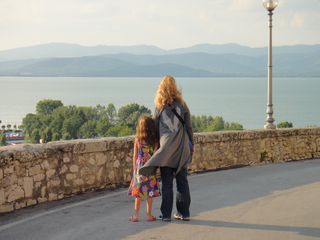
                So I consider myself at least a little bit of a beach veteran.  In addition to the extensive Michigan experiences, I have also enjoyed beaches from Japan to the Caribbean, Florida to Hawaii and Bora Bora.  Nothing, however, could have prepared me for the experience of a beach visit along Italy’s Amalfi coast.

                After a day of touring ruins, I thought a little break might be a good reward for the kids.  So the next day we packed up the trusty mini-bus with towels and sunscreen, balls and sunglasses, and drove into Maiori, scene of the famous grocery heist just days before.  It was early morning, and a work day for most, so the town was significantly transfigured from the jam-packed beach festival we had earlier encountered.  There were still quite a few folks about, but we were actually able to find a parking spot right along the beach.  Little did we know it would be the last good real estate we’d acquire that day.

                I had a bit of an inkling how this was going to work.  I’d seen it all along the French Riviera a few years prior.  Whereas the beaches of most of the world are wide-open, free-range sort of affairs, for some reason many beaches along the south of Europe get a little strange.  Maiori would be no different.  With the exception of a little postage-stamp sized “public beach” section, usually at the end closest to the messiest boats and worst seaweed and largest dead fish, the entire beach is occupied by businesses.  I don’t mean businesses along the beach; I mean businesses on the beach itself.  Almost all the way to the water’s edge umbrellas are arranged neatly in rows, crammed together so their brims almost touch each other.  Along both sides of such a property extends a chain or rope, cordoning off that business’s section of beach from the neighboring competitor.  One can easily keep track of the different sections because the umbrellas are color coordinated: all red in this section.  Next door? All green with white stripes, etc. You show up at the curb, pay an un-posted amount of money, then someone escorts you to your umbrella. 

                For us it was 15 euro for the whole day.  I asked about being in the row in front, near the water, and was told: “It is not possible.” Then we were led down some steps to beach level, out across a wooden walkway, then down between a row of umbrellas all the way to the end along the plastic chain separating our establishment from the one next door.  It was like being given the home in the neighborhood that faces the water tower.  I looked out toward the sea and saw six or more rows ahead of us.  The one along the water’s edge was completely unoccupied, as were 90% of the spots in the whole complex.  Compared to the acres and acres experiences we’d had on beaches around the world, this was high up on the strange list. 

                Next I surveyed our “property.”  It was at least nine square feet, consisting of the aforementioned umbrella flanked by a lounge on one side and a high-backed chair on the other.  I can’t help a small diversion describing these chairs:

                Italy is known around the world for its design.  This applies to cars, motorcycles, architecture, clothing, leather goods, what have you.  There is a style to the things Italians make that is unique and appealing.  In most cases, they just get it right.  Not so, however, when it comes to beach chairs.  Everywhere we went, from the hotel pool in Sorrento, to Villa Scarpariello, to this beach in Maiori, and later at our villa in Tuscany, we encountered these same awful chairs.  They were everywhere.  Pick up any brochure for a hotel and you’ll see them by the pool.  Drive by any beach and it’s all they’ve got.  Yet for us, the darn things were impossible.  We couldn’t figure out how in the world anyone could get comfortable in such contraptions.  Take the lounge, for instance; it was adjustable to two settings: 1) back ache and 2) neck ache.  Whoever had designed this highly popular chair had never taken a look at the human skeleton.  In the lower position the lounge required one to bend at the shoulder blades.  In the upright position one was expected to bend at the kidneys.  More time had apparently been invested into the device that folds up over the head, ostensibly to shield out the sun.  Instead, it invariably ends up in one’s face or hair.  Eventually I concluded this handy feature must be there to hide one’s grimacing face. 

                The upright chair was no better.  Sitting in it was an experience reminiscent of those baby bounce seats one hangs in a doorway.  The baby sets down into it, fully trapped, and bounces up and down.  This is exactly how this chair felt, minus the bouncing part.  That would have made it fun.  Instead, as soon as you plop down into it you realize you’ll need help extracting yourself.  This chair, too, has two helpful settings: 1) pinch fingers and 2) pop pelvis. 

                Terri and I took turns trading back and forth between these two delightful implements of our most recent real estate transaction as our children frolicked in the sand.  Actually, they first had to snake through the maze of chairs and umbrellas and all the smoking Italians before doing any frolicking.  That’s apparently one of the largest attractions of the beach: smoking.  Everywhere we looked, that’s what people were doing.  Even the parents.  This was far different than Ireland, where we couldn’t help but notice how frowned upon smoking was, at least judging by the warning labels on cigarette cartons, which said things such as, “Warning: Smoking has been shown to kill people outright. It is stupid, stupid, stupid!” and “Only an idiot would buy this pack of cigarettes.” And those were some of the tamer ones.  So I guess what I’m saying is if you are a smoker, you probably want to choose Italy over Ireland.  Besides, the beaches in Ireland are probably pretty rainy, anyway.

                After taking in our position in the umbrella city, wrestling with the furniture, and observing the smokers, I next was confronted with physiques.  It was hard to avoid.  For one thing, single piece bathing suits must be quite out of style.  Instead, what’s fashionable seems to be flab hanging down over a bikini bottom.  And that was just the men.  The women’s suits were even less modest.  I learned more about Italian anatomy in half an hour than any lawn furniture designer ever knew.  Apparently, I wasn’t the only one noticing.  My five-year-old innocently made the comment, “These mommies and daddies don’t need to buy trampolines; their kids can just bounce on their bellies!”

                I snaked my way through the umbrella maze and joined my children in the water.  Here’s where the Mediterranean shines.  Warm, calm salt water gently carried me along on my back as I surveyed the beautiful mountain behind the small town.  I relaxed in total comfort, swimming with my children and gazing all around.  What a beautiful place, I thought, spotting a castle I hadn’t seen before perched high up on a crag. 

                Back on shore we kicked around a small soccer ball, then tossed it high to enable heroic diving catches.  I took the two younger children for rides on my back out past the swim area markers.  Out there the water grew a bit cooler, offering refreshment against the ever-rising sun.  The day was getting hotter and hotter and ashore I could see the umbrella city filling up.  We headed back to our little slice of territory and our kids began digging a commercial strip mine.  They piled the rough, nearly black sand high on four sides of an enormous pit.  This overflowed into several other beach sites in the neighborhood, crowding others out and blatantly trespassing – all without a permit.  No one seemed to mind, however, as between smoke rings we were given approving smiles and nods.  Once again we were welcomed by the friendliness of the people.

                Our children thought it was funny how the coarse sand stuck to them when they were wet, so they rolled around and got completely covered, sand filling their face, nose, mouth, ears, hair; all the places a parent would later have to scrub clean.  For the moment, however, they were having too much fun to be stopped.  We took pictures and laughed, sharing in one of those good family moments vacations are supposed to bring.  

    It wasn’t long, however, before I started thinking about lunch.  I was going native.  Not all the way, though.  I’d have to be in Italy for a hundred years before I’d buy one of those tight, bikini-style swim trunks; maybe two hundred.


    The Art of Vacation:

    Take-Alongs and Take-Aways


    1.    Everything looks better from the water.
    2.    All beaches are not created equal.
    3.    There are job opportunities for beach chair designers in Italy.



  • All things in moderation, they say. Most of us would agree with that statement, at least in general. But who among us couldn't be convicted of extremism in at least one category or another? Consider cell phones and electronic means of communication, for instance. Statistics show that the average American checks his/her smart phone upwards of 150 times per day! Add to that the amount of time we spend online with computers and laptops, and our behavior of "being connected" could quickly appear to be extreme.

    We live in fast times with microwaved food, drive through windows, express lanes, online banking, immediate wire transfers, and instant communication around the globe. Technology advances so quickly it's hard to keep up.  Fast, fast, fast – that's the word for today's times – fast.

    But the word fast has an ancient definition as well. In Biblical terms, the word fast refers to a Christian's voluntary abstinence from food and other legitimate enjoyments for spiritual purposes. It represents a way of eliminating distractions and dependencies from our life for the purpose of momentarily seeking a greater degree of closeness with God. Fasting, in this sense, is for spiritual purposes and God's glory.

    Now, let's put the two concepts together.

    DSC00962To allow the solitude, quietude, and uninterruptedness necessary to foster greater spiritual awareness, prayer, Bible study, family time, thinking, and planning (not to mention sanity), would it not make sense to develop the habit of electronic fasting from time to time? Perhaps once a day for an hour? Just imagine: with a mere hour a day devoid of your phone, laptop, computer, and any other form of interruption or compulsion, you could actually get in touch with what's most important in life. By disconnecting, you just might be able to connect more deeply with what (and who) matters most. By holding an electronic fast, you just might be able to hold fast to things not electronic – in other words, the things that really aren't things at all.

    Technology in many ways is wonderful. But it is also sneaky. It can creep into corners of our lives and consume our time and focus without us noticing how much of our private territory we've surrendered. Just because something can be done doesn't necessarily mean it should.

    Here are some practical ideas for putting an electronic fast into practice in your life:

    1. Try taking the first hour of the day without consulting your phone, email, computer, social networking sites, or anything that smacks of "communication" at all. Instead, read the Bible, look at a goal sheet, organize your day, pray, and simply think. 

    2. Set aside some "family time" in which the phones all get shut off and nobody can be interrupted. Play games, go out together, or just simply talk. 

    3. When meeting with a client or business partner, or a friend or subordinate in need of counsel or advice, shut off your phone, turn off your computer monitor, and allow yourself to focus upon the person sitting across from you. Feel free also to ask them to do the same.

    4. Whenever you feel your stress level approaching the boiling point, shut everything down. Get away from it. Find some quiet. And maybe a good book. Perhaps THE good book. Sometimes "going dark" is the best way to find some light.

    5. From time to time, try taking an entire day away from electronics and communication devices. Those of you who were tracking with me up to this point are maybe dropping away now. But trust me: it can be done; the world won't fall apart in your absence, and you won't believe the impact it will have on your wellbeing.

    6. Learn that most things that seem urgent can wait. Learn to prioritize. Fight the temptation to be too connected. Figure out what's important, and then use technology to help you achieve those things. 

    I know that much of this seems like modern-day heresy. But it's important that you learn to take charge of technology instead of allowing it to take charge of you.

    Sometimes you've got to disconnect in order to truly connect.


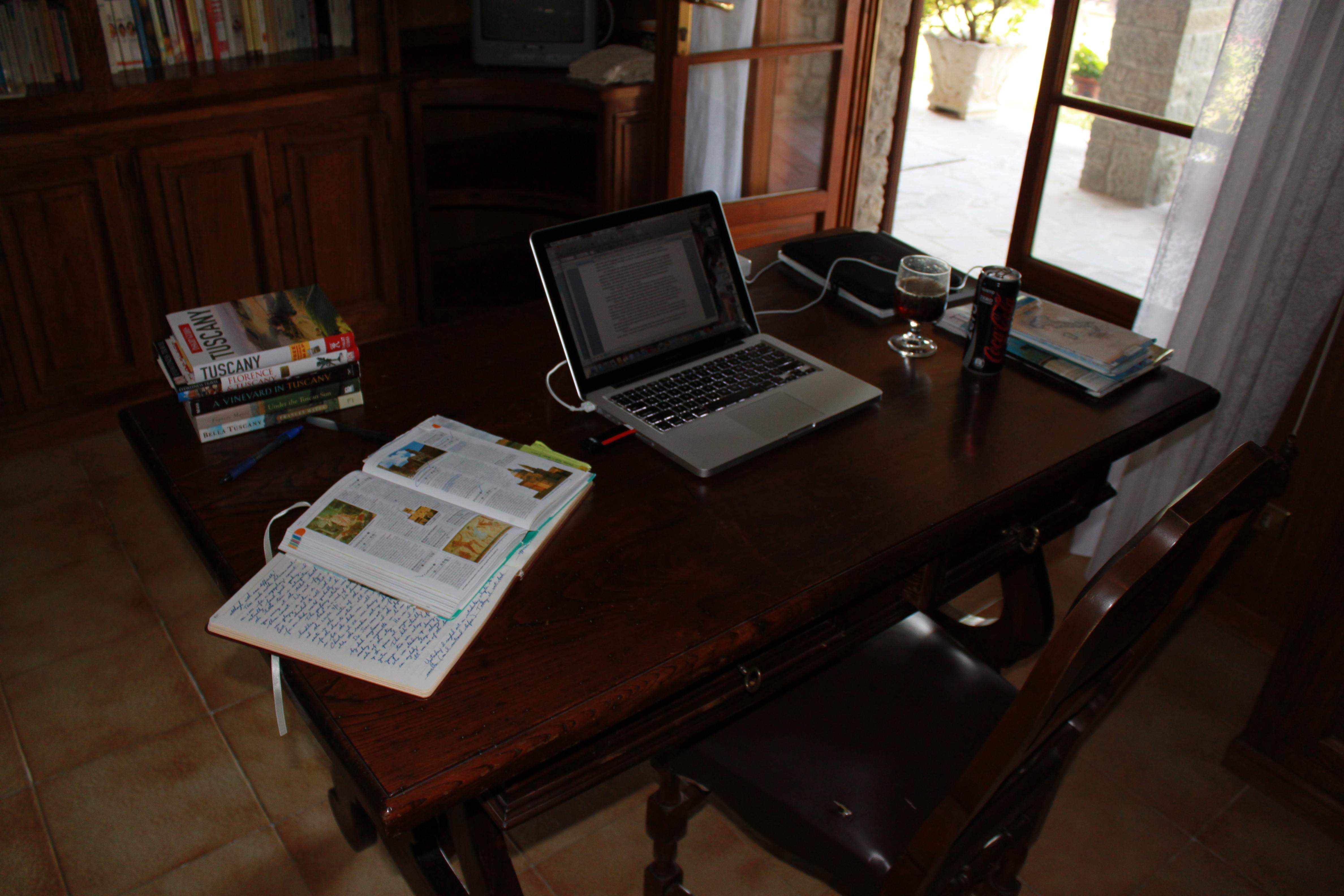
  • IMG_4390I like lists. In my journal are several pages for listing things such as trips I've taken, books I've read, and quotes I like. One such list contains an eclectic collection entitled "Life Lessons." This consists of things I've learned through experience that could possibly have saved me from the experience in the first place! Occasionally, I'll dust off this list and read through it, finding that these lessons learned often need to be re-learned. At any rate, they keep me sharp and spur introspection. One that struck me this morning is:

    "The time is going to pass and be gone. You can't do it all. Sooner or later you have to figure out what you can't imagine not accomplishing and give everything you've got toward doing it. Learn to say NO to everything else."

    Good advice?

    Achievable?

    What do you think?

    What are some of your life lessons?


  • ImagesThe world has changed a lot since I was a kid. Last evening three of my children and I stopped at a restaurant for a quick dinner. The place was an order-at-the-counter type, where you stand around waiting for your food for a few minutes before taking a seat at a table. During those brief moments I noticed a bizarre ritual performed by each and every successive patron who entered. It went like this:

    1. enter restaurant and take a quick look at the queue

    2. take place at back of line and dig smart phone out of pocket

    3. assume the "smart phone slouch" (a position wherein the smart phone user curls spine forward and downward so he or she can peer at the little screen)

    4. occasionally glance up at line and move into the empty space that was opened up because no one was paying attention

    5. repeat

    Man! How things have changed! When I was a kid, all those people would have been smoking!

  • In today's political environment there seems to be two sides: 1) those who think the government can and should be in charge of solving our problems, and 2) those who think the government is evil and should be restrained. These are oversimplifications, to be sure, but I believe they at least come close to making a little sense of where people stand. 

    IMG_6340Each of these viewpoints can easily run to extremes. Those of the first viewpoint can readily get caught up in theories of government that, in the past, have led to totalitarian states, oppression, and state-sponsored genocide. Those of the second viewpoint tend to take the form of "founding father worship," a condition whereby we deify the men who gave us America's founding documents as though they were infallible.

    It is with this second viewpoint I wish to take momentary umbrage. For, although I believe America's founding to be a spectacularly singular event in the history of freedom, I do believe the founders were fallible, fallen human beings like the rest of us.

    I also believe they made at least one huge error.

    Lemmesplain.

    Yesterday evening I was out with my family. Somehow, the topic of the game of Monopoly came up. Recently, my two youngest children, six and eight years old, have been completely enamored with this game. And boy, are they good at it! In one knock-down-drag-out-winner-take-all match, my six year old son cleaned my clock and left me destitute, all the while subsidizing his sister, who was not in much better shape than myself. I marvelled at their mathematical skills, their grasping of the concept of mortgages, and the agility with which they would quickly become real-estate tycoons. In yesterday's discussion, it came up that in a game between just the two of them things had progressed so far that they actually broke the bank.

    "What do you mean?" I asked, smelling a rat.

    "We made sooooo much money the bank ran out," answered the six-year-old with pride.

    "Yeah, so we made more," chimed the eight-year-old with a freckled grin. 

    "You did what?" I asked.

    "We made more money."

    "Just like that?"

    "Yup. It was easy, actually."

    Now I knew I was onto something, so I pressed further, asking, "Who gave you the authority to do it?"

    They both shrugged their shoulders and answered, "We did."

    "And why did you think it was ok to do?" I asked, going for the jugular.

    "Because we were in charge of the game, silly!"

    Out of the mouth of babes! You see, what my two cherubs had done was nothing more than the obvious – nothing more than governments have been prone to do any time and every time they find themselves in a similar jam, and, "being in charge of the game," who's to stop them?

    The founding fathers put into documentary form many principles from the greatest minds of statehood from throughout history. They sought to chain the monster of government and make it subservient to the dictate of the people. Balances of powers, states' rights, a Bill of Rights, and the rule of law were enshrined in founding documents that began a great experiment in freedom unmatched in world history. However, they overlooked at least one enormous point: whoever controls the money controls the game. By assigning exclusive control of the money supply to the government alone, they dangled a carrot of irresistable size in front of the noses of power mongers and opportunists. It was only a matter of time before such a towering source of power would be abused. Without competition, due oversight, or powers of restraint provided to the people, the exclusive authority to control the money supply could eventually be the Achilles heel of the entire government.

    Which brings us to today. Both sides of the political divide (the two viewpoints stated above) have found that once in office, the magic machine of money creation is easily at hand to enact their policies (no matter what their campaign rhetoric had been). The benefit is that the populace does not have to be asked, and no new taxes need be imposed. One political side promises more big government as the answer, and funds it with trillions of dollars created out of thin air. The other side yells and screams about the socialism of such programs, and then, once in office, reaches for the same easy-money spigot. The bottom line is this: when something as powerful as controlling the money supply is governed only by the false notion of self-restraint, there will be no restraint. 

    "What happened next?" I asked my young Federal Reserve Chairmen.

    "We made more, why?"

    "Oh, just wondering," I said.

    "But Dad," interrupted the eight-year-old, sharp enough to see where I was heading, "It didn't cause prices to go up!"

    I was so proud of her, for she remembered the lesson of inflation I had tried to teach them a couple years ago. But she was also missing another aspect of the game.

    "That's because the rents are fixed," I answered. "They are printed on each card and cannot change. If they weren't fixed, they would go up every time you expand the money supply." (Don't even get me started on the evils of price-fixing! That's another monster altogether!)

    "I know, I know, Dad," she said with a coy smile, "But it's just a game!"

    She was right, of course, and Dad didn't feel like infringing any further upon childhood joy with real life economics. But when it comes to real life, it is not just a game.

    So what could the founders have done differently?

    The concept is called "privatized money," which involves allowing the people themselves to come up with, distribute, and regulate their own money supply based upon open competition. There would be several at a time, all vying for our usage based upon merit alone. No authoritative government would be handing us one single choice and forcing us to accept it as "legal tender," all the while affecting its value with its hands on the levers behind the curtain. Privatization would be like choosing amongst Visa, MasterCard, and American Express based upon who we thought had the most stable, reliable, well-known, and dependable money. Perhaps each would offer a backing and redemption in gold. It is not such a crazy idea. Deregulation and free markets have vastly improved such things as airlines, telephones, and even postal service (Federal Express, Airborne, and others have carved a nice niche in the space around the government's strange monopoly on mail). Privatized money has been done many times in spotty moments throughout history, at points where governments hadn't yet confiscated control. It worked. Usually it went from chaos to consolidation among a handful of worthy competitors, just like most industries.

    We don't need to debate the details, however, because it's unlikely to ever happen. Those in charge of the game will never give it up. Instead, they've got to work to keep us playing along.

    "Hey, you just passed 'GO', collect your $200 and pay your rent." 


  • Watch this fascinating video and learn the power of controlling what your mind focuses upon and the lens through which you see the world around you.

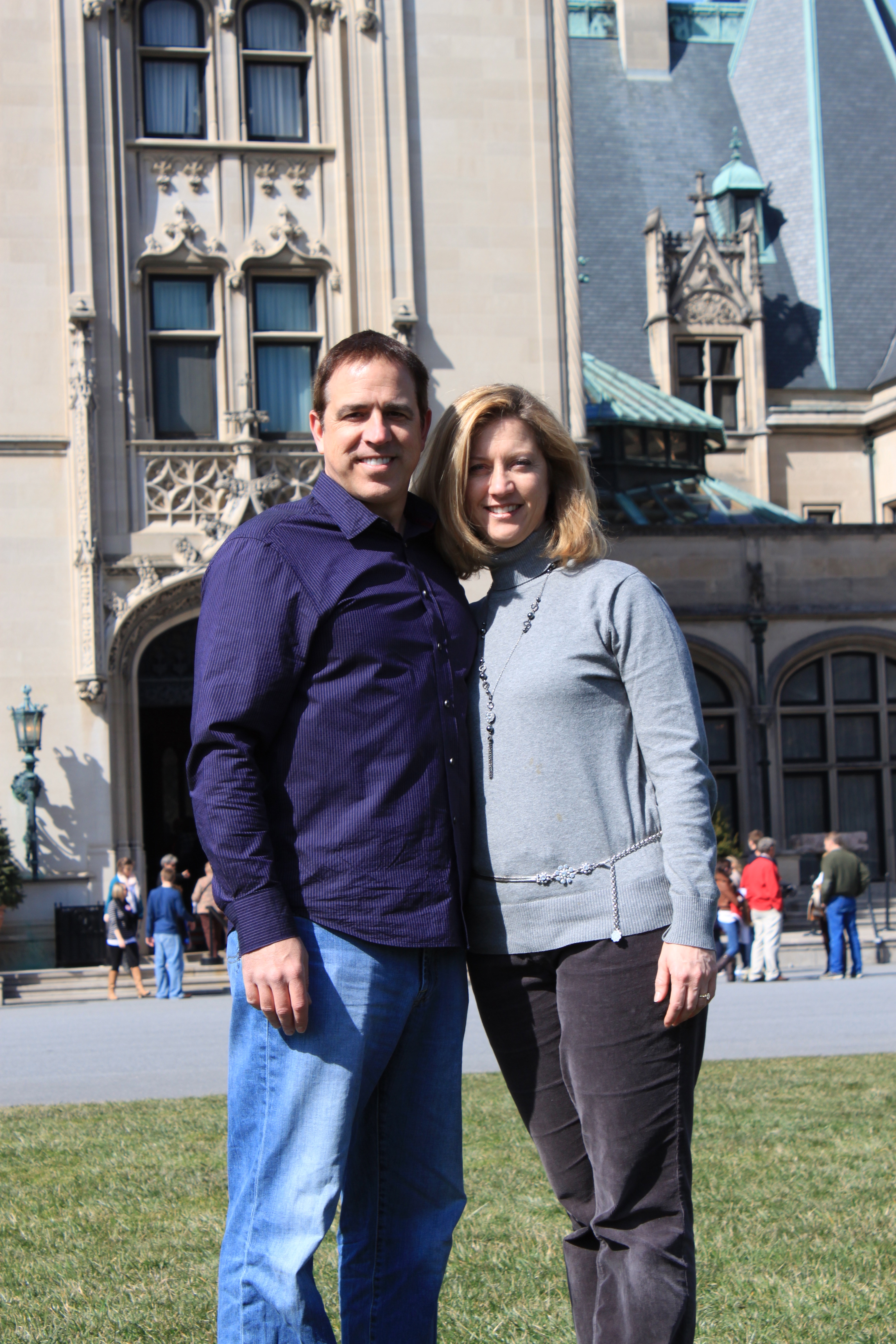
  • My first view of it came from at least a mile away, across fields and woods and colored by a setting sun. The spires of the Biltmore mansion stood proudly in a group, sticking up above the pines and pointing into the sky. Even from such a distance, it looked enormous.

    IMG_6326I had tried once before to come here and tour this place, but instead a flu had me hallucinating in a nearby hotel room bed. I fought off dragons and flew through black ink skies until our schedule forced us to move on – me in the passenger seat, curled into the fetal position. We left without even getting a glimpse. Now, four years hence, the glimpse alone was worth the trip.

    The next day we gathered with dear friends and took the official tour. My favorite was the library, of course. Being a sucker for architecture and the creative process in general, I was taken in by George Vanderbilt's vision, his design, the attention to detail, and, obviously, the sheer size of the building. My mind went to thoughts of infrastructure and logistics, the complication of the build, and the cost. 125,000 acres, I thought! What an estate.

    Seeing the servants' quarters, noting the scale of the kitchens and "working rooms," it occurred to me how many people must work to allow a few to be at leisure. What had Vanderbilt himself done, after all, to earn all of this? He was a third generation millionaire (billionaire in today's inflated dollar terms) who spent his inheritance on this dream home while his older brother carried on the family work. But then, who was I to judge? And who could begrudge someone using his means in a way he saw fit, that didn't hurt anyone, and that brought a lot of activity to a lot of people. Besides, there was also talk of his private contributions to charity. 

    That's when I thought of it.

    One part of the audio tour mentioned that Vanderbilt had 40 full-time staff to run the place in his day. Yet, everywhere we went on the property, from the inn to the winery, from the guard shack to the house proper, we were met and greeted and handled by friendly, smiling people. There are way more than 40 people working here now. One man's dream from over a century ago has provided not only enjoyment, but employment for countless others down through the years. 

    Dreams, you see, have ramifications. Beauty has a special quality that, when shared, is free and contagious. It can be appreciated by everybody. But beyond the sharing of a work of art, such as the Biltmore mansion, dreams can be productive in employing others and providing a livelihood, too. 

    Dream big. Dream in a God-honoring way. Dream of things you can do with your talents and abilities to bring joy, share beauty, and impact others in a positive way. Do no harm. Seek to do good. For you can never know for sure how far your dream will reach or last, and how many it will benefit along the way. Who knows, someone may just be writing about your dream 100 years from now!