Welcome to
Chris Brady’s
Blog

“The only way to be happy, is to give happy.”

  • 'Get out and vote,' we are told; 'Be informed and get active,' and so we who value our freedom and love our country run like a pack of lemmings to a stage show draped in red, white, and blue. 'Hooray for our side,' they yell, 'All of our problems can be neatly packaged in a ten second soundbite and blamed on the other side,' we are repeatedly led to believe.

    The inherent problem with our partisan political process is that the very essence of its structure imbibes a false assumption. We are invited to participate, but in order to do so we have to 'choose a side.' Then, having chosen, we are fed the long list of proper beliefs to substantiate why our side is so right and the other is so wrong.

    But what if both sides are complicit in the problem, or perhaps less, what if they are both benign in their abilities to do anything about the real problems? What if neither side is totally right or wrong? What if the real problem lies above the stage show?

    Freedom is the parent of some strange children, two of which are

    1. blaming others, and

    2. feeling guilty.

    Whenever a problem gets bantered about in our national public discourse, it is usually one or both of these reactions that ensues. This is fueled by the structure of an 'our side against yours' national mindset.

    For example, when gasoline prices skyrocketed a few years ago we heard from one side of the red-white-and-blue stage show that it was because Americans were wasteful and driving gas-guzzling SUVs. From the other side of the stage show we heard that those big, bad Chinese people were consuming more and more of OUR oil. There you have it, blame and guilt all wrapped up in the debate. So those feeling guilty run out and buy hybrid vehicles to assuage their pangs while others fight the urge to 'hate' an ethnic group that gets labelled as hyper-productive and stealing our jobs by being willing to work for peanuts (or, um, rice).

    Closer scrutiny, however, reveals a different story. While China's growing economy (as well as those of other emergent nations) has increased the demand for oil, it is at best only one of the three main factors in the increase in oil prices, and it might be the least significant. What really occurred was a financial commodities bubble caused by a complicated set of games-playing in the commodities markets by banks operating with secret and unfair federal exemptions to bring investment money into a place it was never supposed to be. 

    Picture the commodities trading floor as a closed system in which producers of commodities (oil, wheat, corn, etc. the 'stuff' that everyday people need and can't do without) meet purchasers of commodities (like cereal companies, etc) to buy and sell with each other. A small amount of 'speculators' is allowed in so a 'ready market' is available at all times for both buyers and sellers (who therefore don't have to wait for each other to make a sale or purchase). This small amount of speculators is closely regulated by a federal law established in 1936. But over time six or seven very powerful investment banks obtain secret letters of exemption which allow them government-granted monopoly status to allow 'their investment customers' special access to those markets through their trading desks. This is exactly what happened, and as a result the money invested in commodity indices rose from just $13 billion in 2003 to over $317 billion in 2008 (twenty five times growth in less than five years). This amount of money pumped into a market that can only be 'played long' (meaning, money is made by the investors ONLY when prices go up, unlike securities where money can be made on 'both sides' of the market – going up OR down) had the effect of massively increasing the prices of commodities. Of course, these prices quickly find their way to the end customer, the little guy, who is paying more for everything and can't figure out why. What's really happening is the government has allowed a small number of granted monopoly banks to fleece him without his knowledge or consent.

    That's just one of the scams being run.

    Another (and thankfully it's getting much more coverage these days) is the willful, intentional, deliberate devaluation of the American dollar. While the government (through the workings of its private partner the FED) pumps trillions of worthless dollars into circulation (through the hands of many of the same banking interests given such special treatment in the commodities scam above) the dollars held by average Americans become worth less and less. So while the 'little guy' is getting creamed in the commodities market and the price of everything he buys is going higher and higher, the dollars he holds to buy those things is capable of purchasing less and less.

    We could also dive into the housing bubble that has left millions of Americans 'upside down' in their home mortgages while bankrupting millions of others. That would represent scam #3, and again, it was perpetrated by many of the same characters from scam #1 and scam #2 above, but I won't go into the whole vicious circle of greed and government bailouts to fat-cat bankers with taxpayer money that makes this one so sickening, because this isn't a direct factor in the oil price scandal. 

    Only now, after these three revolving cons, can we even begin to discuss the growing Chinese market and its impact on oil prices. And only now can we even begin to consider the car we drive as having an effect on all this.

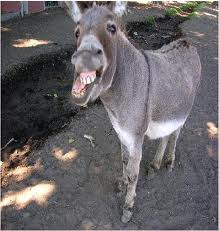
    What has happened is the American public has been hi-jacked by a glitzy distraction called partisan politics in which blame and guilt are manipulated by the media to keep us split in a neat fifty-fifty feud. It doesn't hurt that moral issues are thrown in so that our convictions force us to lump everything together in what appear to be neat packages of "Donkey" or "Elephant." Meanwhile, the whole time we bicker and fight amongst ourselves, a bunch of cronies are robbing us blind.

    I wonder what would happen if we rose above the partisan stage-show and united? What if we found common ground on all the things we could agree upon, such as freedom and justice for all, and turned our well-meaning but mis-guided furor upon the real thieves of the American dream? 


  • Images Aesop's collection of fables has provided many a generation with wisdom, wit, and instruction on how to live properly. One of the most profound fables therein is called The Ass Carrying the Image*:

        A sacred image was being carried to the temple. It was mounted on an Ass adorned with garlands and gorgeous trappings, and a grand procession of priests and pages followed it through the streets. As the Ass walked along, the people bowed their heads reverently or fell on their knees, and the Ass thought the honor was being paid to himself.

        With his head full of this foolish idea, he became so puffed up with pride and vanity that he halted and started to bray loudly. But in the midst of his song, his driver guessed what the Ass had got into his head, and began to beat him unmercifully with a stick.

        "Go along with you, you stupid Ass," he cried. "The honor is not meant for you but for the image you are carrying."

    This little ditty is doubly funny because its meaning is plain enough, but its Old English terminology coincides with a humorous usage of words whose meanings have largely changed since the time of its authorship. In this case that change produces an even more impactful meaning!

     As leaders we are given notoriety and recognition, sometimes even perks and benefits – but leadership is not comprised of these things. Nor is anyone a real leader who pursues the position of leadership solely for self aggrandizement and gain. Rather, leadership is for those willing to assume added responsibility and risk, who will often be asked to carry an unfair burden, shoulder the bulk of the load, and take the blame for the failures of others. When things go poorly a leader is expected to step forward and take the heat, guard his followers and play the part of the hero. Conversely, when things are going well a leader must share the glory and deflect the praise, shining light on the people who toil in obscurity. More importantly, however, a leader must understand the source and root of his or her blessings and 'reflect' that glory in the proper direction – upward.

    Every breath we take, every second of our lives, every step and every action are granted as gifts from God above. It is by His grace that we live. It is by His grace that we have any ability whatsoever to lead others. The Bible tells us that God made us in His image. Remember the lesson of the stupid Ass, and never forget that the crowds are not really cheering for you at all.

    "The honor is not meant for you but for the image you are carrying."

    *Source: The Aesop for Children; Scholastic, Inc., 1994  

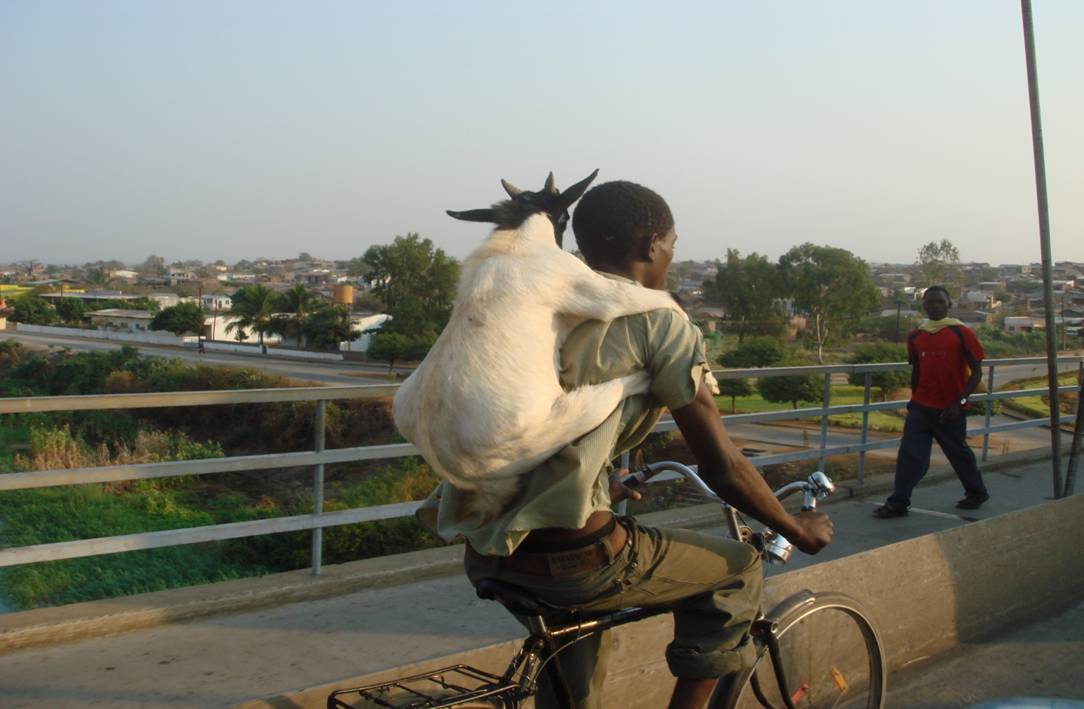
  • After another fantastic round of creative contributions, we are finally ready to announce the winner of Caption Contest 2011.1.  The judge's panel chooses as the number one entry:

    Deploying the latetst anti-virus soft wear.

    Posted by: Tom Gumpert | January 07, 2011 at 07:52 PM

    Congratulations Tom! Just comment on this article with your mailing address (which will not be published) and we'll send you an autographed copy of Orrin Woodward and my NY TImes best seller Launching a Leadership Revolution.

    And now for the next installment of the caption contest series:

    Goat on Back  Good luck everyone!

  • A farmer ambled along the lonely country road heading to his humble farm one dusk evening when he dozed and ran off the road. Ditches were deep in those parts and his overloaded pickup truck sank far into the muddy crevice and came to rest on its side. Unfortunately, the farmer had been hauling both a pig and a cow. Both were trapped under the truck and wailing in pain. Moments later a state trooper happened by and spotted the truck's headlights pointing oddly along the length of the ditch. Stepping from his cruiser to investigate, the trooper heard the squeals of the dying livestock. Being the merciful sort, the trooper drew his service revolver and fired a shot into the head of the suffering cow, killing him instantly. The pig wailed even louder. The trooper likewise relieved him of his misery. At this moment the farmer recovered from his unconsciousness and attempted to free himself from the cab of the crumpled truck. The commotion caught the attention of the trooper who asked, "Is there anybody else in there? Are you injured?" To which the farmer replied, "Nope, never felt better in my life!!!!"

    Sometimes serving means different things to different parties. In the case of the "service revolver" in the above story, it was an instrument of mercy for the animals, danger for the farmer. Likewise is our leadership in the lives of those we affect. We may have tendencies and strengths that are effective for some, detrimental to others. This is where the best leaders understand that the most impactful leadership often involves treating people uniquely as individuals.

    I know in my own leadership experience I find myself "going gentle" with some while "hitting hard" with others. This is because each of us is a uniquely created and infinitely complex individual. We are made in the image of God with special characteristics, abilities, gifts, and tendencies. I can only hope I've gotten the "touch" of such individualized treatment correct!

    However, there is a simpler lesson to be gained from the farmer and the trooper, and that is one of service. The trooper was trying to help. He saw a need and did his duty. This, too, is illustrative of the proper function of a leader. Leaders serve. Leaders are not meant to sit in a position of authority and soak up the benefits of title. They serve again and again from different positions and in various circumstances. In fact, leaders themselves could be said to be 'service revolvers:' going from person to person and from opportunity to opportunity to 'be of' service. Their privileges are not for their pleasure but rather for their purpose.

    The purpose of a leader is a multi-faceted consideration, including casting and pursuing a vision, service to others, sacrificing self for larger issues, standing in the gap where others fail to stand, holding strong to principles, fighting for causes, taking responsibility, giving credit, eliminating obstacles, developing more leaders, and empowering and encouraging others. Orchestrations, administration, management, and coordination must also be looked to; usually by placing others with requisite gifts into correct positions. In short, leadership is the giving of what you have to others so they can collectively give (and accomplish) more than otherwise would have been possible. We add when we do, but we multiply when we lead.

    Consider your gifts, your position, your abilities, and your blessings. Mobilize those assets in the service of others wherever you are, whoever you are, and with whatever you have, whenever you can. In this way, you'll be leading; you'll be a service revolver. Just don't shoot any farmers.

  • IMG_2641 A book I read a few years back on the subject of developing one's creative thinking explained the technique of combining categories that don't usually mix. In other words, think of an A and a B that don't normally get considered in context with one another and put them together to see what results.

    This occurred quite by accident in a recent conversation I had with my wife. We were discussing either football or the ministry (I can't remember which) and she thought I said "Roughing the Pastor" instead of the official foul in the NFL called "Roughing the Passer."  Laughter followed, and of course this led to a ten or fifteen minute jam-session in which we both tried to come up with other such penalties a "National Faith League (another NFL)" referee might call on a misbehaving congregation, minister, or both!

    With football season winding down, I thought it only fitting to honor my many close friends in the ministry with the following Official List of Church Penalties. Here are our top five:

    1. Roughing the Pastor

    2. Unnecessary Gruffness

    3. Illegal reFormation

    4. Encroachment

    5. Delay of game (this occurs when the sermon goes long and gets parishioners home too late for kickoff)

    In the spirit of collaboration, I welcome the dear readers of this blog (all 3 of you) to contribute additional violations for this list. Thanks for playing (and praying!)


  • Blahblah Color movies were instantly more popular than the previous black and white variety. Children ask for stories to be told them but resist direct instruction. We remember what we see much better than what we merely hear. All these and more speak to the fact that communication is almost always best when aligned with the natural human tendency to think and learn in terms of stories.

    Stories are more than just mere entertainment – they are the language of the imagination.

    So don't be so quick to rush out your facts and figures, keep your platitudes and preachments in the holster, and quit with your pronouncements and proclamations. If you truly want to communicate, whether to a large audience or small, formally or informally, through the written word or spoken, you must realize the importance of creating a picture in the mind's eye(s) of your listener(s).

    Example: When I was but a wee engineer just cutting my teeth in the profession, I had the good fortune to be thrown in with several elderly gentlemen who were extremely accomplished in the field. These guys were so good at technical things they actually conducted races to see who could solve complex puzzles and riddles the quickest. I was eager to learn all I could from such a wealth of experience all around me. Unfortunately, much of that wealth was inaccessible to me because I could never seem to catch much of what these men so casually reported. As a case in point there was a discussion one day in a meeting in which I asked a question of one of them. I was simply inquiring for a restatement of his conclusion to a complicated set of data he had presented – something along the lines of, "So would it be better to use Copper or Magnesium for this application?" I will never forget the reply. It wasn't "Copper." It wasn't "Magnesium." Nor was it "both" or "neither." Instead I was answered with something like this: "Well, if you look at the second column, copper is 67.98 and magnesium is 56.37." The reason his answer failed to answer, so to speak, was he was forcing me to construct my own picture from data that, although apparently clear and meaningful to him, was nothing more than numbers to me. I had no context in which to understand the meaning or magnitude of his numerical findings. In short, what I needed for him to do was paint me the picture, not give me the dimensions of the frame.

    In the above paragraph, what have I done? I have given an illustration that (hopefully) demonstrates my point – the best communication is done through illustrations!

    Communicate through stories. Bring your points to life with illustrations. Give examples wherever possible. Come up with analogies and similes and metaphors. I learned in a book by Stuart Olyott that the best preachers first state their message, then illustrate it, and then apply it practically to their listeners' lives. This is sage advice, not only for preachers, but also for everyone who wishes to communicate more effectively. Otherwise, all your knowledge and preparation and results and platitudes and conclusions will hardly even be heard – much less understood or long remembered. You'll be no more than a "Blah Blah Blah" to the Gingers in your life! (With a special salute to Gary Larsen)


  • IMG_1407 Raised in Michigan, a state with bountiful shoreline and beautiful state parks, I didn't venture too far from home for most of my youth. There were the occasional family trips across the country, the most memorable being the one to California and back after my High School graduation, complete with a robbery, car accident, and engine flames in the cab of the motor home while driving down the highway (these and other episodes will perhaps be covered in future musings). Mostly, however, I stayed close to home in the good old Flint area. My first airline flight didn't occur until age 19 when I went to pick up a car in Oklahoma.

    Then it all changed. I spent some time in Texas as a student, then attended grad school in Pittsburgh, then went to finish my Master's degree in Toyohashi, Japan. My view of life was forever molded and expanded by these experiences. I had been bitten by the travel bug. I soon thereafter began traveling for for my job, and went out west to visit friends when I got time off work. Eventually my entrepreneurial endeavors took me across most of the United States and Canada. Finally, I began traveling abroad on vacations, more to study and learn than as a holiday.

    Travel can sometimes be a bear, especially considering weather delays, mechanical problems, lines, germs, and a myriad of other inconveniences. However, it can almost always be considered a blessings if experienced with a good attitude and seen in the correct light. After all, there is still something exhilarating about sitting in a chair and hurling through the sky at 500 miles per hour. It is still a thrill to sit down, then stand up a few hours later at a different spot on the map.

    Walking the parapet of a castle in Cardiff, seeing purple ridges in Killarney, looking out over Florence from the lantern of Brunelleschi's Dome in the Duomo, driving a Smart Car through the tight streets of Santorini, riding a water taxi in Venice, kayaking in Dubrovnik, scuba diving in the British Virgin Islands, or working with the children of the Favellas just outside Rio are all experiences that leave their imprint on a person. Cultures, languages, topography, mores, manners, customs, climates, and histories are all different and infinitely interesting. International travel opens one's eyes and heart to an entire world of people who in many ways live differently, but in many important ways share the same characteristics.

    I would heartily recommend a good dose of international travel to everyone who is able. Although it's a cliche that it will broaden your horizons, it also happens to be true. It will increase your understanding of your fellow man, soften your heart to the plights of others less fortunate, increase your grace in handling differences and peculiarities, open your eyes to possibilities, and enlighten you in your perspective on the size of God's world while helping to clarify your place in it. I know for me, international travel has always produced deep moments of gratitude and speculation, engendering thoughts such as, "I could be doing more."

    If you don't already have it on your dreams list to travel abroad, allow me to heartily make the recommendation. It will cost money and gobble up some time, but it will be worth it. I consider it a facet of my lifelong, self-directed educational process, and therefore priceless. I have written elsewhere with some recommendations and considerations for international travel for those serious about putting detail into their travel dreams. 

    I believe international travel can and should also evolve into something more than just personal gratification – it should be about service to others. There are unlimited needs around the globe where we can pitch in and make a difference. Get involved in your church's mission efforts to spread the gospel and feed the orphans and widows, for example. We are needed, perhaps more than ever, in person and on the spot to demonstrate the source of our blessings and to give back from all that we've been given.

    There will be a thousand reasons and distractions and interruptions that will attempt to stop you, but make it a priority to get out and see the world (and serve the world) yourself. Build your business to the point where you can afford the time and money, or work your career hard enough to earn the time off necessary, or, if you are in the years of your formal education, perhaps you could seek out some of the many study abroad programs that have become so popular. You will learn more than you can imagine, grow more than you might predict, contribute more than you might otherwise, and enjoy it more than you can probably believe. Your adventure awaits. Live purposely and travel light.


  • IMG_2644 "It's kind of fun to do the impossible," said Walt Disney.

    "People rarely succeed unless they have fun in what they are doing," wrote Dale Carnegie.

    "I never did a day's work in my life. It was all fun," said Thomas Edison.

    "If you watch a game, it's fun. If you play it, it's recreation. If you work at it, it's golf," quipped Bob Hope.

    And finally, "Girls just want to have fun," or so says the popular song (there is at least some justification for the suspicion that the proverbial jury is still out on this one).

    This concept of fun seems prevalent in our thoughts and speech. Everyone seems to have some sort of attachment to it, some philosophy about it, and some amount of understanding of the term. We 'make fun,' 'have fun,' and are sometimes called 'fun.' But just what is this word all about? Could it be any fun at all to explore the various facets of fun itself?

    Economists (who by reputation are likely far from experts on the subject) might be inclined to call 'fun' a 'good.' This is not a value judgment, as comparing something to 'bad,' but rather a term meant to describe the means to satisfy man's wants. Goods are anything that bring about satisfaction to the economic actor, or desirous man. See, it's just no fun from this angle.

    So let's try another. Bohemians are famous for their worship of this word 'fun,' or rather, its realization in their lives. They chase it, pursue it, covet it, cherish it, and continually and shamelessly idolize it.

    Then there are the legalistic whose highest value appears to be the absence of fun, or the non-fun, or the anti-fun. They've missed grace and found rules. Crinkled brows and stern faces seem to indicate that fun is bad mostly because it appears to be fun. (Do not be offended. This is all in fun).

    So some people worship fun while others prohibit it. Yet Disney, Carnegie, and Edison all seem to indicate that fun itself is a factor in productive living. Each of us, no doubt, carry fond memories of fun moments and fun times with fun people. In short, it's fun to have fun (at which point the reader must feel we have arrived at no very great distance from where we started!)

    Allow me to posit that fun is the by-product of a number of other correct factors all being in place at the same time. To illustrate this idea, let's consider the negative. It is nearly impossible to 'have fun' when something important is amiss in our lives. We cannot sincerely laugh and worry at the same time. We cannot really have fun while grieving, regretting, or hurting. Fun, then, won't alight in our lives unless the conditions are correct. It is at this point we might enjoy looking at the official definition (taken from Webster's, definition #2)

    Fun: a mood for finding or making amusement.

    Aha! It's a mood! Well that explains a lot! Our moods come and go, change and morph, in reaction to our environment, circumstances, and how we choose to perceive and react to those stimuli. So fun, in the manner in which we are considering it, is an enjoyable mood that amuses us. 

    So why have we ventured this far along what feels to be a philosophical journey, and a rather obvious one, at that? Simply to realize that fun is a mood to be induced under the correct conditions. And why is this helpful? Because, in such a light, fun can be seen as a tool.

    Say what?

    Yes, a tool. Fun is a condition, and according to Disney, Carnegie, and Edison at least, a productive one, in which people are amused, entertained, and for which they are grateful. In other words, it is a blessing in their lives. What better tool could the would-be leader learn about and learn to utilize than one that blesses, enriches, entertains, and leads to productivity?

    And this (don't miss it) is the point of this meandering discussion: the best leaders understand how to have fun and how to invoke fun in the lives of their followers. The best leaders know when to lighten to mood, how to arrange circumstances in a way that is likely to produce fun, and how to make the shared tasks of their teams enjoyable. This accomplishes several things:

    1. Better mental health of the participants

    2. A shared sense of mirth (and therefore belonging)

    3. A lack of heaviness which leads to bad attitudes and negative outlooks

    4. A relief of tension which prohibits productive action and creative thinking

    5. Relational challenges which result from too much seriousness or overblown perspectives on self-importance

    6. Quicker passing of time for more menial tasks

    7. Makes further work more attractive and minimizes 'project dread'

    I have witnessed leaders who understood the power of fun injected it into situations at just the right time. Tense moments were diffused, heaviness was lifted, and optimism was restored through simple gestures of fun. Other leaders have established fun as a pervasive element in their very corporate culture (Southwest Airlines and Zappos come to mind). The very best of leaders understand that working in the area of one's natural gifts is often the most fun work that exists for that individual, and ultimately,it is to this that the quotes at the beginning of this article were alluding. When we are doing what we are built to do, called to do, and deeply motivated to do, we will enjoy it. We will have fun. Therefore, as author and researcher Jim Collins put it, the best leaders will make sure their people are "in the correct seats on the bus." However, it will often take a lot of work (that may not be much fun) to get to the point where the organization is correctly arranged and people have earned their way into positions of their gifting. Learning, striving, and climbing are often arduous and difficult activities. It is through these stretches that the best leaders interject doses of fun along the way. Fun thus becomes like grease in a machine – it carries away heat and chips and minimizes friction.   

    Obviously, moderation is the key. Neither the Bohemians nor the legalists have it right. But properly utilized, fun can be a very effective implement in the leader's toolbox. It will lead to greater productivity by happier people.

    To close, let's consider two more comments regarding this topic of fun.

    "I cannot even imagine where I'd be today were it not for that handful of friends who have given me a heart full of joy. Let's face it, friends make life a lot more fun." Charles Swindoll

    "Skiing combines outdoor fun with knocking down trees with your face." Dave Barry


  • In reading the story of the Pentecost, that day on which the Apostles were visited by the Holy Spirit and given the power of signs and wonders and speaking to all nations, I was struck by something: the "Others." The Bible relates how there was a loud sound from heaven and the people gathered around, marveling at the ability of some mere Galileans to be able to communicate to each of them in their own languages. Thousands were amazed and convicted by the explanation given by Peter, whereby he explained Old Testament prophesies being fulfilled in their presence. But, the Bible is quick to say, there were others who thought the apostles were victims of "new wine." From this event we can see that even when the Holy Spirit manifests Himself in a most powerful and visible way, at which point thousands are convicted and believe, there will still be "others" who scoff.

    If there were scoffers on such a day, there will be scoffers in every day. If there were scoffers at such a miraculous and powerful display, there will certainly be scoffers at lesser things. These "others" are everywhere, at all times throughout history. They have been there at every sermon ever preached by those same apostles, they have been there at the proclamation of every new discovery, every new invention, every new idea, every new attempt by someone to achieve something of significance. And yes, they have been there at every step of our own little lives, as well.

    These "others" feel obligated to tell us what won't work, what we should have done differently, how the quarterback should have played, how the manager should have managed, how the preacher should have preached, how the painter should have painted, how the writer should have written, how the businessman should have conducted himself, and even how the parent should have parented. These "others" are the court jesters of our lives, with no qualifications of their own, save for an acid tongue and a negative perspective. It doesn't matter what you do, for what reasons, or how well you do it, there will ALWAYS, and I mean ALWAYS be someone who stands in opposition, judgment, criticism, and opposition.

    We should not be surprised at this. Nor should we despair. Rather, we should be thankful the "others" are so reliably there. After all, it's the overcoming of obstacles that makes us better and forces us to continually examine our motives, improve our performance, and perfect our crafts. These "others" can thus be seen to be like the weights in a gym. Who would show up at a workout facility and lament the presence of barbells and weights? It is the resistance they provide which builds the muscle – as long as the possessor of the muscles is willing to work against that resistance. Therein lies the key. As long as we are willing to strive against the "others" we will be made better by their sorry position in life. From such an understanding we can see that rather than resent them we should be thankful for them, and perhaps harbor a little pity on their behalf. After all, they are the ones who seem relegated to the peanut gallery, while we are blessed enough to be out on the field of life.   


  • Children and adults alike fantasize about becoming big successes. Everyone wonders what it would be like to have huge talent, amazing gifts, and the opportunity to become great at something. Fame and fortune is reserved for the lucky few.

    But that last part is a lie.

    There is no easy street to high achievement. 

    Certainly a basic level of ability and health is required, as well as opportunity. After all, someone without the blessings of health and peace could not become a big sports star or succeed in business. It's hard to achieve something big when the basic functions of life are a struggle or when you are struggling just to survive.

    But that's not the condition of most people within reading distance of this blog. There is a different affliction running amok in their ranks: complacency and the lure of mediocrity. We can safely stay within our comfort zones as long as we can convince ourselves that those pesky high-achievers are somehow "lucky," "gifted," "supremely talented," or otherwise. Any excuse will do when we are looking to duck the pressure of actually becoming a champion ourselves.

    The truth about high achievement, however, is quite unsettling. What we discover is that high-achievement comes about from a lot of hard work, deliberately applied, over a long period of time. And THAT'S why champions are rarer than an honest politician. THAT'S why we stop and stare when they perform, THAT'S why we pay super high ticket prices to see them live, THAT'S why we read their books and tac their posters on our walls. They did it. They worked hard. They practiced their craft to the point of mastery. They conquered the excuses and distractions of our modern world and became great in spite of it all!

    High achievers don't show us what's possible with talent, they show us what's possible with tenacity. Many times, they even show us what's possible without talent! They demonstrate how great we could be if we could just put down the video game controllers, TV remotes, and iPod Touches.

    If a picture's worth a thousand words, then a video must be worth at least a thousand and one. In this clip sent to me by some friends in Maryland (you know who you are), we get a look at a twelve-year old boy who has apparently missed out on a lot of video game time. The message? If you expect to be great, you'd better expect to earn it! (You may have to click the play button after the commercial finishes).

    <