

-
Since many of you have so graciously been contributing your favorite quotes to this blog, I thought it might be enjoyable to post a link to a short video montage of great quotes from great leaders. I don’t have any information on the authors or the background of the new book from which these are drawn, but someone emailed me the web address for the short video clip and I liked it so much I thought I would share it with you all! I hope you enjoy it as much as I did!
God Bless!
http://www.greatquotesmovie.com/
And by the way, I am looking forward to seeing any of you that can make it to the book signing in Flint, Michigan at the Barnes and Nobles on Saturday, January 26th, between 12:00 and 3:00. Orrin Woodward will be there, too!
-
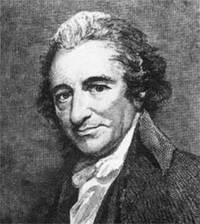
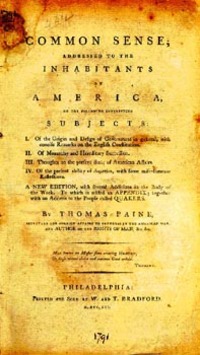 In late 1775, George Washington and his tiny, nearly beaten army, retreated out of New York, losing rear-guard action after action. Pushed into and through New Jersey, Washington was forced to cross the Delaware into safety in Pennsylvannia. As January of 1776 dawned cold and harsh on Washington’s now very tiny army, a radical among his number, Thomas Paine, penned a pamphlet that would become what many would call "The most famous pamphlet in American history." Washington was so moved by it that he had it read to his troops to inspire them. The pamphlet, at first published anonymously, was an immediate best seller. It appeared all across the colonies and gave voice to a revolutionary movement that needed unifying. In the days before modern electronic media, Thomas Paine’s pamphlet became a media weapon in its own right. As John Adams would say in 1805, "I know not whether any man in the world has had more influence on its inhabitants or affairs for the last thirty years than Tom Paine."
 Perhaps the most famous phrase from Common Sense is, "These are the times that try men’s souls. The summer soldier and sunshine patriot will, in this crisis, shrink from the service of his country; but he that stands it now, deserves the love and thanks of man and worman. Tyranny, like hell, is not easily conquered."
The power of Common Sense is that the language rings so timelessly true as to be undeniable. Who among us, even in our day, has not seen men who "shrink from service" and take the easy way out? Or cower when the shots begin and head for cover? Who among us has not seen "summer soldiers and sunshine patriots" that will fight for a cause only when it is convenient? And what about the reference to tyranny? Truer words would be hard to find. Tyranny still causes its destruction all over the globe, from despots in third-world theocracies, to cowardly wife and child abusers in the home.
I believe Paine’s pamphlet caught such fire in 1776 because he so elegantly put into words truths that rang sweet to the ears. My favorite passage is the following:
"A long habit of not thinking a thing wrong, gives it a superficial appearance of being right, and raises at first a formidable outcry in defense of custom. Time makes more converts than reason."
This particular portion of the pamphlet, for me, speaks to what happens when goo
 d people allow a "crack in the door" for a bad idea. Slavery, for instance, began when a few sugar plantation owners in the West Indies accepted the apparently easy solution of populating their sugar cane fields with kidnapped Africans. Over time, who was to say that African slavery was wrong? After all, "Time makes more converts than reason." After Thomas Jefferson, as America’s third president, negotiated the Louisianna Purchase, he blew a perfect opportunity to proclaim the new territory a slave-free zone. Such a move certainly wouldn’t have been without opposition, but with the mammoth stretching of executive power he had already exercised to finnagle purchasing the great swath of land, it would have been a mere extension of his hand to drive a stake in the ground and proclaim, "No more." At the time, he was the most powerful man on the continent, not only the President of the United States but the leader and founder of the Republican Party (different than today’s party of the same name). Presidents from the party of Jefferson would hold the Presidency for generations. So Jefferson certainly could have done it, or at least tried it. And it would have stayed off the ensuing "Missouri Compromise" which was really just another crack in the door for the spread of slavery that culminated in the bloody American Civil War.
 Another famous "crack in the door" that rages violently in our day is abortion. At first, abortion was made legal only for the sake of saving the mother’s life in a time of severe medical emergency. But "time makes more converts than reason," and once it is acceptable to take an infant life for ANY reason, it is almost easy to expand the list of reasons from what began as extreme circumstances, until today when the reason is nothing other than the expediency and "privilege" of the mother. From emergency to convenience. Indeed, "Time makes more converts than reason."
Someday, future generations will look at abortion in our times like we look at slavery in the eighteenth century. We marvel at how Washington, Jefferson and others could spout such wonderful republican ideals while OWNING other human beings at the same time. The very concept is revolting to us and unimaginable. But we have the benefit of history to focus our lenses. We were never forced to look at slavery long enough to get used to it. This makes no excuse for America’s founders, it just offers a bit of explanation for their unspeakable behavior. And it also has another purpose: it should serve to warn each of us that we live in exactly the same type of situation in which they found themselves. Abortion has creeped so far into our conciousness that we cease to be revolted by it. Our shock is subdued and our offense at the practice is softened by its continual acceptance in society
This is how evil works. It creeps in subtly, allowing everyone to get used to the new territory it has gained. Then, when accepted as status quo, it advances some more. This is true in people’s personal lives as well as society at large. As we seek to keep our own lives on track, and as we fight to get our society back on track, may we never forget the words of a famous founding father that "a long habit of not thinking a thing wrong, gives it superficial appearance of being right."
-
One of the concepts many individuals associated with LIFE get excited about is something called the "Media War." I have heard wonderful stories about how the CDs, books, DVDs, audio and video clips, pamphlets, and events have changed people's lives, given them new perspectives, and taught them things they never knew before.
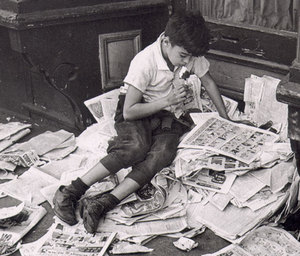
The concept of the Media War is basically a recognition that everything we do in our modern world is shaped in some way by media. Whether it is "The Media," which by most is meant to include all public media including television, radio, movies, newspapers, and the like, or all the other forms of media that are out there, it is beyond argument that media in general is a prime mover in our societies. The concept of a Media War is that the effects of all this media may not be all good.
For instance, much of what passes for entertainment (and don't get me wrong, I love watching sports and movies as much as the next guy!) has a tendency to program us and rearrange our values. See enough murders on television and in movies and we get a little desensitized to the horror of the sin of murder. Hear enough foul language, and it lo
 ses its sting. See enough filth, and the mind gladly adjusts downward away from clean thoughts. You have heard all of this before. These are the extreme examples.
 The more subtle effects include "dumbing down," taking people away from "real living" by experiencing it vicariously through media instead, celebrating mediocrity, stoking victim mentality, and creating dependencies.
What the Media War enthusiasts are doing is trying to flood back in the other direction with positive, life-building media. Instead of teaching and celebrating mediocrity, such media advances the concept of achievement through struggle and personal growth. Instead of decadence masquerading as "cool," positive media teaches that those who dream, struggle, serve, and sacrifice and the real "cool." Rather than violence and victimhood, positive media teaching heroism and accomplishment and meritocracy.
How do we know that this type of positive, live-skill teaching, people-building media makes a difference? Because it has worked for us! And believe me, some of us (me in particular), were a long way off in our thinking compared to where we are today. When I first got exposed to this type of media, it was like giving water to a man dying of thirst in the desert. I thought, "Where has this type of teaching BEEN all my life?" I began to change in my thinking, which resulted in better attitudes, which produced better actions, which generated better results! Further, I have seen extreme improvements in people's lives as a result of this same training. People have saved their marriages, gotten off drugs, stopped other addictive behavior, grown in their relationships, strengthened their character, discovered their purpose, and found their true spiritual callings. Incredible.
So what am I advocating?
Simple. I am not one of those extremists who suggests a total retreat from "The World's Media." Rather, I believe that it should be sampled in doses small enough that it can be balanced with training from positive, life-helpful media like what LIFE makes available. I still watch a football or soccer game. I still take in a great movie when I can. But I know I must continue to learn and grow and reach for better in myself, and the thing that has helped me do that the most is positive media of books and CDs and websites (hopefully like this one!). My education takes up a lot more of my time than does my entertainment. If I ever lose that balance, I am quite certain I will lose my creative edge. I simply can't and won't let that happen, and I hope you don't either.
Plug into a system of great materials. Maintain your status as a student of life. Continue to force yourself to get better by listening and reading and mentoring more and more and more. As the saying goes, "Learn as though you'll live forever and live as though you'll die tomorrow."
In a bigger sense, there is a war going on in the culture's of our countries. Media, as always, plays a big part in it. The concept of a Media War means that there is something at stake here. It means that what people drench their brains in, and how they think, and what they do, and the habits they establish DO MATTER in our societies. Those fighting the Media War are actively doing something about it, one person at a time; teaching people that they can grow in their character, escape entitlement mentality, and learn to push themselves and sacrifice for others is a very good thing. It can't help but make a difference in society. I salute you.
-
"If newspapers are useful in overthrowing tyrants, it is only to establish a tyranny of their own." – James Fenimore Cooper
"Journalism largely consists in saying "Lord Jones Dead" to people who never knew Lord Jones was alive." – G. K. Chesterton

"Along with responsible newspapers we must have responsible readers." – Arthur Hays Sulzberger
"The press, the movies, radio and television bear a large share of the resopnsiblity for the climate of fear . . . which has enveloped our country and which has become such a threat to our freedom." – William T. Evjue
"I find television very educating. Every time somebody turns on the set I go into the other room and read a book." – Groucho Marx
"Most American television stations reproduce all night long what only a Roman could have seen in the Coliseum during the reign of Nero." – George Faludy
"I keep reading between the lies." – Goodman Ace
"TV – chewing gum for the eyes." – Frank Lloyd Wright
"Do you realize if it weren’t for Edison we’d be watching TV by candlelight?" – Al Boliska
-
There was a charming environment in the late eighteenth century elections that occurred in the young United States. It was thought that anyone who would actively seek Presidential office was unworthy to serve in the position. This was because "ambition" was counter to the "serving and selflessness" that was considered a prerequisite for statesmanship. As a result, both Washington and Adams refrained from campaigning in any way, only casually asknowledging that they were being considered for the position. Jefferson, always a split personality,
 took his "disinteredness" to the point of deception, taking the preposterous posture of acting surprised when he was chosen! Since Jefferson and Madison ushered our country into the age of political parties, that chivalrous moment is gone forever.
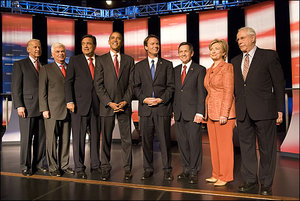
The concept was barely workable in the age of America’s founders, and it would certainly be hard to imagine today. But the precept remains an intriquing one. I was thinking of this recently as I reviewed the list of candidates vying for our attention and affection l
 ike so many puppies in a litter trying to be the one next selected for purchase. In the case of a few of the candidates, their ambition for personal glory and their obvious lust for power are frightening.
Don’t get me wrong. After all, co-author Orrin Woodward and myself established "hunger" as a fundamental starting point for any would-be leader. But hunger differs from "ambition." The difference might appear to be subtle, but it is enormous in practice. Hunger comes from the tension that a God-given vision to assault the status quo generates. Ambition is the desire for personal gain, power, status, fame, fortune, and control. One is selfless and for the sake of a grander purpose which always includes God and serving others, the other is selfish and for the sake of a grander self which rarely includes God (unless as a cover) and uses others.
Orrin Woodward’s blog has generated many great discussions about the Presidential candidates and how to consider which one deserves to be elected. I would suggest everyone interested in this topic to read through it all. And then throw this one last log on the fire, asking: "Why, exactly, does each of these people want this position? Which of these is most driven by a true vision of service to others, self-sacrifice, and statesmanship? Which of them is truly consumed by a God-given vision of a cause they have no choice but to serve?" These are all really the same question asked in different ways. The negative way to ask it, perhaps, would be: "Which of them wears their ambition with the least amount of ugly?"
What are your thoughts on the "ambition" showing on the faces and in the actions of these candidates?
-
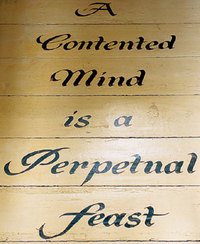 As participants in this blog, this is your chance to contribute content to a future project. If you would like to help, please tell us your favorite quotes! There are lots of good quotes out there, but what I am looking for are the ones that move you, cause you to stop and think, or stay with you and have an impact on your behavior.
 I know in my life, there are five or six that had that kind of power. Statements such as, "Ten years from now, what will you wish you had done today?" have changed my life. I look forward to reading the ones that have had similar impact on you!
And as always, thanks for contributing!
-
"It’s not what happens, it’s how you respond." These are easy words to hear, but hard ones to live out. For most of us, it is easy to let people "hi-jack" us emotionally, to "blow our lid," or "get ticked off," or "blow our stack," or "lose our temper,
 " or "come un-glued," or "let them have it," or "lose control," or "boil over," or "erupt," or "fly off the handle," or "throw a tantrum," or "pitch a fit," or "get our knickers in a knot," or "get our tailfeathers in a knot," or "get jacked sideways," or "spout off," or any number of expressions (in fact, if anybody out there knows any more, perhaps you could contribute them here in the comments section!). Perhaps there are so many expressions for this because there are so many instances of this in our lives. It would make sense that we would need a lot of names for something that happens a lot!
But what a shame, really. How many pharases are there for the opposite? "Keep one’s cool," or "stay calm," or "keep control," or "maintain composure," or "turn the other cheek," or "blow it off," or "let it lie," or "leave it alone," or "take it with a grain of salt," or "keep things in perspective," or "let sleeping dogs lie," or "don’t rock the apple cart," or "leave well enough alone," or "keep the peace," or take it all in stride." (again, we would welcome your inputs on this blog if you can think of more!)
For both cases, when we lose our temper or when we maintain control, our language is full of expressions to describe the event. It must be that this is a big deal. And in the art of human relations, I can assure you that how we respond to the things that happen to us in life IS A BIG DEAL.
Many, many times the things that happen to us are with, through, about, or because of other people. The interesting thing about life is that we, as humans, are free to choose our response. We are different from the animals which have no choice but simply react by instinct. Sure, we have instincts, but we also have overriding intelligence that offers us a choice of our response in any situation. It is how we choose our responses that matters.
Do we choose our responses because they make us feel better in the moment, riding the emotional wave that wells up in us and forgetting to engage our intelligence? Or do we stop and think for a moment, making a concious choice about what our response will be? HOW we choose our response is important.
Addtionally, WHAT response we choose matters, too. We should gain enough control over ourselves to choose the appropriate response. And which response is the appropriate one? Would it be the response of expediency, meaning the choice that serves our personal needs the best? Or would it be better to choose a response that serves the other person? Should our response be in line with the highest purpose we have for our life? Should our response have anything to do with God and His glory?
You see, asking these kinds of questions of ourselves (and what is thinking, if not the attempt at answering questions we ask ourselves?) produces the environment for us to CHOOSE our response, and to CHOOSE appropriately. Remember, we are the happiest when our actions are in line with the highest picture we have of ourselves, and when that picture is as accurate as it can be – meaning: the closest in line with how God would have us live.
People who are given to emotional flights of fancy, getting angry and battling with the people in their lives for whom they are supposed to love, are the least likely to produce lasting relationships. They may have great "people skills" on the front end, but over time, their lack of emotional self-control will deliver misery and regret by the truckload. Many of the wounds resulting from a lack of emotional control are very painful and heal slowly. Trust is destroyed and is rebuilt painfully and slowly, if at all.
Work hard to grow emotionally. Experts agree that your "emotional quotient" is more important than your "intelligence quotient." Get control of yourself by getting clear on who you are and what your purpose is. Don’t lose perspective on the big picture in your life. Get in touch with the fact that your life is finite. Keep in mind that the most important aspects of your life are how you touch and influence the lives of God’s children around you. You will be remembered more for your contributions or subtractions from people’s lives than anything else you will accomplish. And finally, it may be helpful to keep in mind two of my favorite quotes:
"Life is too short to be little,"
and
"A man is only as big as the smallest thing that makes him lose his temper."
So grow big.
Life is too short to live otherwise.
-
 "Honey, I’m home!"


